
Unlock the secrets to choosing party entertainment packages that elevate your event. Engage your guests and create memorable experiences!
TL;DR:
• Choosing party entertainment packages requires matching performers to your audience and theme for maximum impact. Planning ahead with objective vendor scoring and comprehensive contracts reduces risks and improves event success. Prioritizing fit over fame and early booking ensures guest engagement and a smooth experience.
Choosing party entertainment packages is the process of selecting and customizing performance and service options that best fit your event’s audience, theme, and logistical requirements. The right package does more than fill time. It shapes the energy in the room, keeps guests engaged, and gives your event a clear identity. Whether you are planning a corporate gala, a bar mitzvah, or a backyard birthday, the entertainment you book directly determines how guests remember the night. This guide gives you a practical framework for evaluating options, avoiding costly mistakes, and booking with confidence.
The single most important factor is audience fit. Event success depends more on selecting entertainment that matches your audience and theme than on chasing the biggest budget or most recognizable name. A high-energy DJ set works at a corporate holiday party but falls flat at an intimate anniversary dinner. Know your crowd before you browse any catalog.
Budget is the second filter, and it hides a trap most planners miss. Production riders for power, sound, and staging can equal or exceed talent fees, turning a reasonable quote into a surprise expense when your venue cannot meet the technical requirements. Always request the full technical rider before signing anything.
Four factors shape every good entertainment decision:
• Audience demographics and event type. Kids’ parties, corporate events, and adult milestone celebrations each require different formats, energy levels, and content standards.
• Budget, including production costs. Factor in setup, breakdown, and rider requirements alongside the base talent fee.
• Venue and logistics. Ceiling height, power access, noise ordinances, and load-in windows all affect what entertainment is physically possible.
• Theme and event goals. A themed entertainment package that reinforces your event’s concept creates a cohesive experience guests feel from the moment they arrive.
Pro Tip: When choosing kids’ party entertainment, confirm that all performers carry liability insurance and that their content is age-appropriate. These two checks alone eliminate most bad-fit vendors.
Objective evaluation beats gut instinct every time. Scoring rubrics that rate vendors 1–5 on criteria like production quality, insurance compliance, and contingency planning give you a repeatable method that removes emotion from the decision. Experts recommend requiring a minimum score of 5/5 on insurance compliance before moving any vendor forward. That single threshold eliminates a significant category of risk.

Use this evaluation framework when comparing vendors:
| Evaluation category | What to assess |
|---|---|
| Insurance and liability | Proof of general liability coverage, minimum policy limits |
| Production quality | Video samples, live performance references, sound quality |
| Contingency planning | Backup performer policy, equipment redundancy |
| Contract terms | Deposit percentage, cancellation penalties, rider clarity |
| References | Verified client contacts, event type match |
Beyond the rubric, request video samples and at least two references from events similar to yours in size and format. Vetting vendors with a standardized call script and checklist reduces last-minute surprises and gives you documented evidence if a dispute arises later.
Clear contracts with defined deposit percentages, insurance proof, and cancellation policies are industry best practice. A contract without a backup performer clause is a liability waiting to activate on your event day.
Pro Tip: Ask every vendor directly: “What happens if you cannot perform on the day?” The answer tells you more about their professionalism than any promotional video.
For weddings specifically, the same logic applies across all vendors. Prioritizing fit over fame, whether for entertainment or photography, consistently produces better results. A resource like wedding entertainment ideas from Pixel Groves shows how this principle plays out across different reception formats.
The most expensive mistakes in entertainment booking are also the most preventable. Skipping rehearsals and sound checks is the most frequent error professional planners cite. Technical problems discovered during the event, not before it, create stress that no amount of recovery can fully fix. Treat every performer like a production team member who requires a scheduled check before guests arrive.
Watch for these four pitfalls:
• Booking on price or fame alone. A well-known act that does not connect with your specific audience delivers less value than a lesser-known performer who fits perfectly.
• Ignoring the technical rider. Vague or unreviewed rider requirements become what industry professionals call “budget grenades” when the venue cannot meet them.
• Skipping insurance verification. An uninsured performer creates liability exposure for you as the event organizer.
• Failing to confirm backup provisions. Without a written backup plan, a single cancellation can leave your event without entertainment entirely.
The event planning checklist from Porcci NYC covers these verification steps in detail and gives you a structured format to track each vendor requirement before the event date.
A clear sequence from shortlist to signed contract protects your budget and your event. Book entertainment 2–6 months in advance, depending on event size. Popular acts and specialty performers fill their calendars fast, and early booking gives you negotiating room and more options.
Follow these steps in order:
1. Define your entertainment criteria. Audience type, event format, budget ceiling, and venue constraints come first.
2. Build a shortlist of three to five vendors. Use referrals, industry directories, and portfolio reviews to narrow the field.
3. Run each vendor through your scoring rubric. Eliminate anyone who scores below your minimum threshold on insurance or contingency.
4. Request contracts, riders, and references. Review all three before any money changes hands.
5. Negotiate and confirm backup provisions. Secure a written backup performer clause and confirm all technical requirements with your venue.
6. Sign and document everything. Keep copies of the contract, insurance certificates, and all written communications.
Pro Tip: Negotiate the deposit structure before signing. Many vendors accept a lower upfront deposit in exchange for a confirmed booking date, which protects your cash flow without reducing your commitment.
Coordinating with your venue’s production team after signing is not optional. Sound system setup requirements vary significantly by room size and layout, and confirming these details early prevents day-of conflicts between your entertainment vendor and the venue.
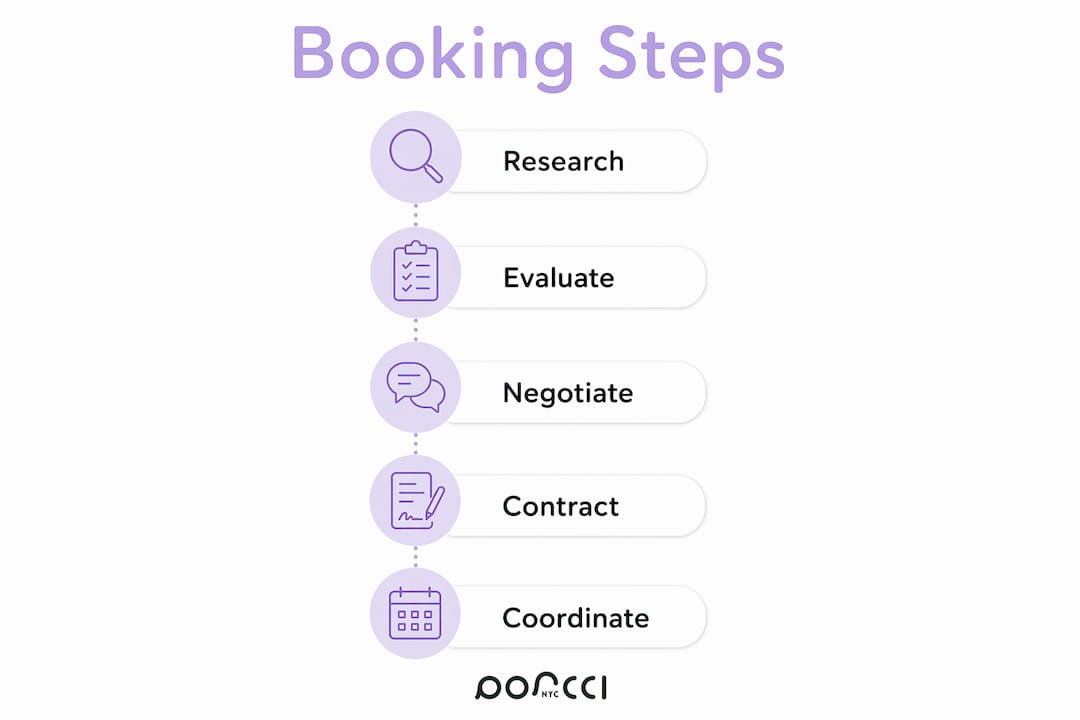
The most effective approach to choosing party entertainment packages combines audience fit, objective vendor scoring, and early booking to eliminate risk and maximize guest satisfaction.
| Point | Details |
|---|---|
| Audience fit over budget | Entertainment aligned with your crowd outperforms high-cost or high-profile acts every time. |
| Score vendors objectively | Use a 1–5 rubric with minimum thresholds on insurance and contingency before shortlisting. |
| Read the full rider | Production costs can match or exceed talent fees; review technical requirements before signing. |
| Book 2–6 months early | Early booking expands your options and gives you negotiating leverage with vendors. |
| Require written backup plans | A signed backup performer clause is non-negotiable for any professional entertainment contract. |
The advice that gets ignored most often is also the most valuable: fit beats fame, every single time. We have seen planners spend significantly more on a recognizable act, only to watch guests disengage within the first 30 minutes because the performance style did not match the room. The energy never recovered.
Rehearsals are not a luxury. They are the difference between a smooth event and a crisis you manage in real time. Every performer we work with goes through a sound check and a timing walkthrough before a single guest arrives. That discipline is what keeps the flow moving when something small goes wrong, and something small always does.
Scoring rubrics feel bureaucratic until the moment they save you. When a vendor cannot produce proof of insurance or cannot answer a direct question about their backup plan, the rubric gives you a clean, defensible reason to move on. That clarity is worth more than any sales pitch.
Start early, communicate clearly, and never assume a verbal agreement covers what a written contract should. Those three habits eliminate the majority of entertainment booking problems we see planners face.
— PORCCI
Porcci NYC provides the AV and production infrastructure that makes entertainment packages perform at their best. Whether you need DJ services in NYC for a high-energy reception or a photo booth rental to keep guests engaged between sets, every service includes delivery, setup, and breakdown. For events requiring full audio support, AV and sound system rentals cover everything from wireless microphones to speaker arrays sized for your venue. Porcci NYC serves events across New York City and New Jersey, and the team builds packages around your specific event goals. Request a customized quote to get a proposal matched to your guest count, venue, and entertainment format.
A party entertainment package is a bundled service offering that combines performance, equipment, and logistics into a single booking. Packages typically include setup, breakdown, and at least one entertainment format such as DJ services, karaoke, or a photo booth.
Book entertainment 2–6 months before your event date. Popular performers and specialty acts fill their schedules quickly, and early booking gives you more options and better negotiating terms.
Use a scoring rubric that rates each vendor 1–5 on insurance, production quality, contingency planning, and contract terms. Require a minimum score on insurance compliance before moving any vendor to the shortlist.
Every contract should specify the deposit amount, cancellation penalties, technical rider requirements, backup performer provisions, and proof of liability insurance. Missing any of these terms creates risk for the event organizer.
No. Performance style aligned with your audience and event theme consistently delivers better results than spending more on a high-profile act that does not fit the room.
Unlock the secrets to choosing party entertainment packages that elevate your event. Engage your guests and create memorable experiences!
TL;DR:
• Choosing party entertainment packages requires matching performers to your audience and theme for maximum impact. Planning ahead with objective vendor scoring and comprehensive contracts reduces risks and improves event success. Prioritizing fit over fame and early booking ensures guest engagement and a smooth experience.
Choosing party entertainment packages is the process of selecting and customizing performance and service options that best fit your event’s audience, theme, and logistical requirements. The right package does more than fill time. It shapes the energy in the room, keeps guests engaged, and gives your event a clear identity. Whether you are planning a corporate gala, a bar mitzvah, or a backyard birthday, the entertainment you book directly determines how guests remember the night. This guide gives you a practical framework for evaluating options, avoiding costly mistakes, and booking with confidence.
The single most important factor is audience fit. Event success depends more on selecting entertainment that matches your audience and theme than on chasing the biggest budget or most recognizable name. A high-energy DJ set works at a corporate holiday party but falls flat at an intimate anniversary dinner. Know your crowd before you browse any catalog.
Budget is the second filter, and it hides a trap most planners miss. Production riders for power, sound, and staging can equal or exceed talent fees, turning a reasonable quote into a surprise expense when your venue cannot meet the technical requirements. Always request the full technical rider before signing anything.
Four factors shape every good entertainment decision:
• Audience demographics and event type. Kids’ parties, corporate events, and adult milestone celebrations each require different formats, energy levels, and content standards.
• Budget, including production costs. Factor in setup, breakdown, and rider requirements alongside the base talent fee.
• Venue and logistics. Ceiling height, power access, noise ordinances, and load-in windows all affect what entertainment is physically possible.
• Theme and event goals. A themed entertainment package that reinforces your event’s concept creates a cohesive experience guests feel from the moment they arrive.
Pro Tip: When choosing kids’ party entertainment, confirm that all performers carry liability insurance and that their content is age-appropriate. These two checks alone eliminate most bad-fit vendors.
Objective evaluation beats gut instinct every time. Scoring rubrics that rate vendors 1–5 on criteria like production quality, insurance compliance, and contingency planning give you a repeatable method that removes emotion from the decision. Experts recommend requiring a minimum score of 5/5 on insurance compliance before moving any vendor forward. That single threshold eliminates a significant category of risk.
Use this evaluation framework when comparing vendors:
| Evaluation category | What to assess |
|---|---|
| Insurance and liability | Proof of general liability coverage, minimum policy limits |
| Production quality | Video samples, live performance references, sound quality |
| Contingency planning | Backup performer policy, equipment redundancy |
| Contract terms | Deposit percentage, cancellation penalties, rider clarity |
| References | Verified client contacts, event type match |
Beyond the rubric, request video samples and at least two references from events similar to yours in size and format. Vetting vendors with a standardized call script and checklist reduces last-minute surprises and gives you documented evidence if a dispute arises later.
Clear contracts with defined deposit percentages, insurance proof, and cancellation policies are industry best practice. A contract without a backup performer clause is a liability waiting to activate on your event day.
Pro Tip: Ask every vendor directly: “What happens if you cannot perform on the day?” The answer tells you more about their professionalism than any promotional video.
For weddings specifically, the same logic applies across all vendors. Prioritizing fit over fame, whether for entertainment or photography, consistently produces better results. A resource like wedding entertainment ideas from Pixel Groves shows how this principle plays out across different reception formats.
The most expensive mistakes in entertainment booking are also the most preventable. Skipping rehearsals and sound checks is the most frequent error professional planners cite. Technical problems discovered during the event, not before it, create stress that no amount of recovery can fully fix. Treat every performer like a production team member who requires a scheduled check before guests arrive.
Watch for these four pitfalls:
• Booking on price or fame alone. A well-known act that does not connect with your specific audience delivers less value than a lesser-known performer who fits perfectly.
• Ignoring the technical rider. Vague or unreviewed rider requirements become what industry professionals call “budget grenades” when the venue cannot meet them.
• Skipping insurance verification. An uninsured performer creates liability exposure for you as the event organizer.
• Failing to confirm backup provisions. Without a written backup plan, a single cancellation can leave your event without entertainment entirely.
The event planning checklist from Porcci NYC covers these verification steps in detail and gives you a structured format to track each vendor requirement before the event date.
A clear sequence from shortlist to signed contract protects your budget and your event. Book entertainment 2–6 months in advance, depending on event size. Popular acts and specialty performers fill their calendars fast, and early booking gives you negotiating room and more options.
Follow these steps in order:
1. Define your entertainment criteria. Audience type, event format, budget ceiling, and venue constraints come first.
2. Build a shortlist of three to five vendors. Use referrals, industry directories, and portfolio reviews to narrow the field.
3. Run each vendor through your scoring rubric. Eliminate anyone who scores below your minimum threshold on insurance or contingency.
4. Request contracts, riders, and references. Review all three before any money changes hands.
5. Negotiate and confirm backup provisions. Secure a written backup performer clause and confirm all technical requirements with your venue.
6. Sign and document everything. Keep copies of the contract, insurance certificates, and all written communications.
Pro Tip: Negotiate the deposit structure before signing. Many vendors accept a lower upfront deposit in exchange for a confirmed booking date, which protects your cash flow without reducing your commitment.
Coordinating with your venue’s production team after signing is not optional. Sound system setup requirements vary significantly by room size and layout, and confirming these details early prevents day-of conflicts between your entertainment vendor and the venue.
The most effective approach to choosing party entertainment packages combines audience fit, objective vendor scoring, and early booking to eliminate risk and maximize guest satisfaction.
| Point | Details |
|---|---|
| Audience fit over budget | Entertainment aligned with your crowd outperforms high-cost or high-profile acts every time. |
| Score vendors objectively | Use a 1–5 rubric with minimum thresholds on insurance and contingency before shortlisting. |
| Read the full rider | Production costs can match or exceed talent fees; review technical requirements before signing. |
| Book 2–6 months early | Early booking expands your options and gives you negotiating leverage with vendors. |
| Require written backup plans | A signed backup performer clause is non-negotiable for any professional entertainment contract. |
The advice that gets ignored most often is also the most valuable: fit beats fame, every single time. We have seen planners spend significantly more on a recognizable act, only to watch guests disengage within the first 30 minutes because the performance style did not match the room. The energy never recovered.
Rehearsals are not a luxury. They are the difference between a smooth event and a crisis you manage in real time. Every performer we work with goes through a sound check and a timing walkthrough before a single guest arrives. That discipline is what keeps the flow moving when something small goes wrong, and something small always does.
Scoring rubrics feel bureaucratic until the moment they save you. When a vendor cannot produce proof of insurance or cannot answer a direct question about their backup plan, the rubric gives you a clean, defensible reason to move on. That clarity is worth more than any sales pitch.
Start early, communicate clearly, and never assume a verbal agreement covers what a written contract should. Those three habits eliminate the majority of entertainment booking problems we see planners face.
— PORCCI
Porcci NYC provides the AV and production infrastructure that makes entertainment packages perform at their best. Whether you need DJ services in NYC for a high-energy reception or a photo booth rental to keep guests engaged between sets, every service includes delivery, setup, and breakdown. For events requiring full audio support, AV and sound system rentals cover everything from wireless microphones to speaker arrays sized for your venue. Porcci NYC serves events across New York City and New Jersey, and the team builds packages around your specific event goals. Request a customized quote to get a proposal matched to your guest count, venue, and entertainment format.
A party entertainment package is a bundled service offering that combines performance, equipment, and logistics into a single booking. Packages typically include setup, breakdown, and at least one entertainment format such as DJ services, karaoke, or a photo booth.
Book entertainment 2–6 months before your event date. Popular performers and specialty acts fill their schedules quickly, and early booking gives you more options and better negotiating terms.
Use a scoring rubric that rates each vendor 1–5 on insurance, production quality, contingency planning, and contract terms. Require a minimum score on insurance compliance before moving any vendor to the shortlist.
Every contract should specify the deposit amount, cancellation penalties, technical rider requirements, backup performer provisions, and proof of liability insurance. Missing any of these terms creates risk for the event organizer.
No. Performance style aligned with your audience and event theme consistently delivers better results than spending more on a high-profile act that does not fit the room.