Discover essential types of event lighting for NYC & NJ venues. Transform your events and create unforgettable atmospheres with this guide!
TL;DR:
• Lighting profoundly influences guest experience by transforming spaces and setting different moods. Different fixture types serve atmosphere, focus, or energy functions, guiding effective design and budget allocation. Strategic combinations of uplighting, pin spots, gobos, and moving heads create memorable, cohesive events in NYC and New Jersey venues.
Lighting is the single most powerful tool you have to shape how your guests feel from the moment they walk through the door. The right combination can turn a plain banquet hall into an elegant ballroom, make a rooftop party feel electric, or give a corporate dinner a polished, branded look. But with so many fixture types, technologies, and rental options available across New York City and New Jersey, knowing where to start can feel overwhelming. This guide breaks down every major event lighting category, shows you how to compare them side by side, and gives you a clear framework for choosing what your specific event actually needs.
• How to choose event lighting: Atmosphere vs. focus vs. energy
• The essential types of event lighting (with strengths and ideal uses)
• Feature comparison: Matching lighting types to event needs
• Spotlight: Insider tips and advanced considerations
• Our take: How we approach event lighting for maximum guest impact
• Event lighting rentals and solutions for NYC & NJ
| Point | Details |
|---|---|
| Lighting drives event mood | Choosing the right lighting sets the atmosphere and creates key memories at any event. |
| Mix lighting types for impact | The most dynamic events use a blend of ambient, focus, and motion-based lighting. |
| Match lighting to your goals | Decide if you need ambiance, highlight features, or energize guests to choose the best options. |
| Consider setup and expertise | Some lighting, like intelligent fixtures and custom gobos, work best with professional setup. |
Before diving into the specific lighting types, let’s get clear on what each type is designed to accomplish. Every lighting fixture you rent or install falls into one of three functional roles, and understanding those roles is the fastest way to build a coherent, effective design.
1. Atmosphere lighting creates mood and sets the overall emotional tone of the space. Think warm amber washes on a brick wall, cool blue uplights framing a corporate stage, or soft candlelit tones across a wedding reception room. This is your foundation layer.
2. Focus lighting directs your guests’ attention to specific objects or areas. Centerpieces, the sweetheart table, a product display, or a speaker’s podium all benefit from targeted, precise light that separates them from the background.
3. Energy lighting moves, changes color, and responds to sound. This category exists to build excitement and keep guests engaged on the dance floor or during high-energy moments like award reveals or grand entrances.
As event lighting planning experts advise, the smartest approach is to decide whether you need atmosphere and coverage using wash or ambient fixtures, hierarchy and focus using spotlights, pin spots, or gobos, or motion and beat-synced energy using intelligent moving lights, and then program transitions tied to your event timeline. That decision framework prevents you from renting fixtures that duplicate each other or miss critical gaps in your design.
Pro Tip: Start by nailing your atmosphere layer first. Once your base color and tone feel right, add focus points for key moments, then layer in motion and energy for the dance floor or finale. This sequence keeps the room cohesive rather than chaotic.
Knowing which of the three functions you need most also helps you allocate your budget wisely. For a seated gala dinner, atmosphere and focus will carry most of the work. For a birthday party or wedding reception with a full dance floor, energy lighting becomes equally important. For impactful event lighting, matching function to event type is the starting point every time.
Armed with an understanding of lighting goals, let’s explore the most effective event lighting types available.
• Uplighting places fixtures at floor level and washes vertical surfaces like walls, columns, and drapery with colored light. It is the most popular single upgrade for any indoor venue because it instantly transforms the perceived size and warmth of a room. Uplighting works beautifully for weddings, corporate galas, and fundraisers where elegance is the goal.
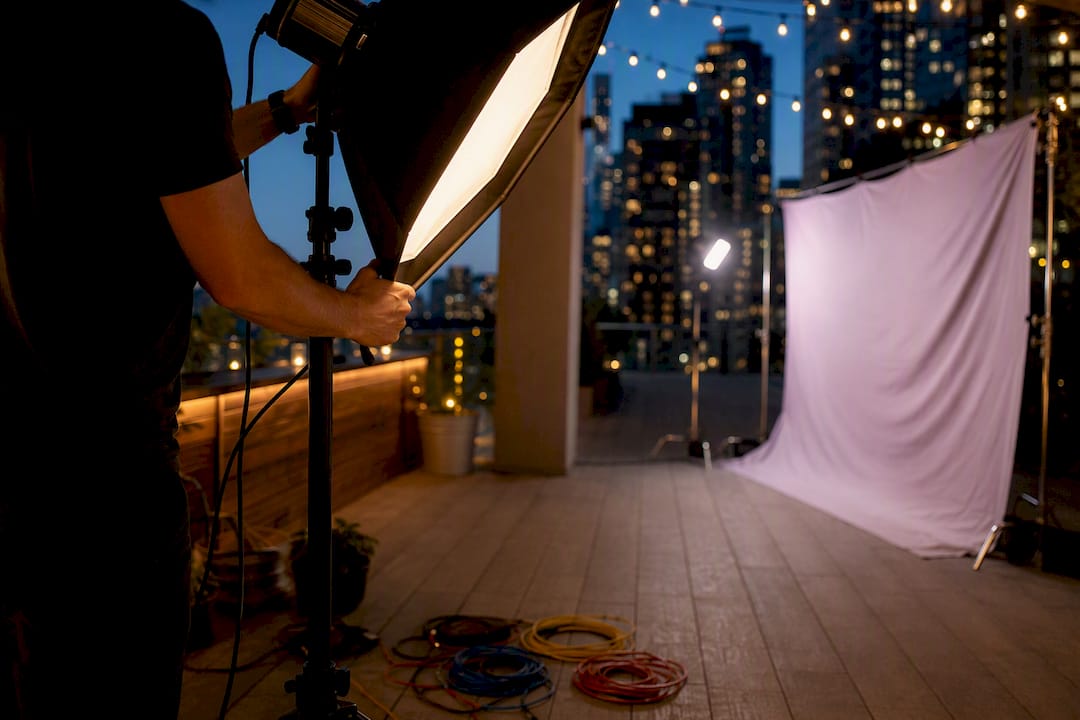
• String and bistro lighting uses warm, small-bulb strands suspended across a space to create a festive, intimate atmosphere. It is especially effective outdoors for garden parties, rooftop events, and rustic or vintage-themed gatherings. Indoors, it adds texture and depth without requiring rigging equipment.
• Pin spotting is a narrow, highly focused beam aimed at a single object, most commonly a floral centerpiece, a wedding cake, or a product on a display table. A well-aimed pin spot makes that object appear to glow and draws the eye without flooding the surrounding area with unwanted light.
• Gobo projection uses a metal or glass template inside a spotlight to project a custom shape, logo, pattern, or monogram onto walls, floors, or ceilings. For corporate events, a company logo projected onto the stage backdrop creates instant branding. For weddings, a couple’s monogram on the dance floor is a classic and elegant touch.
• Intelligent and moving lights, sometimes called moving heads, are motorized fixtures that can pan, tilt, change color, and shift beam size on command or in sync with music. They are the backbone of high-energy dance floor lighting and are equally capable of delivering slow, sweeping aerial effects during a first dance or grand entrance.
As wedding lighting experts at The Knot note, event planners for weddings commonly combine uplighting, string and bistro lighting, pin spots, and gobo monograms or patterns, while dance floor looks frequently rely on intelligent and moving lights.
All of these fixture types can be connected to audio-visual rentals that include control systems, dimmer packs, and DMX programming, making it possible to manage your entire lighting design from a single console.

You know the main lighting types. Here’s how they stack up when you compare features for different event needs.
| Lighting type | Atmosphere | Focus/highlight | Motion/energy | Custom effects | Setup complexity |
|---|---|---|---|---|---|
| Uplighting | Excellent | Low | None | Color only | Easy |
| String/bistro | Excellent | None | None | Minimal | Easy |
| Pin spotting | Low | Excellent | None | None | Moderate |
| Gobo projection | Moderate | High | None | Logos/patterns | Moderate |
| Moving heads | Good | Good | Excellent | Full range | Advanced |
A few things stand out from this comparison. Uplighting and string lighting are the easiest wins for atmosphere, requiring minimal programming and no special rigging in most venues. Pin spots and gobos require more careful placement and focusing but deliver the sharpest visual impact on specific objects or branding elements.
Moving-head fixtures are commonly used because they can deliver beam, spot, and wash roles with motorized optics, enabling dynamic coverage and effects that no other fixture type can match. That flexibility makes them especially valuable when your event has multiple phases, such as a formal dinner followed by an open dance floor, because a single fixture can serve both functions with a program change.
For a quick decision guide:
• Need to fill a large ballroom with color? Go with uplighting first.
• Want guests to notice your branded centerpieces? Add pin spots.
• Presenting a corporate logo prominently? Gobo projection is your answer.
• Running a wedding reception from ceremony through reception dance? Moving heads give you adaptability through every phase.
You can read more detailed event lighting tips specific to NYC and NJ venues on our blog.
Beyond the basics, a few expert strategies make event lighting truly outstanding.
Getting gobos right is trickier than it looks. Gobos are limited by their optics and clarity, and by the projection distance and angle. For sharp logos or readable patterns, you need a spot-type fixture with crisp gobo optics and careful focus and centering. A gobo projected from too far away, or at a steep angle onto a curved surface, will produce a blurry, unreadable result. Always test projection distance and surface flatness before your event starts.
Moving heads need sufficient ceiling height. In low-ceiling venues common in Manhattan lofts or New Jersey banquet rooms, a moving head mounted at floor level may not achieve full pan and tilt range without the beam hitting walls prematurely. Rigging from a truss above solves this but adds setup time and cost. Ask your rental provider about ceiling height minimums for the specific fixtures you’re booking.
Pro Tip: Sync your intelligent lighting to event cues, not just music. Program a color shift to signal the beginning of dinner, a slow sweep for the first dance, and a full party mode when the dance floor opens. Guests feel the shift instinctively, and it gives your event a professional, produced quality that’s genuinely memorable.
Battery-powered uplights have become a popular choice for NYC venues with strict power restrictions or limited outlet placement. They eliminate cable runs across the floor, which reduces trip hazards and speeds up setup. The trade-off is a shorter operating time, typically 8 to 12 hours, so confirm runtime before relying on them for a full-day event.
Intelligent lighting that is LED-based enables automation and can be synced with music to energize the dance floor and shift focus toward key moments, making it an especially strong investment when you’re pairing lighting with sound system rentals for a fully integrated AV setup.
Here’s what years of producing events across New York City and New Jersey have actually taught us: more fixtures do not automatically mean a better event. We’ve seen rooms overloaded with moving heads that felt visually exhausting by 9 p.m. We’ve also seen a simple combination of warm uplighting, six well-placed pin spots, and one gobo monogram create a wedding reception that guests talked about for months.
Our philosophy is to prioritize adaptive systems and well-timed transitions over sheer fixture count. A room where the lighting shifts from soft amber during cocktail hour to crisp white during dinner service to vibrant, beat-synced color during the dance set feels alive and intentional. That pacing communicates professionalism and keeps guests emotionally engaged through every phase of the event.
The biggest lesson from NYC and NJ events specifically is that venue architecture matters enormously. A Manhattan venue with exposed brick and high ceilings responds differently to uplighting than a glass-walled New Jersey waterfront space. We always recommend walking the venue with your lighting plan in hand, identifying where natural anchor points exist such as columns, alcoves, and ceiling beams, and building your design around them rather than fighting the space.
Focus is also underrated. Most planners rush to add energy and color, but the moments guests remember most are often the quiet, focused ones. A perfectly lit sweetheart table. A monogram on the dance floor that captures the couple’s initials in warm gold. A pin spot on an award trophy at a corporate ceremony. Those precise, intentional moments are what elevate an event from well-lit to truly memorable.
We go deeper on the principles behind professional lighting insights for anyone who wants to understand the full design philosophy behind our approach.
For those ready to elevate their event lighting, here’s where you can find help and gear locally. At Porcci NYC, we offer full-service event lighting rentals and consultation for weddings, corporate events, private parties, bar and bat mitzvahs, and community gatherings across New York City and New Jersey. Our team handles delivery, setup, programming, and breakdown so you can focus on your guests rather than your gear.
Our packages pair lighting with complementary services including DJ and event services for beat-synced intelligent lighting and photo booth rentals that capture your perfectly lit event moments. We work with you to match fixture types to your venue, budget, and event timeline, so every dollar you spend on lighting actually shows up in your guests’ experience. Reach out for a personalized quote and let us help you build the right plan.
String or bistro lighting is the most popular outdoor choice for ambient warmth, while uplighting and moving heads add dramatic effects and coverage for larger outdoor spaces. Planners often combine uplighting, string lighting, and intelligent fixtures for a complete outdoor look.
Use spot-type fixtures with crisp gobo optics and test projection distance carefully before the event begins. As gobo projection guides explain, focus and centering are critical for keeping edges readable, especially on angled or textured surfaces.
Intelligent and moving lights are the clear choice for dance floor energy. LED intelligent lighting can be synced with music to build excitement and naturally shift guest attention toward key moments during the reception.
Absolutely, and most planners do. Wedding lighting combinations typically include uplighting, string lighting, pin spots, gobos, and moving lights layered together so that each element serves a specific function across the event timeline.
Discover essential types of event lighting for NYC & NJ venues. Transform your events and create unforgettable atmospheres with this guide!
TL;DR:
• Lighting profoundly influences guest experience by transforming spaces and setting different moods. Different fixture types serve atmosphere, focus, or energy functions, guiding effective design and budget allocation. Strategic combinations of uplighting, pin spots, gobos, and moving heads create memorable, cohesive events in NYC and New Jersey venues.
Lighting is the single most powerful tool you have to shape how your guests feel from the moment they walk through the door. The right combination can turn a plain banquet hall into an elegant ballroom, make a rooftop party feel electric, or give a corporate dinner a polished, branded look. But with so many fixture types, technologies, and rental options available across New York City and New Jersey, knowing where to start can feel overwhelming. This guide breaks down every major event lighting category, shows you how to compare them side by side, and gives you a clear framework for choosing what your specific event actually needs.
• How to choose event lighting: Atmosphere vs. focus vs. energy
• The essential types of event lighting (with strengths and ideal uses)
• Feature comparison: Matching lighting types to event needs
• Spotlight: Insider tips and advanced considerations
• Our take: How we approach event lighting for maximum guest impact
• Event lighting rentals and solutions for NYC & NJ
| Point | Details |
|---|---|
| Lighting drives event mood | Choosing the right lighting sets the atmosphere and creates key memories at any event. |
| Mix lighting types for impact | The most dynamic events use a blend of ambient, focus, and motion-based lighting. |
| Match lighting to your goals | Decide if you need ambiance, highlight features, or energize guests to choose the best options. |
| Consider setup and expertise | Some lighting, like intelligent fixtures and custom gobos, work best with professional setup. |
Before diving into the specific lighting types, let’s get clear on what each type is designed to accomplish. Every lighting fixture you rent or install falls into one of three functional roles, and understanding those roles is the fastest way to build a coherent, effective design.
1. Atmosphere lighting creates mood and sets the overall emotional tone of the space. Think warm amber washes on a brick wall, cool blue uplights framing a corporate stage, or soft candlelit tones across a wedding reception room. This is your foundation layer.
2. Focus lighting directs your guests’ attention to specific objects or areas. Centerpieces, the sweetheart table, a product display, or a speaker’s podium all benefit from targeted, precise light that separates them from the background.
3. Energy lighting moves, changes color, and responds to sound. This category exists to build excitement and keep guests engaged on the dance floor or during high-energy moments like award reveals or grand entrances.
As event lighting planning experts advise, the smartest approach is to decide whether you need atmosphere and coverage using wash or ambient fixtures, hierarchy and focus using spotlights, pin spots, or gobos, or motion and beat-synced energy using intelligent moving lights, and then program transitions tied to your event timeline. That decision framework prevents you from renting fixtures that duplicate each other or miss critical gaps in your design.
Pro Tip: Start by nailing your atmosphere layer first. Once your base color and tone feel right, add focus points for key moments, then layer in motion and energy for the dance floor or finale. This sequence keeps the room cohesive rather than chaotic.
Knowing which of the three functions you need most also helps you allocate your budget wisely. For a seated gala dinner, atmosphere and focus will carry most of the work. For a birthday party or wedding reception with a full dance floor, energy lighting becomes equally important. For impactful event lighting, matching function to event type is the starting point every time.
Armed with an understanding of lighting goals, let’s explore the most effective event lighting types available.
• Uplighting places fixtures at floor level and washes vertical surfaces like walls, columns, and drapery with colored light. It is the most popular single upgrade for any indoor venue because it instantly transforms the perceived size and warmth of a room. Uplighting works beautifully for weddings, corporate galas, and fundraisers where elegance is the goal.
• String and bistro lighting uses warm, small-bulb strands suspended across a space to create a festive, intimate atmosphere. It is especially effective outdoors for garden parties, rooftop events, and rustic or vintage-themed gatherings. Indoors, it adds texture and depth without requiring rigging equipment.
• Pin spotting is a narrow, highly focused beam aimed at a single object, most commonly a floral centerpiece, a wedding cake, or a product on a display table. A well-aimed pin spot makes that object appear to glow and draws the eye without flooding the surrounding area with unwanted light.
• Gobo projection uses a metal or glass template inside a spotlight to project a custom shape, logo, pattern, or monogram onto walls, floors, or ceilings. For corporate events, a company logo projected onto the stage backdrop creates instant branding. For weddings, a couple’s monogram on the dance floor is a classic and elegant touch.
• Intelligent and moving lights, sometimes called moving heads, are motorized fixtures that can pan, tilt, change color, and shift beam size on command or in sync with music. They are the backbone of high-energy dance floor lighting and are equally capable of delivering slow, sweeping aerial effects during a first dance or grand entrance.
As wedding lighting experts at The Knot note, event planners for weddings commonly combine uplighting, string and bistro lighting, pin spots, and gobo monograms or patterns, while dance floor looks frequently rely on intelligent and moving lights.
All of these fixture types can be connected to audio-visual rentals that include control systems, dimmer packs, and DMX programming, making it possible to manage your entire lighting design from a single console.
You know the main lighting types. Here’s how they stack up when you compare features for different event needs.
| Lighting type | Atmosphere | Focus/highlight | Motion/energy | Custom effects | Setup complexity |
|---|---|---|---|---|---|
| Uplighting | Excellent | Low | None | Color only | Easy |
| String/bistro | Excellent | None | None | Minimal | Easy |
| Pin spotting | Low | Excellent | None | None | Moderate |
| Gobo projection | Moderate | High | None | Logos/patterns | Moderate |
| Moving heads | Good | Good | Excellent | Full range | Advanced |
A few things stand out from this comparison. Uplighting and string lighting are the easiest wins for atmosphere, requiring minimal programming and no special rigging in most venues. Pin spots and gobos require more careful placement and focusing but deliver the sharpest visual impact on specific objects or branding elements.
Moving-head fixtures are commonly used because they can deliver beam, spot, and wash roles with motorized optics, enabling dynamic coverage and effects that no other fixture type can match. That flexibility makes them especially valuable when your event has multiple phases, such as a formal dinner followed by an open dance floor, because a single fixture can serve both functions with a program change.
For a quick decision guide:
• Need to fill a large ballroom with color? Go with uplighting first.
• Want guests to notice your branded centerpieces? Add pin spots.
• Presenting a corporate logo prominently? Gobo projection is your answer.
• Running a wedding reception from ceremony through reception dance? Moving heads give you adaptability through every phase.
You can read more detailed event lighting tips specific to NYC and NJ venues on our blog.
Beyond the basics, a few expert strategies make event lighting truly outstanding.
Getting gobos right is trickier than it looks. Gobos are limited by their optics and clarity, and by the projection distance and angle. For sharp logos or readable patterns, you need a spot-type fixture with crisp gobo optics and careful focus and centering. A gobo projected from too far away, or at a steep angle onto a curved surface, will produce a blurry, unreadable result. Always test projection distance and surface flatness before your event starts.
Moving heads need sufficient ceiling height. In low-ceiling venues common in Manhattan lofts or New Jersey banquet rooms, a moving head mounted at floor level may not achieve full pan and tilt range without the beam hitting walls prematurely. Rigging from a truss above solves this but adds setup time and cost. Ask your rental provider about ceiling height minimums for the specific fixtures you’re booking.
Pro Tip: Sync your intelligent lighting to event cues, not just music. Program a color shift to signal the beginning of dinner, a slow sweep for the first dance, and a full party mode when the dance floor opens. Guests feel the shift instinctively, and it gives your event a professional, produced quality that’s genuinely memorable.
Battery-powered uplights have become a popular choice for NYC venues with strict power restrictions or limited outlet placement. They eliminate cable runs across the floor, which reduces trip hazards and speeds up setup. The trade-off is a shorter operating time, typically 8 to 12 hours, so confirm runtime before relying on them for a full-day event.
Intelligent lighting that is LED-based enables automation and can be synced with music to energize the dance floor and shift focus toward key moments, making it an especially strong investment when you’re pairing lighting with sound system rentals for a fully integrated AV setup.
Here’s what years of producing events across New York City and New Jersey have actually taught us: more fixtures do not automatically mean a better event. We’ve seen rooms overloaded with moving heads that felt visually exhausting by 9 p.m. We’ve also seen a simple combination of warm uplighting, six well-placed pin spots, and one gobo monogram create a wedding reception that guests talked about for months.
Our philosophy is to prioritize adaptive systems and well-timed transitions over sheer fixture count. A room where the lighting shifts from soft amber during cocktail hour to crisp white during dinner service to vibrant, beat-synced color during the dance set feels alive and intentional. That pacing communicates professionalism and keeps guests emotionally engaged through every phase of the event.
The biggest lesson from NYC and NJ events specifically is that venue architecture matters enormously. A Manhattan venue with exposed brick and high ceilings responds differently to uplighting than a glass-walled New Jersey waterfront space. We always recommend walking the venue with your lighting plan in hand, identifying where natural anchor points exist such as columns, alcoves, and ceiling beams, and building your design around them rather than fighting the space.
Focus is also underrated. Most planners rush to add energy and color, but the moments guests remember most are often the quiet, focused ones. A perfectly lit sweetheart table. A monogram on the dance floor that captures the couple’s initials in warm gold. A pin spot on an award trophy at a corporate ceremony. Those precise, intentional moments are what elevate an event from well-lit to truly memorable.
We go deeper on the principles behind professional lighting insights for anyone who wants to understand the full design philosophy behind our approach.
For those ready to elevate their event lighting, here’s where you can find help and gear locally. At Porcci NYC, we offer full-service event lighting rentals and consultation for weddings, corporate events, private parties, bar and bat mitzvahs, and community gatherings across New York City and New Jersey. Our team handles delivery, setup, programming, and breakdown so you can focus on your guests rather than your gear.
Our packages pair lighting with complementary services including DJ and event services for beat-synced intelligent lighting and photo booth rentals that capture your perfectly lit event moments. We work with you to match fixture types to your venue, budget, and event timeline, so every dollar you spend on lighting actually shows up in your guests’ experience. Reach out for a personalized quote and let us help you build the right plan.
String or bistro lighting is the most popular outdoor choice for ambient warmth, while uplighting and moving heads add dramatic effects and coverage for larger outdoor spaces. Planners often combine uplighting, string lighting, and intelligent fixtures for a complete outdoor look.
Use spot-type fixtures with crisp gobo optics and test projection distance carefully before the event begins. As gobo projection guides explain, focus and centering are critical for keeping edges readable, especially on angled or textured surfaces.
Intelligent and moving lights are the clear choice for dance floor energy. LED intelligent lighting can be synced with music to build excitement and naturally shift guest attention toward key moments during the reception.
Absolutely, and most planners do. Wedding lighting combinations typically include uplighting, string lighting, pin spots, gobos, and moving lights layered together so that each element serves a specific function across the event timeline.