See 12 trending first dance songs for 2026, why 1.5–3 minute edits win, and precise DJ and band briefing and rehearsal tips from Porcci NYC.
The dominant first dance song trend for 2026 blends deeply personal picks with fast-moving TikTok hits, and it favors shorter, tighter edits over full-length album cuts. We recommend starting now: pick three songs that mean something to you, then test each one for tempo and length before you commit.
TL;DR:
• Most requested first dance songs in 2026 are emotionally layered or personal, with shorter edits of 1.5 to 3 minutes preferred over full-length versions.
• TikTok virality influences song choices quickly, but not all viral tracks are suitable for extended slow dancing, emphasizing the importance of a live tempo test.
• Couples should focus on personal meaning and run lyric checks to avoid awkward surprises, ensuring the song’s lyrics and tempo fit their dance style.
• Shortening the track requires precise editing, and rehearsing the specific version helps prevent surprises during the actual dance.
• Following the dance, selecting an upbeat or easily recognizable song maintains energy, with clear cues and lighting transitions enhancing the flow.
• First dance song trends 2026: what’s actually shifting
• The 2026 trending first-dance song list, by category
• How to choose your first dance song: a four-step framework
• Recorded track, live cover, or acoustic version?
• Rehearsal and performance: practice, staging, and the exit plan
• What to play right after your first dance
• How Porcci NYC supports your first-dance moment
• Sources
• FAQ
Couples aren’t defaulting to the same five wedding staples anymore, and the shift traces back to where people discover music now. Social platforms have compressed the timeline from “song goes viral” to “song gets requested at a wedding” into just weeks, and DJs are seeing it firsthand. Trend reports on 2026 wedding music point to TikTok-originated tracks entering wedding playlists faster than ever, though not every viral moment survives the jump to a three-minute spotlight dance.
Here’s what’s driving the shift:
• TikTok-to-wedding speed: A song can chart on social media in January and show up in bridal Spotify playlists by spring, but virality doesn’t guarantee it holds up danced slowly, in a room, with everyone watching.
• Personal storytelling over defaults: More couples are picking songs tied to a specific memory (a road trip, a first date playlist) rather than whatever topped a “best first dance songs” list.
• Melancholic and complex picks: Bittersweet, emotionally layered tracks are having a moment. Choosing something less obvious is often a deliberate move toward feeling authentic instead of following a wedding script.
• Shorter edits win: Full-length tracks that run five minutes are getting trimmed. Couples increasingly favor a tighter 1.5 to 3-minute version so the moment lands rather than drags.
• Classics still hold ground: Songs like “Perfect” and “Can’t Help Falling in Love” keep appearing in DJ request data alongside newer names, proving longevity still counts.
We grouped this year’s most requested and most personally resonant picks into five categories, based on what DJs are seeing booked and what tends to hold up once a couple actually dances to it in a quiet room.
Modern viral and streaming hits:
1. “Ordinary” by Alex Warren — A big, emotional ballad that built its audience through social platforms before crossing into wedding requests. It runs slower and swells midway, so ask your DJ about a fade if the build feels too long for a first dance.
2. “Die With A Smile” by Lady Gaga & Bruno Mars — Duet energy makes this a natural pick for couples who want a song that feels like a conversation. Its tempo sits comfortably in a slow-sway range, no edit required for most couples.
3. “Die for You” by The Weeknd — Moodier and more atmospheric than a typical wedding ballad, which is exactly its appeal for couples avoiding the expected. Request a DJ edit to trim the intro if you want to get to the vocal faster.
Modern R&B and soul:
1. “Best Part” by Daniel Caesar ft. H.E.R. — Warm, unhurried, and built for slow dancing without feeling like a performance. Its natural runtime is already close to the recommended edit length.
2. “Adorn” by Miguel — Smooth and a touch retro, with a groove that reads more confident than sentimental. Works well if you want the first dance to feel a little sultry instead of tearful.
Indie and unique picks:
1. “Dandelions” by Ruth B. — Gentle and understated, popular with couples who want something soft rather than dramatic. Its unhurried pace makes it an easy tempo test.
2. “Turning Page” by Sleeping at Last — A longtime favorite for a reason: it was practically written for a first dance, with lyrics built around commitment and time passing.
3. “From the Start” by Laufey — Jazz-influenced and understated, this one signals a couple who wants their music taste on display. Its acoustic feel makes a live-band arrangement especially natural.
4. “Until I Found You” by Stephen Sanchez — Vintage-leaning vocals with a tempo that sits right in the comfortable slow-dance zone, no major edit typically needed.
Timeless classics:
1. “Can’t Help Falling in Love” by Elvis Presley — Still one of the most requested first-dance songs on record, and its short runtime already matches modern edit preferences without any trimming.
2. “Perfect” by Ed Sheeran — The most consistently requested modern classic; it earns its spot on multiple DJ top-request lists year after year.
Upbeat and midtempo options:
1. “Lover” by Taylor Swift — For couples who want warmth without a full ballad’s weight, this sits at a gentle midtempo that’s easy to sway to and easy for guests to sing along with quietly.
Notice the range here. Some of these are five years old and still climbing request lists; others barely existed as wedding songs a year ago. That’s the real 2026 story: not one aesthetic winning, but personal meaning and viral discovery running side by side.
Picking a song shouldn’t take longer than picking your venue, but it deserves the same structured approach. Here’s the framework we’d walk you through if you asked us directly.
1. Start with meaning, not popularity. List three or four songs tied to an actual memory, a fully song you danced to on a second date, something that played during a big move. Starting from personal connection rather than a “best of” list tends to produce a choice you won’t second-guess later.
2. Run the living-room tempo test. Clear a small space, put the song on, and actually sway to it. Most comfortable slow-dance songs land around 60 to 100 BPM, and a tool like SongBPM can confirm the number before you commit. If it feels too fast to hold each other or too slow to stay engaged, that’s useful data.
3. Read the full lyrics out loud. Songs that sound romantic in the chorus sometimes turn oddly specific or awkward in verse two. Screening the whole lyric sheet before your DJ builds anything avoids a surprise during the toast-adjacent silence of a first dance.
4. Set your length and edit plan. Aim for a trimmed version in the 1.5 to 3-minute range so the spotlight moment feels complete instead of stretched. When you talk to your DJ or bandleader, ask about the version they’ll use, the key, the tempo, the exact edit point, and when you’ll get a rehearsal slot.
Pro Tip: A tempo nudge of just 2 to 3 BPM from your DJ can make a song feel noticeably easier to dance to without changing how it sounds to your guests.
The version you choose changes more than the sound. It changes what you can ask for.
A DJ working from a studio track gives you exact original production and an easy path to edits. Trimming length, nudging tempo, or building a clean fade point takes minutes, not rehearsal time.
A live band brings texture a recording can’t match, but it comes with logistics. Confirm the key ahead of time, and know that learning an uncommon song may carry an extra fee since most bands work from a set repertoire. Always request a rehearsal slot at the venue, not just at the studio.
When requesting a clean edit, whether from a DJ or a band, be specific:
• Give exact time stamps for where the edit should start and end.
• Ask for a gentle fade rather than an abrupt cut.
• State your target length in seconds, not just “shorter.”
• Confirm whether an acoustic or slowed arrangement suits the room better than the studio original, especially for high-tempo songs that need to come down to a danceable pace.
Check our DJ vs. live band guide for NY and NJ weddings for a deeper breakdown of when each option fits your event.
You don’t need dance lessons. You need ten quiet minutes a week and a plan for where you’re walking when the song ends.
Run the living-room test weekly, not just once. A simple baseline works for almost everyone: embrace, one underarm turn, a slow circle, repeat. Nobody is scoring your technique.
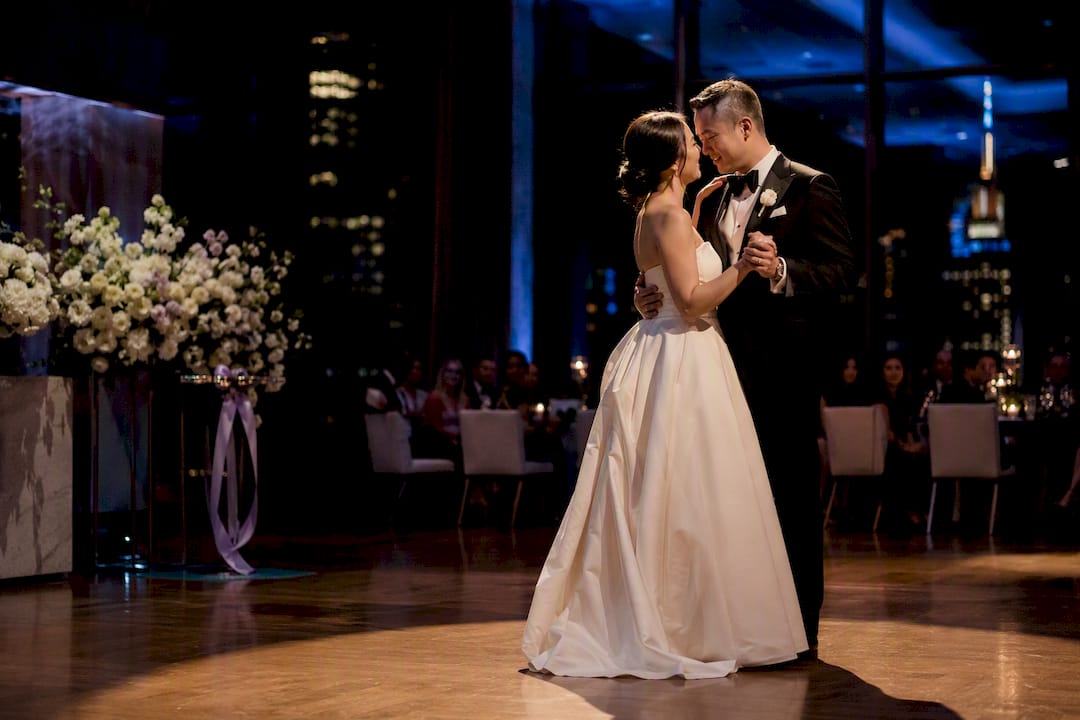
Staging matters more than most couples expect. Arrange guests in a half-moon rather than a full circle so faces are visible and nobody’s stuck staring at a back. Decide exactly where you’ll step when the song ends and who you’re walking toward first.
• Confirm your sound check slot with the DJ or band before guests arrive.
• Rehearse the actual edit, not just the full song, so the ending doesn’t catch you off guard.
• Practicing in short, frequent sessions with a final walk-through at the venue reduces nerves more than one long dress rehearsal.
• Know your exit point before the DJ cues the next track.
Pro Tip: Rehearse the last ten seconds of your edit more than any other part. That’s the moment nerves spike, right as you’re wondering where to go.
The song that follows your first dance either keeps the energy or lets it stall. Plan it with the same care.
Follow a slow ballad with something widely known and upbeat, not another slow song. Guests should recognize the next track within two bars; that recognition is what pulls people onto the floor immediately. Briefing your emcee or DJ to deliver one short cue line as applause fades, then drop straight into the opener, keeps the transition tight instead of awkward.
• Pick an opener your guests would sing along to without thinking.
• Brief your DJ on the exact cue line and timing.
• Confirm lighting shifts from spotlight to full dance-floor lighting right as the opener starts.
• Rehearse the handoff once during sound check, not just the dance itself.
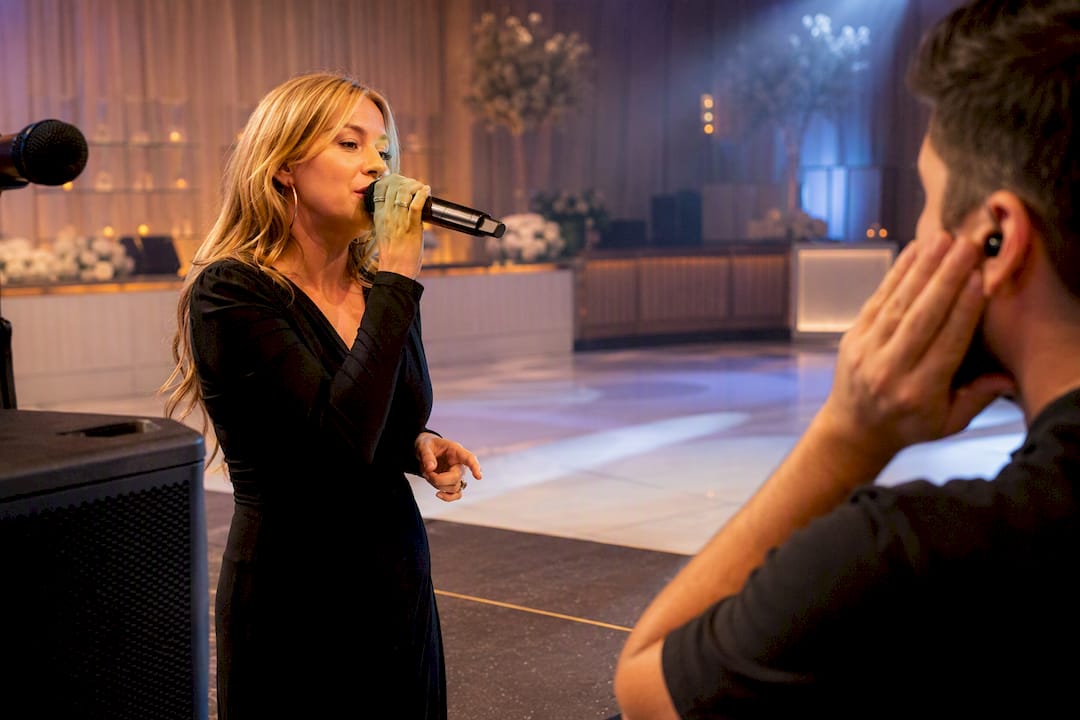
Miking matters more than couples expect, too. If a live vocalist is performing the first dance, we confirm monitor levels during sound check so nothing feeds back or drops out mid-verse. Our wedding dance floor setup guide covers this in more detail.
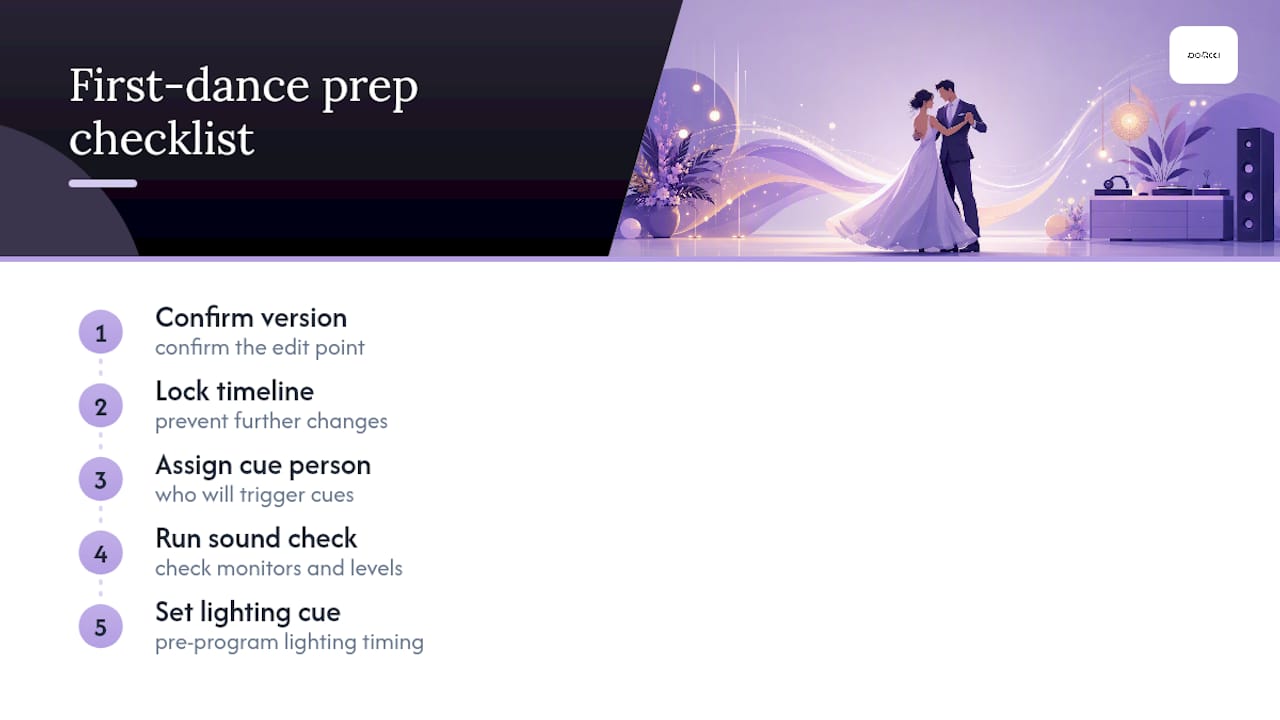
A short preparation checklist before any first dance includes confirming the version and edit point, locking the timeline, assigning a cue person, running the sound check, and setting the lighting cue in advance.
Porcci NYC handles the parts of a first dance that are easy to overlook until they go wrong: sound quality, timing, and a smooth handoff to the rest of the reception. Our DJ services cover custom edits and cueing, so if you want that 1.5 to 3-minute trim or a specific fade point, we build it into your timeline ahead of the event. Pair that with AV and sound system rentals sized correctly for your venue, and you avoid the flat, thin sound that undercuts an otherwise perfect song choice. We also offer a rehearsal slot as part of setup, so your sound check isn’t rushed. When you request a quote, have your song and version ready, note any rehearsal needs, and share your reception timeline. Get a quote from Porcci NYC and start locking in the details.
• How to Pick the Perfect First Dance Song - Inspired Bride
• First dance guide - Shortlist Wedding
• Wedding songs 2026-2027 - The Evore
• Top 100 most-requested wedding songs 2026 - BandCalendar
Trending picks include “Ordinary” by Alex Warren, “Die With A Smile” by Lady Gaga & Bruno Mars, and “Perfect” by Ed Sheeran, alongside enduring classics like “Can’t Help Falling in Love” that continue to top DJ request lists.
The biggest shifts are a faster pipeline from TikTok virality to wedding requests, a preference for personal and emotionally complex song choices over defaults, and shorter, edited versions in the 1.5 to 3-minute range.
A trendy pick usually blends personal meaning with a manageable tempo, roughly 60 to 100 BPM, and a length that’s been trimmed so the moment doesn’t outlast the emotion behind it.
Beyond the first dance, couples are pulling from the same pool: modern R&B tracks like “Best Part” by Daniel Caesar and H.E.R., indie picks like “From the Start” by Laufey, and steady classics that never seem to leave the request list.
Aim for 1.5 to 3 minutes, which usually means asking your DJ or band for a trimmed edit rather than playing the full studio track.
See 12 trending first dance songs for 2026, why 1.5–3 minute edits win, and precise DJ and band briefing and rehearsal tips from Porcci NYC.
The dominant first dance song trend for 2026 blends deeply personal picks with fast-moving TikTok hits, and it favors shorter, tighter edits over full-length album cuts. We recommend starting now: pick three songs that mean something to you, then test each one for tempo and length before you commit.
TL;DR:
• Most requested first dance songs in 2026 are emotionally layered or personal, with shorter edits of 1.5 to 3 minutes preferred over full-length versions.
• TikTok virality influences song choices quickly, but not all viral tracks are suitable for extended slow dancing, emphasizing the importance of a live tempo test.
• Couples should focus on personal meaning and run lyric checks to avoid awkward surprises, ensuring the song’s lyrics and tempo fit their dance style.
• Shortening the track requires precise editing, and rehearsing the specific version helps prevent surprises during the actual dance.
• Following the dance, selecting an upbeat or easily recognizable song maintains energy, with clear cues and lighting transitions enhancing the flow.
• First dance song trends 2026: what’s actually shifting
• The 2026 trending first-dance song list, by category
• How to choose your first dance song: a four-step framework
• Recorded track, live cover, or acoustic version?
• Rehearsal and performance: practice, staging, and the exit plan
• What to play right after your first dance
• How Porcci NYC supports your first-dance moment
• Sources
• FAQ
Couples aren’t defaulting to the same five wedding staples anymore, and the shift traces back to where people discover music now. Social platforms have compressed the timeline from “song goes viral” to “song gets requested at a wedding” into just weeks, and DJs are seeing it firsthand. Trend reports on 2026 wedding music point to TikTok-originated tracks entering wedding playlists faster than ever, though not every viral moment survives the jump to a three-minute spotlight dance.
Here’s what’s driving the shift:
• TikTok-to-wedding speed: A song can chart on social media in January and show up in bridal Spotify playlists by spring, but virality doesn’t guarantee it holds up danced slowly, in a room, with everyone watching.
• Personal storytelling over defaults: More couples are picking songs tied to a specific memory (a road trip, a first date playlist) rather than whatever topped a “best first dance songs” list.
• Melancholic and complex picks: Bittersweet, emotionally layered tracks are having a moment. Choosing something less obvious is often a deliberate move toward feeling authentic instead of following a wedding script.
• Shorter edits win: Full-length tracks that run five minutes are getting trimmed. Couples increasingly favor a tighter 1.5 to 3-minute version so the moment lands rather than drags.
• Classics still hold ground: Songs like “Perfect” and “Can’t Help Falling in Love” keep appearing in DJ request data alongside newer names, proving longevity still counts.
We grouped this year’s most requested and most personally resonant picks into five categories, based on what DJs are seeing booked and what tends to hold up once a couple actually dances to it in a quiet room.
Modern viral and streaming hits:
1. “Ordinary” by Alex Warren — A big, emotional ballad that built its audience through social platforms before crossing into wedding requests. It runs slower and swells midway, so ask your DJ about a fade if the build feels too long for a first dance.
2. “Die With A Smile” by Lady Gaga & Bruno Mars — Duet energy makes this a natural pick for couples who want a song that feels like a conversation. Its tempo sits comfortably in a slow-sway range, no edit required for most couples.
3. “Die for You” by The Weeknd — Moodier and more atmospheric than a typical wedding ballad, which is exactly its appeal for couples avoiding the expected. Request a DJ edit to trim the intro if you want to get to the vocal faster.
Modern R&B and soul:
1. “Best Part” by Daniel Caesar ft. H.E.R. — Warm, unhurried, and built for slow dancing without feeling like a performance. Its natural runtime is already close to the recommended edit length.
2. “Adorn” by Miguel — Smooth and a touch retro, with a groove that reads more confident than sentimental. Works well if you want the first dance to feel a little sultry instead of tearful.
Indie and unique picks:
1. “Dandelions” by Ruth B. — Gentle and understated, popular with couples who want something soft rather than dramatic. Its unhurried pace makes it an easy tempo test.
2. “Turning Page” by Sleeping at Last — A longtime favorite for a reason: it was practically written for a first dance, with lyrics built around commitment and time passing.
3. “From the Start” by Laufey — Jazz-influenced and understated, this one signals a couple who wants their music taste on display. Its acoustic feel makes a live-band arrangement especially natural.
4. “Until I Found You” by Stephen Sanchez — Vintage-leaning vocals with a tempo that sits right in the comfortable slow-dance zone, no major edit typically needed.
Timeless classics:
1. “Can’t Help Falling in Love” by Elvis Presley — Still one of the most requested first-dance songs on record, and its short runtime already matches modern edit preferences without any trimming.
2. “Perfect” by Ed Sheeran — The most consistently requested modern classic; it earns its spot on multiple DJ top-request lists year after year.
Upbeat and midtempo options:
1. “Lover” by Taylor Swift — For couples who want warmth without a full ballad’s weight, this sits at a gentle midtempo that’s easy to sway to and easy for guests to sing along with quietly.
Notice the range here. Some of these are five years old and still climbing request lists; others barely existed as wedding songs a year ago. That’s the real 2026 story: not one aesthetic winning, but personal meaning and viral discovery running side by side.
Picking a song shouldn’t take longer than picking your venue, but it deserves the same structured approach. Here’s the framework we’d walk you through if you asked us directly.
1. Start with meaning, not popularity. List three or four songs tied to an actual memory, a fully song you danced to on a second date, something that played during a big move. Starting from personal connection rather than a “best of” list tends to produce a choice you won’t second-guess later.
2. Run the living-room tempo test. Clear a small space, put the song on, and actually sway to it. Most comfortable slow-dance songs land around 60 to 100 BPM, and a tool like SongBPM can confirm the number before you commit. If it feels too fast to hold each other or too slow to stay engaged, that’s useful data.
3. Read the full lyrics out loud. Songs that sound romantic in the chorus sometimes turn oddly specific or awkward in verse two. Screening the whole lyric sheet before your DJ builds anything avoids a surprise during the toast-adjacent silence of a first dance.
4. Set your length and edit plan. Aim for a trimmed version in the 1.5 to 3-minute range so the spotlight moment feels complete instead of stretched. When you talk to your DJ or bandleader, ask about the version they’ll use, the key, the tempo, the exact edit point, and when you’ll get a rehearsal slot.
Pro Tip: A tempo nudge of just 2 to 3 BPM from your DJ can make a song feel noticeably easier to dance to without changing how it sounds to your guests.
The version you choose changes more than the sound. It changes what you can ask for.
A DJ working from a studio track gives you exact original production and an easy path to edits. Trimming length, nudging tempo, or building a clean fade point takes minutes, not rehearsal time.
A live band brings texture a recording can’t match, but it comes with logistics. Confirm the key ahead of time, and know that learning an uncommon song may carry an extra fee since most bands work from a set repertoire. Always request a rehearsal slot at the venue, not just at the studio.
When requesting a clean edit, whether from a DJ or a band, be specific:
• Give exact time stamps for where the edit should start and end.
• Ask for a gentle fade rather than an abrupt cut.
• State your target length in seconds, not just “shorter.”
• Confirm whether an acoustic or slowed arrangement suits the room better than the studio original, especially for high-tempo songs that need to come down to a danceable pace.
Check our DJ vs. live band guide for NY and NJ weddings for a deeper breakdown of when each option fits your event.
You don’t need dance lessons. You need ten quiet minutes a week and a plan for where you’re walking when the song ends.
Run the living-room test weekly, not just once. A simple baseline works for almost everyone: embrace, one underarm turn, a slow circle, repeat. Nobody is scoring your technique.
Staging matters more than most couples expect. Arrange guests in a half-moon rather than a full circle so faces are visible and nobody’s stuck staring at a back. Decide exactly where you’ll step when the song ends and who you’re walking toward first.
• Confirm your sound check slot with the DJ or band before guests arrive.
• Rehearse the actual edit, not just the full song, so the ending doesn’t catch you off guard.
• Practicing in short, frequent sessions with a final walk-through at the venue reduces nerves more than one long dress rehearsal.
• Know your exit point before the DJ cues the next track.
Pro Tip: Rehearse the last ten seconds of your edit more than any other part. That’s the moment nerves spike, right as you’re wondering where to go.
The song that follows your first dance either keeps the energy or lets it stall. Plan it with the same care.
Follow a slow ballad with something widely known and upbeat, not another slow song. Guests should recognize the next track within two bars; that recognition is what pulls people onto the floor immediately. Briefing your emcee or DJ to deliver one short cue line as applause fades, then drop straight into the opener, keeps the transition tight instead of awkward.
• Pick an opener your guests would sing along to without thinking.
• Brief your DJ on the exact cue line and timing.
• Confirm lighting shifts from spotlight to full dance-floor lighting right as the opener starts.
• Rehearse the handoff once during sound check, not just the dance itself.
Miking matters more than couples expect, too. If a live vocalist is performing the first dance, we confirm monitor levels during sound check so nothing feeds back or drops out mid-verse. Our wedding dance floor setup guide covers this in more detail.
A short preparation checklist before any first dance includes confirming the version and edit point, locking the timeline, assigning a cue person, running the sound check, and setting the lighting cue in advance.
Porcci NYC handles the parts of a first dance that are easy to overlook until they go wrong: sound quality, timing, and a smooth handoff to the rest of the reception. Our DJ services cover custom edits and cueing, so if you want that 1.5 to 3-minute trim or a specific fade point, we build it into your timeline ahead of the event. Pair that with AV and sound system rentals sized correctly for your venue, and you avoid the flat, thin sound that undercuts an otherwise perfect song choice. We also offer a rehearsal slot as part of setup, so your sound check isn’t rushed. When you request a quote, have your song and version ready, note any rehearsal needs, and share your reception timeline. Get a quote from Porcci NYC and start locking in the details.
• How to Pick the Perfect First Dance Song - Inspired Bride
• First dance guide - Shortlist Wedding
• Wedding songs 2026-2027 - The Evore
• Top 100 most-requested wedding songs 2026 - BandCalendar
Trending picks include “Ordinary” by Alex Warren, “Die With A Smile” by Lady Gaga & Bruno Mars, and “Perfect” by Ed Sheeran, alongside enduring classics like “Can’t Help Falling in Love” that continue to top DJ request lists.
The biggest shifts are a faster pipeline from TikTok virality to wedding requests, a preference for personal and emotionally complex song choices over defaults, and shorter, edited versions in the 1.5 to 3-minute range.
A trendy pick usually blends personal meaning with a manageable tempo, roughly 60 to 100 BPM, and a length that’s been trimmed so the moment doesn’t outlast the emotion behind it.
Beyond the first dance, couples are pulling from the same pool: modern R&B tracks like “Best Part” by Daniel Caesar and H.E.R., indie picks like “From the Start” by Laufey, and steady classics that never seem to leave the request list.
Aim for 1.5 to 3 minutes, which usually means asking your DJ or band for a trimmed edit rather than playing the full studio track.