Learn how to plan a wedding event in NYC and NJ with our step-by-step guide. Navigate budgets, venues, and guest lists effortlessly!
TL;DR:
• Successful wedding planning in NYC and New Jersey relies on setting a realistic budget, guest list, and preferred date early to avoid costly backtracking. Booking venues 12 to 18 months in advance and securing key vendors promptly ensures availability, while detailed organization minimizes logistical surprises. Partnering with experienced professionals helps couples enjoy their day confidently, rather than stressing over complex arrangements.
Planning a wedding in New York City or New Jersey is genuinely exciting, but it can also feel like you’re managing a small corporation with a very emotional board of directors. Between high venue costs, vendor availability windows that close fast, and guest lists that tend to grow on their own, knowing how to plan a wedding event clearly and methodically is what separates couples who enjoy the process from those who just survive it. This guide gives you a practical, step-by-step roadmap built around the real constraints and opportunities of the NYC and NJ market.
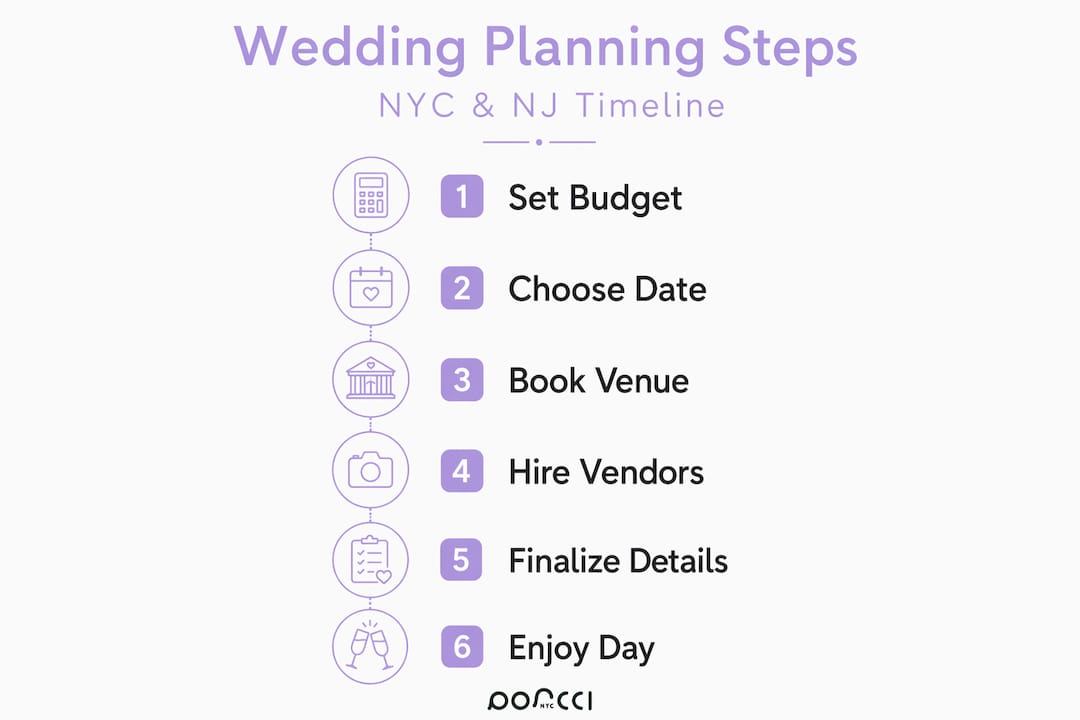
• Setting your wedding foundation: budget, date, and guest list
• Booking your venue and hiring key vendors on time
• Managing invitations, RSVPs, and guest experience
• Final preparations and day-of execution for a stress-free wedding
• Wedding planning truths: what we’ve learned from NYC and NJ couples
• Professional event planning and entertainment services in NYC and NJ
| Point | Details |
|---|---|
| Set a realistic budget | Start by establishing a firm budget and guest count since these drive most other wedding decisions. |
| Book early and strategically | Reserve popular venues and photographers 12-18 months in advance to secure your ideal date and vendors. |
| Track RSVPs diligently | Send invitations early, set clear RSVP deadlines, and follow up promptly to confirm accurate guest counts. |
| Use coordinators wisely | Hire a day-of coordinator to manage logistics and reduce stress on your wedding day. |
| Organize for easy execution | Label and separate wedding supplies by event area to facilitate smooth setup across multiple locations. |
Every decision you make in wedding planning flows from three things: how much you can spend, how many people you’re inviting, and when you want to get married. Get these wrong and you’ll spend months backtracking.
Start with an honest look at your budget. Average US weddings cost $34,200 for 117 guests, which works out to roughly $292 per person. But if you’re in New Jersey, NJ weddings average $49,600 in 2026, which is 45% above the national average. That gap matters when you’re trying to set realistic expectations with family members who got married in a different decade.
Here’s what to lock in before you contact a single vendor:
• Your firm budget ceiling, including a 5 to 10% contingency fund for surprises (and there will be surprises)
• Your guest count range, since every person you add increases catering, seating, and venue costs in a near-linear way
• Your 3 to 5 non-negotiables, whether that’s a specific venue style, a live band, or a particular date
• Your preferred date or season, since off-peak months like January through March and weekday events can cut venue rates significantly in NYC and NJ markets
Pro Tip: Once you set your guest count, resist the urge to “just add a few more.” Going from 100 guests to 130 can push you into a larger venue bracket and add $8,000 or more to your catering bill before you notice.
Guest count also shapes your wedding entertainment rentals needs and your event staffing requirements. A 200-person reception has very different AV and coordination demands than an intimate 60-person dinner.
Now that you understand why setting a solid foundation matters, let’s look at how to secure your venue and vital vendors in the competitive NYC and NJ markets.
This is where most couples lose time they can’t get back. Popular venues in NYC and New Jersey fill up fast, and top photographers are often booked months before the venue search even begins.
Follow this booking sequence to stay ahead:
1. Start venue shopping 12 to 18 months out. Popular venues book this far in advance, especially for spring and fall Saturdays.
2. Read every venue contract line by line, paying close attention to minimum food and beverage spend, corkage fees, and what’s actually included in the package.
3. Book your photographer and videographer immediately after signing the venue contract. These vendors have the fewest available dates and are the hardest to replace.
4. Apply for permits early. NYC outdoor events with 20+ guests require a $25 application fee plus a $400 wedding fee, with a 30-day processing window. Missing this can derail your entire outdoor ceremony plan.
5. Confirm wedding AV equipment needs with your venue before finalizing your entertainment vendor list, since some venues have noise restrictions or preferred vendor lists that limit your options.
Here’s a quick reference for booking timing:
| Vendor or task | Recommended timeline |
|---|---|
| Venue booking | 12 to 18 months before |
| Photographer/videographer | 10 to 12 months before |
| Caterer (if not included) | 9 to 12 months before |
| Entertainment (DJ, band) | 9 to 12 months before |
| Formal invitations sent | 6 to 8 months before |
| Event lighting confirmed | 4 to 6 months before |
| Final vendor confirmations | 1 to 2 weeks before |
Pro Tip: When reviewing venue proposals, ask specifically whether the quote includes gratuity and service charges. In NYC and NJ, these can add 22 to 28% to your food and beverage total, and many couples don’t realize it until the final invoice arrives.
With your venue and key vendors secured, let’s look at managing invitations and your guest experience.
Guest communication is an area where small organizational lapses cause outsized stress. When you’re managing 100 or 200 people, a missing RSVP or a dietary restriction you forgot can create real problems at the catering and seating stage.
Send save-the-dates 6 to 8 months before the wedding date, then follow with formal invitations at 6 to 8 months out as well. Set your RSVP deadline 3 to 4 weeks before the wedding, not two weeks, because you’ll need buffer time.
Keep a running guest list spreadsheet with the following columns:
• Full name and mailing address
• Email and phone number for follow-up
• RSVP status and date received
• Meal preference and any dietary restrictions
• Plus-one name if applicable
• Table assignment (added after final count)
Give your caterer the final headcount 1 to 2 weeks before the event. That means you need to start chasing non-responders about 3 weeks before your RSVP deadline, not after it passes.
Once you have your final count, build your seating chart intentionally. Group guests by relationship and energy level, not just by who knows each other. Putting your most enthusiastic dancers near the dance floor and your quieter guests closer to the bar area can do a lot to keep the energy in the room feeling right throughout the night. Planning thoughtful private party entertainment moments during dinner transitions also helps keep guests engaged between courses.

Also think through logistics your guests experience before they even sit down: clear venue signage, transportation details in the invitation, and a parking or transit note for your NYC or NJ location. These small touches communicate that you’ve thought of them, and that sets a positive tone before the first toast.
Working with an experienced entertainment partner for your DJ or music can also shape how guests flow through the room. Good DJ planning for weddings means your timeline stays intact even when cocktail hour runs a few minutes long.
The final week before your wedding is not the time to improvise. It’s the time to confirm, organize, and hand off.
Here’s your final-week checklist:
• Confirm arrival times and final payments with every vendor, in writing
• Share a detailed day-of timeline with all vendors, your coordinator, and your wedding party
• Assign one person as vendor point of contact on the wedding day so you and your partner aren’t fielding logistics calls during the ceremony
• Build buffer time into your morning schedule, because hair and makeup almost always run long
• Pack an emergency kit the night before, including safety pins, fashion tape, a stain remover pen, pain reliever, and extra phone chargers
A day-of coordinator in NJ costs between $1,800 and $4,000. That investment frees you from managing vendor arrivals, resolving setup issues, and keeping the timeline moving, all of which are things that genuinely derail couples who try to handle them alone.
Assign someone as vendor contact the night before, not the morning of. That person needs to have every vendor’s phone number, the timeline, and the authority to make small decisions without interrupting you.
Entertainment choices like wedding karaoke or a live DJ are also worth confirming one final time, since equipment setup windows need to align with your venue’s vendor access hours.
Here’s something most wedding guides won’t say directly: the couples who enjoy their wedding day most are almost never the ones who controlled every detail themselves. They’re the ones who made smart decisions early, handed off execution confidently, and gave themselves permission to be present.
One of the most common mistakes we see is signing a contract after paying a deposit, rather than before. Never pay a venue deposit before you have a signed contract in hand. Couples learned this the hard way during recent years of event disruptions, and it’s a protection that costs nothing to insist on.
We also recommend organizing all wedding items by labeled bins assigned to specific event areas: ceremony, cocktail hour, reception, exit. When vendors are setting up across multiple spaces or locations, this approach eliminates confusion and speeds up the entire process.
NJ venues in particular tend to have strict attrition clauses (meaning you pay for a minimum guest count even if fewer show up) and may require $1 million in liability insurance for extras like fireworks or live flame. Review these policies before you’re emotionally committed to a space.
Budget adjustments are normal and expected. When they come, the wisest place to protect your spending is coordination. Trying to cut costs by managing everything yourself almost always costs more in stress, and occasionally in actual vendor errors, than it saves.
Working with experienced event staffing and entertainment rental providers gives you people who’ve solved the exact problems you haven’t encountered yet.
At Porcci NYC, we work with engaged couples across New York City and New Jersey who want expert support without the complexity of managing a dozen separate vendors. Our event planning services are built around the practical realities of local weddings, from venue logistics to entertainment timing. We provide professional DJ services for receptions of every size, along with photo booth rentals that give guests something to remember. Bundling entertainment and coordination through one provider simplifies your vendor list and keeps communication clear. Reach out to us for a personalized quote that fits your vision and your budget.
Book popular venues 12 to 18 months in advance, particularly for peak season dates, since major market venues fill up well over a year out and waiting means losing your preferred date.
Outdoor NYC weddings with 20 or more guests require a permit with a $25 application fee plus a $400 wedding fee, and the processing window is approximately 30 days, so apply early.
Day-of coordinators in NJ typically cost between $1,800 and $4,000, and they handle vendor management and logistics so you can focus on enjoying the day rather than running it.
Couples frequently underestimate service charges and gratuity at NYC and NJ venues, skip the recommended 5 to 10% contingency fund, and miss NJ venue insurance requirements that can add significant cost if not budgeted for early. Non-refundable deposits are another common surprise when plans shift unexpectedly.
Learn how to plan a wedding event in NYC and NJ with our step-by-step guide. Navigate budgets, venues, and guest lists effortlessly!
TL;DR:
• Successful wedding planning in NYC and New Jersey relies on setting a realistic budget, guest list, and preferred date early to avoid costly backtracking. Booking venues 12 to 18 months in advance and securing key vendors promptly ensures availability, while detailed organization minimizes logistical surprises. Partnering with experienced professionals helps couples enjoy their day confidently, rather than stressing over complex arrangements.
Planning a wedding in New York City or New Jersey is genuinely exciting, but it can also feel like you’re managing a small corporation with a very emotional board of directors. Between high venue costs, vendor availability windows that close fast, and guest lists that tend to grow on their own, knowing how to plan a wedding event clearly and methodically is what separates couples who enjoy the process from those who just survive it. This guide gives you a practical, step-by-step roadmap built around the real constraints and opportunities of the NYC and NJ market.
• Setting your wedding foundation: budget, date, and guest list
• Booking your venue and hiring key vendors on time
• Managing invitations, RSVPs, and guest experience
• Final preparations and day-of execution for a stress-free wedding
• Wedding planning truths: what we’ve learned from NYC and NJ couples
• Professional event planning and entertainment services in NYC and NJ
| Point | Details |
|---|---|
| Set a realistic budget | Start by establishing a firm budget and guest count since these drive most other wedding decisions. |
| Book early and strategically | Reserve popular venues and photographers 12-18 months in advance to secure your ideal date and vendors. |
| Track RSVPs diligently | Send invitations early, set clear RSVP deadlines, and follow up promptly to confirm accurate guest counts. |
| Use coordinators wisely | Hire a day-of coordinator to manage logistics and reduce stress on your wedding day. |
| Organize for easy execution | Label and separate wedding supplies by event area to facilitate smooth setup across multiple locations. |
Every decision you make in wedding planning flows from three things: how much you can spend, how many people you’re inviting, and when you want to get married. Get these wrong and you’ll spend months backtracking.
Start with an honest look at your budget. Average US weddings cost $34,200 for 117 guests, which works out to roughly $292 per person. But if you’re in New Jersey, NJ weddings average $49,600 in 2026, which is 45% above the national average. That gap matters when you’re trying to set realistic expectations with family members who got married in a different decade.
Here’s what to lock in before you contact a single vendor:
• Your firm budget ceiling, including a 5 to 10% contingency fund for surprises (and there will be surprises)
• Your guest count range, since every person you add increases catering, seating, and venue costs in a near-linear way
• Your 3 to 5 non-negotiables, whether that’s a specific venue style, a live band, or a particular date
• Your preferred date or season, since off-peak months like January through March and weekday events can cut venue rates significantly in NYC and NJ markets
Pro Tip: Once you set your guest count, resist the urge to “just add a few more.” Going from 100 guests to 130 can push you into a larger venue bracket and add $8,000 or more to your catering bill before you notice.
Guest count also shapes your wedding entertainment rentals needs and your event staffing requirements. A 200-person reception has very different AV and coordination demands than an intimate 60-person dinner.
Now that you understand why setting a solid foundation matters, let’s look at how to secure your venue and vital vendors in the competitive NYC and NJ markets.
This is where most couples lose time they can’t get back. Popular venues in NYC and New Jersey fill up fast, and top photographers are often booked months before the venue search even begins.
Follow this booking sequence to stay ahead:
1. Start venue shopping 12 to 18 months out. Popular venues book this far in advance, especially for spring and fall Saturdays.
2. Read every venue contract line by line, paying close attention to minimum food and beverage spend, corkage fees, and what’s actually included in the package.
3. Book your photographer and videographer immediately after signing the venue contract. These vendors have the fewest available dates and are the hardest to replace.
4. Apply for permits early. NYC outdoor events with 20+ guests require a $25 application fee plus a $400 wedding fee, with a 30-day processing window. Missing this can derail your entire outdoor ceremony plan.
5. Confirm wedding AV equipment needs with your venue before finalizing your entertainment vendor list, since some venues have noise restrictions or preferred vendor lists that limit your options.
Here’s a quick reference for booking timing:
| Vendor or task | Recommended timeline |
|---|---|
| Venue booking | 12 to 18 months before |
| Photographer/videographer | 10 to 12 months before |
| Caterer (if not included) | 9 to 12 months before |
| Entertainment (DJ, band) | 9 to 12 months before |
| Formal invitations sent | 6 to 8 months before |
| Event lighting confirmed | 4 to 6 months before |
| Final vendor confirmations | 1 to 2 weeks before |
Pro Tip: When reviewing venue proposals, ask specifically whether the quote includes gratuity and service charges. In NYC and NJ, these can add 22 to 28% to your food and beverage total, and many couples don’t realize it until the final invoice arrives.
With your venue and key vendors secured, let’s look at managing invitations and your guest experience.
Guest communication is an area where small organizational lapses cause outsized stress. When you’re managing 100 or 200 people, a missing RSVP or a dietary restriction you forgot can create real problems at the catering and seating stage.
Send save-the-dates 6 to 8 months before the wedding date, then follow with formal invitations at 6 to 8 months out as well. Set your RSVP deadline 3 to 4 weeks before the wedding, not two weeks, because you’ll need buffer time.
Keep a running guest list spreadsheet with the following columns:
• Full name and mailing address
• Email and phone number for follow-up
• RSVP status and date received
• Meal preference and any dietary restrictions
• Plus-one name if applicable
• Table assignment (added after final count)
Give your caterer the final headcount 1 to 2 weeks before the event. That means you need to start chasing non-responders about 3 weeks before your RSVP deadline, not after it passes.
Once you have your final count, build your seating chart intentionally. Group guests by relationship and energy level, not just by who knows each other. Putting your most enthusiastic dancers near the dance floor and your quieter guests closer to the bar area can do a lot to keep the energy in the room feeling right throughout the night. Planning thoughtful private party entertainment moments during dinner transitions also helps keep guests engaged between courses.
Also think through logistics your guests experience before they even sit down: clear venue signage, transportation details in the invitation, and a parking or transit note for your NYC or NJ location. These small touches communicate that you’ve thought of them, and that sets a positive tone before the first toast.
Working with an experienced entertainment partner for your DJ or music can also shape how guests flow through the room. Good DJ planning for weddings means your timeline stays intact even when cocktail hour runs a few minutes long.
The final week before your wedding is not the time to improvise. It’s the time to confirm, organize, and hand off.
Here’s your final-week checklist:
• Confirm arrival times and final payments with every vendor, in writing
• Share a detailed day-of timeline with all vendors, your coordinator, and your wedding party
• Assign one person as vendor point of contact on the wedding day so you and your partner aren’t fielding logistics calls during the ceremony
• Build buffer time into your morning schedule, because hair and makeup almost always run long
• Pack an emergency kit the night before, including safety pins, fashion tape, a stain remover pen, pain reliever, and extra phone chargers
A day-of coordinator in NJ costs between $1,800 and $4,000. That investment frees you from managing vendor arrivals, resolving setup issues, and keeping the timeline moving, all of which are things that genuinely derail couples who try to handle them alone.
Assign someone as vendor contact the night before, not the morning of. That person needs to have every vendor’s phone number, the timeline, and the authority to make small decisions without interrupting you.
Entertainment choices like wedding karaoke or a live DJ are also worth confirming one final time, since equipment setup windows need to align with your venue’s vendor access hours.
Here’s something most wedding guides won’t say directly: the couples who enjoy their wedding day most are almost never the ones who controlled every detail themselves. They’re the ones who made smart decisions early, handed off execution confidently, and gave themselves permission to be present.
One of the most common mistakes we see is signing a contract after paying a deposit, rather than before. Never pay a venue deposit before you have a signed contract in hand. Couples learned this the hard way during recent years of event disruptions, and it’s a protection that costs nothing to insist on.
We also recommend organizing all wedding items by labeled bins assigned to specific event areas: ceremony, cocktail hour, reception, exit. When vendors are setting up across multiple spaces or locations, this approach eliminates confusion and speeds up the entire process.
NJ venues in particular tend to have strict attrition clauses (meaning you pay for a minimum guest count even if fewer show up) and may require $1 million in liability insurance for extras like fireworks or live flame. Review these policies before you’re emotionally committed to a space.
Budget adjustments are normal and expected. When they come, the wisest place to protect your spending is coordination. Trying to cut costs by managing everything yourself almost always costs more in stress, and occasionally in actual vendor errors, than it saves.
Working with experienced event staffing and entertainment rental providers gives you people who’ve solved the exact problems you haven’t encountered yet.
At Porcci NYC, we work with engaged couples across New York City and New Jersey who want expert support without the complexity of managing a dozen separate vendors. Our event planning services are built around the practical realities of local weddings, from venue logistics to entertainment timing. We provide professional DJ services for receptions of every size, along with photo booth rentals that give guests something to remember. Bundling entertainment and coordination through one provider simplifies your vendor list and keeps communication clear. Reach out to us for a personalized quote that fits your vision and your budget.
Book popular venues 12 to 18 months in advance, particularly for peak season dates, since major market venues fill up well over a year out and waiting means losing your preferred date.
Outdoor NYC weddings with 20 or more guests require a permit with a $25 application fee plus a $400 wedding fee, and the processing window is approximately 30 days, so apply early.
Day-of coordinators in NJ typically cost between $1,800 and $4,000, and they handle vendor management and logistics so you can focus on enjoying the day rather than running it.
Couples frequently underestimate service charges and gratuity at NYC and NJ venues, skip the recommended 5 to 10% contingency fund, and miss NJ venue insurance requirements that can add significant cost if not budgeted for early. Non-refundable deposits are another common surprise when plans shift unexpectedly.