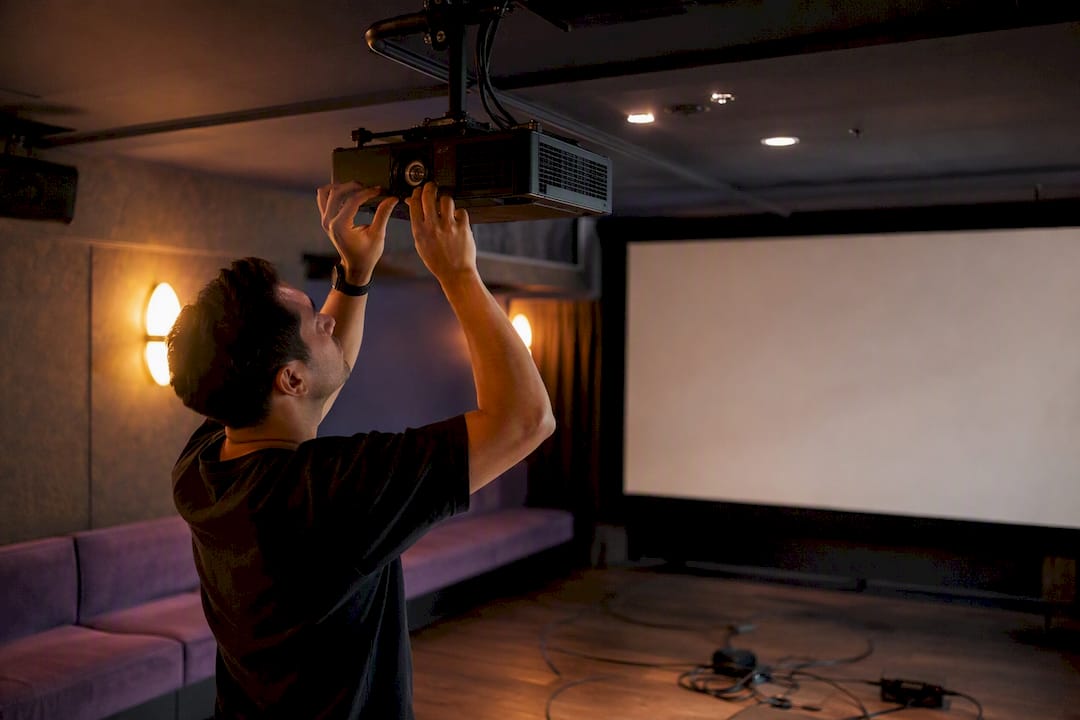
Discover the importance of event logistics for flawless events. Learn how strong logistics enhance experience, reduce risks, and prove ROI.
TL;DR:
• Event logistics are the operational foundation that ensure events run smoothly, on time, and within budget. Effective management improves attendee experience, reduces risks, and provides measurable ROI through data. Poor logistics lead to disorganization, increased costs, and damage to brand reputation.
Event logistics are the operational backbone that determines whether your event runs on time, on budget, and delivers the attendee experience you promised. Get them right and you protect your brand, control costs, and give stakeholders measurable proof of ROI. Get them wrong and even the most creative concept falls apart in front of a live audience.
Three outcomes follow from strong logistics management:
• Attendee experience consistency: Every touchpoint, from check-in to teardown, feels intentional and friction-free.
• Risk reduction: Contingency plans and rehearsals absorb the surprises that would otherwise derail the program.
• Measurable ROI: Operational data (check-in times, vendor scores, cost per attendee) gives you the numbers to justify the budget next time.
Your immediate next step: appoint a logistics owner before any vendor contract is signed, and start a runbook template that every team member can access and update in real time.
• Why event logistics matter for every event you run
• Core components every logistics plan must include
• What poor logistics actually costs you
• How to structure your logistics timeline before, during, and after
• Common logistics mistakes that derail events, and how to fix them
• How to measure logistics success and run your post-event debrief
• How to work with vendors and venues so nothing falls through the cracks
• How consolidated logistics reduced friction at a Porcci NYC event
• Legal and regulatory compliance beyond permits and insurance
• Why logistics separates professional planners from everyone else
• Porcci NYC handles the logistics so your event is ready when guests arrive
• Useful sources and templates for event logistics planning
• FAQ
Event logistics is the planning, coordination, and execution of every operational detail that brings an event to life. It is distinct from creative planning, marketing, or sponsorship strategy. Where those functions decide what an event looks and feels like, logistics decides how it actually happens.
What falls inside the logistics scope:
• Venue coordination and floor plan management
• Transportation, load-in, and load-out
• AV and production technology
• Staffing and crew scheduling
• Catering flow and service timing
• Security and crowd control
• Permits, licenses, and insurance verification
• Inventory, storage, and equipment tracking
• Setup, breakdown, and post-event strike
• Signage, wayfinding, and on-site operations
What typically sits outside logistics: Brand creative, speaker or talent booking, sponsorship activation design, and marketing campaigns are usually owned by planning, marketing, or external agencies. Logistics executes the conditions those functions require. Knowing that boundary helps you avoid scope creep and keeps accountability clear.

A reliable logistics plan covers eleven operational domains. Each one needs an owner, a deadline, and a fallback.
• Venue and floor plan: Confirm load capacity, power access, and ADA compliance before finalizing any layout. Brief the venue operations manager at least four weeks out.
• Load-in and load-out: Schedule dock windows and elevator access in writing. In urban venues, union rules and shared docks are the most common source of cascading delays.
• Transport and shuttles: Confirm vehicle counts, routes, and driver contacts 48 hours before the event. Have a backup carrier on standby.
• AV and production: Run a full technical rehearsal in the venue, not just at the supplier’s warehouse. Test every input, output, and backup.
• Catering flow: Map service timing against the run-of-show. A meal that arrives 20 minutes late pushes every session that follows.
• Staffing and crew scheduling: Publish a shift schedule with role-specific briefing notes at least one week out. Include escalation contacts for each role.
• Security and crowd control: Coordinate with venue security and, for larger events, local law enforcement. Define entry protocols and emergency assembly points.
• Permits and insurance: Collect certificates of insurance from every vendor. Verify permit conditions with the venue and local authorities at least six weeks out.
• Inventory and storage: Maintain a master equipment list with item-level accountability. Assign one person to receive deliveries and sign off on condition.
• Signage and wayfinding: Place directional signage at every decision point, not just at the entrance. Test the flow by walking it as a first-time attendee.
• Waste and sustainability: Designate recycling and compost stations, and brief catering staff on sorting protocols before service begins.
Pro Tip: Dock scheduling is the single most overlooked item in urban event logistics. Book your load-in window in writing with the venue operations manager, confirm it 72 hours before the event, and build a 30-minute buffer before your first AV test. Missing a dock window in a busy building can push your entire setup timeline by two hours.
Pro Tip: For AV, “last-mile” testing means testing the full signal chain in the actual room, with the actual crew, at the actual volume. A system that worked perfectly in rehearsal can fail when the room fills with people and ambient noise changes the acoustic profile. Budget 90 minutes for this test, not 20.

The business case for investing in logistics is concrete. Events can increase brand recognition by 76%, which means a poorly executed event does not just disappoint attendees. It actively works against the brand equity you spent money building.
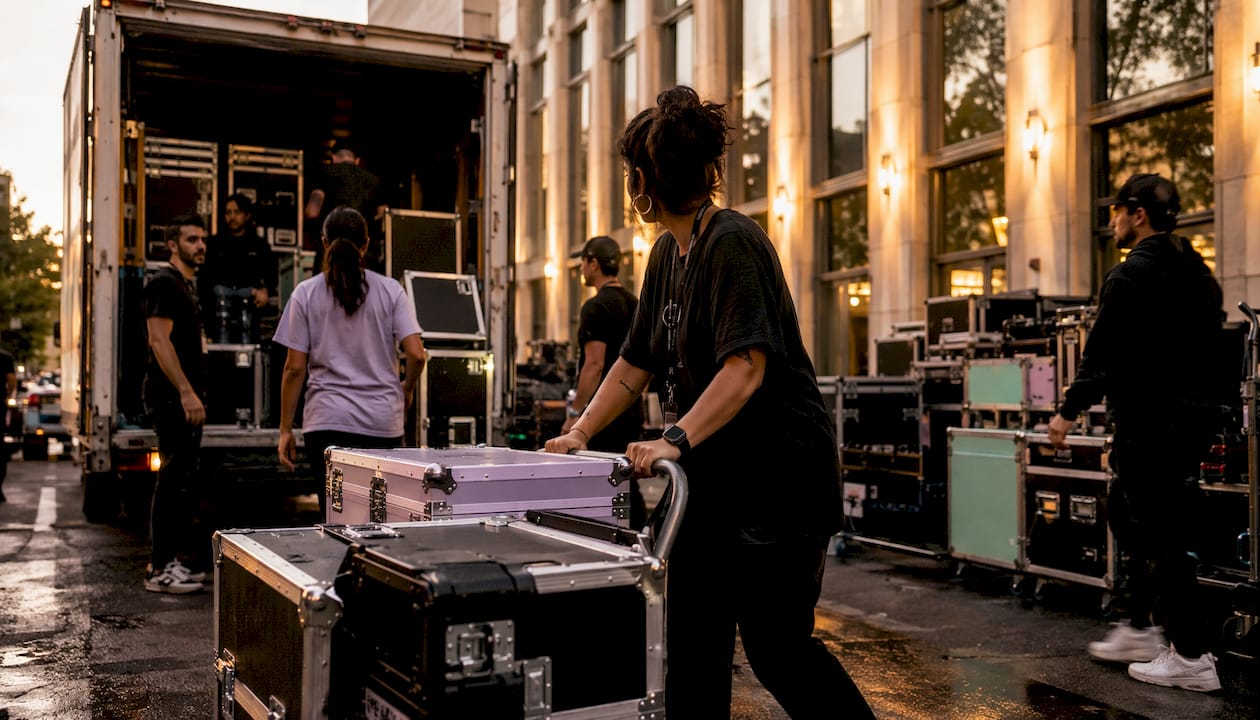
On the attendee side, the first 15 minutes set the tone for the entire experience. A slow check-in line, a room that is not ready, or a microphone that cuts out during opening remarks signals disorganization. Attendees form that impression before your first speaker says a word. Recovering from it takes effort you should not have to spend.
For sponsors and stakeholders, logistics failures translate directly into retention risk. A sponsor who watched their branded activation go unlit because no one confirmed power access is unlikely to renew. A corporate client whose executive keynote started 25 minutes late will remember that number when they are evaluating next year’s vendor.
Cost control is the third lever. Unplanned overtime for venue staff, emergency equipment rentals, and last-minute catering adjustments are all symptoms of logistics gaps. They are also entirely preventable with the right planning windows and vendor contracts in place.
1. Appoint a logistics lead and create a shared runbook with section owners.
2. For large events, logistics planning should begin well in advance of the event date. Multi-venue or large-scale events may need six months.
3. Secure permits and insurance certificates from all vendors.
4. Conduct a venue site visit and document dock access, power locations, and AV infrastructure.
5. Run a full technical rehearsal in the venue at least 24 hours before doors open.
6. Send pre-event briefing documents to every vendor and staff member.
1. Station a logistics lead at the venue entrance and at the dock during load-in.
2. Run check-in flow tests 90 minutes before doors open.
3. Activate incident protocols immediately when a problem surfaces. Do not wait to see if it resolves itself.
4. Supervise vendor performance against the run-of-show and document any deviations.
1. Conduct a structured strike briefing before teardown begins.
2. Reconcile inventory against the master equipment list before any vendor departs.
3. Collect staff and vendor performance notes within 24 hours while details are fresh.
4. Close the debrief loop within 30 days, combining quantitative metrics with qualitative feedback from staff, sponsors, and attendees.
| Planning window | Key milestones |
|---|---|
| 12+ weeks out | Appoint logistics lead; begin venue, permit, and vendor procurement |
| — | Confirm vendor contracts; collect insurance certificates |
| 4–6 weeks out | Finalize floor plan, staffing schedule, and run-of-show |
| 2–3 weeks out | Distribute runbook; confirm dock windows and delivery schedules |
| 1 week out | Send pre-event briefings; confirm all vendor contacts |
| 24–48 hours out | Full technical rehearsal; walk-through with venue ops team |
| Event day | Activate run-of-show; station leads at critical points |
| Within 24 hours post-event | Collect staff and vendor notes; begin inventory reconciliation |
| Within 30 days post-event | Complete debrief; update playbook with lessons learned |
Building your runbook: A solid runbook includes a run-of-show with minute-by-minute timing, a vendor contact sheet with escalation paths, an equipment manifest, emergency protocols, and a post-event checklist. Keep it in a shared cloud folder so every team member can access it from their phone on event day.
Most event failures trace back to a short list of preventable errors. Poor supplier communication, skipped rehearsals, and insufficient contingency planning cause the majority of day-of problems.
Mistake vs. fix pairs:
• Assuming vendors are aligned → Hold a pre-event coordination call with all vendors on the same line, not separate calls. Shared understanding prevents conflicting assumptions.
• No contingency for weather or tech failure → Write a one-page contingency plan for your top three risk scenarios before the event. Assign a decision-maker for each.
• Thin staffing at critical points → Map your floor plan and identify the three highest-traffic moments. Staff those points at 1.5x your baseline estimate.
• Late permit applications → Treat permit deadlines as hard constraints, not targets. Build a six-week buffer into your procurement calendar.
• No post-event reconciliation → Assign one person to own the post-event checklist before the event starts, not after.
Red flags that signal a logistics risk:
• Vendor contracts without defined delivery windows or setup responsibilities
• No written confirmation of dock access or elevator booking
• A run-of-show that has no buffer time between segments
• Staff who have not received a briefing document before arrival
• AV equipment that has not been tested in the actual venue
Pro Tip: Build 15–30 minutes of buffer time between every critical program segment and delivery window. A single late vendor can create a domino effect that pushes your entire program. Buffer time is the cheapest insurance you can buy.
Logistics performance is measurable. Tracking the right KPIs turns a one-time event into a repeatable playbook.
1. Average check-in time: Target under three minutes per attendee for a well-staffed registration desk.
2. Sessions starting on time: Track the percentage of program segments that begin within five minutes of the scheduled time.
3. Tech failure incidents: Log every AV or production failure, its cause, and resolution time.
4. Vendor performance rating: Score each vendor on delivery accuracy, communication, and setup quality using a 1–5 scale.
5. Logistics cost per attendee: Divide total logistics spend by confirmed attendance to benchmark against future events.
Use your event management platform to capture registration and check-in timestamps automatically. Collect session start times from your run-of-show log. Gather vendor scores from your on-site leads within 24 hours. Pull attendee satisfaction data from post-event surveys, focusing on questions about flow, comfort, and timing.
| KPI | Recommended target | Data source |
|---|---|---|
| Average check-in time | Under 3 minutes | Registration system timestamps |
| Sessions starting on time | 90% or more within 5 minutes | Run-of-show log |
| Tech failure incidents | Zero unresolved during program | On-site AV lead report |
| Vendor performance rating | a high rating on a 5-point scale | Staff scorecards |
| Logistics cost per attendee | Benchmark against prior events | Budget reconciliation |
Treat logistics as a cross-functional program with formal KPIs and owners, not a last-minute checklist. Close the debrief within 30 days, and turn findings into a written playbook update that your team uses for the next event.
Vendor misalignment is the most common source of day-of surprises. The fix is written agreements, clear communication protocols, and a single point of accountability on your side.
• Specific delivery windows with a penalty clause for late arrival
• Written setup and breakdown responsibilities, not verbal agreements
• Liability and insurance verification requirements before the event date
• Conditions for equipment substitution and who approves changes
• Contact names and escalation paths for day-of issues
• What is your confirmed delivery window and who is your on-site contact?
• Do you carry general liability insurance, and can you provide a certificate?
• What is your contingency plan if primary equipment fails?
• Have you worked in this venue before? Are you familiar with dock access and union rules?
• What do you need from us to set up on time?
1. Send a pre-event briefing document to every vendor at least one week out.
2. Hold a joint coordination call with all primary vendors 48–72 hours before the event.
3. Distribute a contact sheet with every vendor’s on-site lead name and cell number.
4. Assign one logistics staff member as the single point of contact for vendor questions on event day.
5. Document any deviation from the agreed plan in real time and escalate immediately if it affects the run-of-show.
For client and vendor relationship management, the principle is the same: one owner, one contact sheet, and a written record of every commitment.
A corporate client booked a 300-person evening event in Manhattan with a tight four-hour load-in window. The original plan used four separate vendors for AV, lighting, furniture, and staffing, each with their own delivery schedule and on-site contacts.
The problem surfaced during the pre-event coordination call: two vendors had booked the same dock window, the lighting crew had not confirmed elevator access, and no one had assigned a single point of contact for the venue’s operations manager. The risk of a cascading delay was clear.
The fix was consolidation. Porcci NYC coordinated delivery, setup, and staffed technical testing under a single runbook, with one on-site lead managing all vendor communication. Load-in completed 45 minutes ahead of schedule, the AV system passed its full last-mile test before the venue opened to guests, and the event started on time.
Three lessons from this outcome that you can apply immediately:
• Assign one logistics lead who owns all vendor communication. Multiple points of contact create gaps.
• Confirm dock windows and elevator access in writing, not by phone. Verbal confirmations do not hold when schedules conflict.
• Run a staffed technical test in the actual venue. Equipment that works in isolation often reveals integration issues only when the full system is live.
This consolidated model works best for events of 150 or more attendees in urban venues with shared loading infrastructure. For smaller, single-vendor events in flexible spaces, the coordination overhead may not be necessary. For flexible event spaces that simplify access and reduce dock conflicts, venue selection itself becomes a logistics decision.
Permits and insurance are the floor, not the ceiling, of compliance. Several additional regulatory areas carry real liability for event organizers in the United States.
Health and safety regulations are enforced at the federal, state, and local level. OSHA standards apply to workers on your event site, including vendor crews during setup and breakdown. If a crew member is injured during load-in, your organization may share liability if safe working conditions were not maintained. Brief all on-site staff and vendors on emergency exits, first aid locations, and incident reporting procedures before work begins.
Fire marshal requirements go beyond occupancy limits. Many jurisdictions require a fire safety inspection for events with open flame (candles, pyrotechnics), temporary structures, or large tents. Contact the local fire marshal’s office at least six weeks out to confirm what applies to your specific setup.
ADA compliance is a federal requirement under the Americans with Disabilities Act. Accessible routes, restrooms, and seating must be available and clearly marked. This applies to temporary event setups, not just permanent venues.
Food service licensing is required in most states when catering is provided by a third party. Verify that your catering vendor holds a current food handler’s permit and that the venue is licensed to host food service. Requirements vary by state and county.
Noise ordinances are enforced at the municipal level and can result in fines or early event shutdown. Confirm permitted decibel levels and cutoff times with the venue and local authorities before finalizing your AV plan.
For any specific compliance question, consult the relevant local authority or a qualified legal professional. Requirements vary significantly by jurisdiction, event type, and venue classification.
Effective event logistics require a named owner, a written runbook, and measurable KPIs to turn a one-time event into a repeatable, lower-risk program.
| Point | Details |
|---|---|
| Appoint a logistics owner early | Assign one person to own the runbook before any vendor contract is signed. |
| Start planning at the right window | Events of 200+ attendees need logistics planning to begin 10–12 weeks out. |
| Buffer time prevents domino failures | Build 15–30 minutes of padding between critical segments and delivery windows. |
| Measure what matters | Track check-in time, on-time session starts, and vendor scores after every event. |
| Porcci NYC consolidates the complexity | For NYC and NJ events, Porcci NYC handles delivery, setup, AV, staffing, and breakdown under one runbook. |
The planners who consistently run smooth events share one habit: they treat logistics as a program, not a task list. That means defined owners, written standards, and a debrief process that actually updates the playbook.
What most guides miss is that the debrief is where the real value compounds. A 30-day post-event memo that captures what broke, what held, and what the KPI data showed is worth more than any pre-event checklist. It is the mechanism that turns a single successful event into an organizational capability.
If you want to start building that capability today, pick one process to pilot. Dock scheduling is a good candidate if you work in urban venues. AV last-mile testing is another. Run it with full documentation, measure the outcome against your target, and write up what you learned. That one documented process is the first page of your playbook.
Pro Tip: Schedule your 30-day debrief on the calendar before the event happens. When it is already booked, it does not get pushed aside by the next event’s pre-production pressure.
Planning a mid-size to large event in New York City or New Jersey means managing a lot of moving parts at once: delivery windows, dock access, AV testing, staffing schedules, and vendor coordination. The gap between “equipment delivered” and “event ready” is where most day-of problems originate.
Porcci NYC closes that gap. We handle consolidated delivery, setup, and breakdown for AV and sound systems, DJ services, photo booths, lighting, and event staffing, all under one runbook and one on-site lead. You get a single point of contact instead of four separate vendor calls on event morning.
To get a quote, have your event date, estimated headcount, and venue access details ready (including dock hours and elevator availability). Request a quote here and we will confirm availability and put together a package that fits your event’s scope.
Porcci NYC is the publisher of this article and a provider of the services described above.
The following resources informed this article and offer deeper reading, templates, and regulatory guidance for event planners:
• Event Logistics Guide: Planning, Execution & Best Practices (Engineerica) — Covers the full logistics scope from registration to teardown, with practical tool recommendations.
• The Complete Guide on Event Logistics for Planners (Dryfta) — Includes planning windows, common failure points, and checklist frameworks.
• Event Logistics: The Complete Event Planning and Management Guide (Loopyah) — Strong on the programmatic approach, KPIs, and the 30-day debrief model.
• Event Management Experts on Logistics as a Cross-Functional Program (EVM Institute) — Source for buffer time recommendations and operational standards.
• Event Budget Planning Explained: Your 2026 Guide (Porcci NYC) — Covers how logistics costs fit into an overall event budget, with planning guidance for NYC and NJ events.
• Event RSVP Management: A Complete Guide for Organizers (Porcci NYC) — Practical guidance on check-in systems and registration data collection for KPI tracking.
Regulatory note: Health and safety requirements, fire marshal rules, noise ordinances, and food service licensing vary by state, county, and venue type. Always verify current requirements with your local authority having jurisdiction (AHJ), your venue’s operations team, and a qualified legal or safety professional before finalizing your event plan.
Event logistics covers every operational detail that makes an event run, including venue coordination, transportation, AV and production, staffing, catering, security, permits, inventory, and post-event teardown. It is distinct from creative planning and marketing.
For events of 200 or more attendees, logistics planning should begin at least 10–12 weeks before the event date. Multi-venue or complex events may need six months or more of lead time.
The most useful KPIs are average check-in time (target under three minutes), percentage of sessions starting on time (target 90% or more), tech failure incidents, vendor performance ratings, and logistics cost per attendee. Collect data from your registration system, run-of-show log, and staff scorecards.
Operational checklists, run-of-show documents, and pre-event supplier briefings dramatically reduce day-of errors. Hold a joint vendor coordination call 48–72 hours before the event, build buffer time between segments, and assign one logistics lead as the single point of contact on event day.
Yes. Porcci NYC provides consolidated delivery, setup, AV and sound rentals, DJ services, photo booths, and event staffing for events across New York City and New Jersey, all coordinated under one runbook. Request a quote with your event date, headcount, and venue details to check availability.
Discover the importance of event logistics for flawless events. Learn how strong logistics enhance experience, reduce risks, and prove ROI.
TL;DR:
• Event logistics are the operational foundation that ensure events run smoothly, on time, and within budget. Effective management improves attendee experience, reduces risks, and provides measurable ROI through data. Poor logistics lead to disorganization, increased costs, and damage to brand reputation.
Event logistics are the operational backbone that determines whether your event runs on time, on budget, and delivers the attendee experience you promised. Get them right and you protect your brand, control costs, and give stakeholders measurable proof of ROI. Get them wrong and even the most creative concept falls apart in front of a live audience.
Three outcomes follow from strong logistics management:
• Attendee experience consistency: Every touchpoint, from check-in to teardown, feels intentional and friction-free.
• Risk reduction: Contingency plans and rehearsals absorb the surprises that would otherwise derail the program.
• Measurable ROI: Operational data (check-in times, vendor scores, cost per attendee) gives you the numbers to justify the budget next time.
Your immediate next step: appoint a logistics owner before any vendor contract is signed, and start a runbook template that every team member can access and update in real time.
• Why event logistics matter for every event you run
• Core components every logistics plan must include
• What poor logistics actually costs you
• How to structure your logistics timeline before, during, and after
• Common logistics mistakes that derail events, and how to fix them
• How to measure logistics success and run your post-event debrief
• How to work with vendors and venues so nothing falls through the cracks
• How consolidated logistics reduced friction at a Porcci NYC event
• Legal and regulatory compliance beyond permits and insurance
• Why logistics separates professional planners from everyone else
• Porcci NYC handles the logistics so your event is ready when guests arrive
• Useful sources and templates for event logistics planning
• FAQ
Event logistics is the planning, coordination, and execution of every operational detail that brings an event to life. It is distinct from creative planning, marketing, or sponsorship strategy. Where those functions decide what an event looks and feels like, logistics decides how it actually happens.
What falls inside the logistics scope:
• Venue coordination and floor plan management
• Transportation, load-in, and load-out
• AV and production technology
• Staffing and crew scheduling
• Catering flow and service timing
• Security and crowd control
• Permits, licenses, and insurance verification
• Inventory, storage, and equipment tracking
• Setup, breakdown, and post-event strike
• Signage, wayfinding, and on-site operations
What typically sits outside logistics: Brand creative, speaker or talent booking, sponsorship activation design, and marketing campaigns are usually owned by planning, marketing, or external agencies. Logistics executes the conditions those functions require. Knowing that boundary helps you avoid scope creep and keeps accountability clear.
A reliable logistics plan covers eleven operational domains. Each one needs an owner, a deadline, and a fallback.
• Venue and floor plan: Confirm load capacity, power access, and ADA compliance before finalizing any layout. Brief the venue operations manager at least four weeks out.
• Load-in and load-out: Schedule dock windows and elevator access in writing. In urban venues, union rules and shared docks are the most common source of cascading delays.
• Transport and shuttles: Confirm vehicle counts, routes, and driver contacts 48 hours before the event. Have a backup carrier on standby.
• AV and production: Run a full technical rehearsal in the venue, not just at the supplier’s warehouse. Test every input, output, and backup.
• Catering flow: Map service timing against the run-of-show. A meal that arrives 20 minutes late pushes every session that follows.
• Staffing and crew scheduling: Publish a shift schedule with role-specific briefing notes at least one week out. Include escalation contacts for each role.
• Security and crowd control: Coordinate with venue security and, for larger events, local law enforcement. Define entry protocols and emergency assembly points.
• Permits and insurance: Collect certificates of insurance from every vendor. Verify permit conditions with the venue and local authorities at least six weeks out.
• Inventory and storage: Maintain a master equipment list with item-level accountability. Assign one person to receive deliveries and sign off on condition.
• Signage and wayfinding: Place directional signage at every decision point, not just at the entrance. Test the flow by walking it as a first-time attendee.
• Waste and sustainability: Designate recycling and compost stations, and brief catering staff on sorting protocols before service begins.
Pro Tip: Dock scheduling is the single most overlooked item in urban event logistics. Book your load-in window in writing with the venue operations manager, confirm it 72 hours before the event, and build a 30-minute buffer before your first AV test. Missing a dock window in a busy building can push your entire setup timeline by two hours.
Pro Tip: For AV, “last-mile” testing means testing the full signal chain in the actual room, with the actual crew, at the actual volume. A system that worked perfectly in rehearsal can fail when the room fills with people and ambient noise changes the acoustic profile. Budget 90 minutes for this test, not 20.
The business case for investing in logistics is concrete. Events can increase brand recognition by 76%, which means a poorly executed event does not just disappoint attendees. It actively works against the brand equity you spent money building.
On the attendee side, the first 15 minutes set the tone for the entire experience. A slow check-in line, a room that is not ready, or a microphone that cuts out during opening remarks signals disorganization. Attendees form that impression before your first speaker says a word. Recovering from it takes effort you should not have to spend.
For sponsors and stakeholders, logistics failures translate directly into retention risk. A sponsor who watched their branded activation go unlit because no one confirmed power access is unlikely to renew. A corporate client whose executive keynote started 25 minutes late will remember that number when they are evaluating next year’s vendor.
Cost control is the third lever. Unplanned overtime for venue staff, emergency equipment rentals, and last-minute catering adjustments are all symptoms of logistics gaps. They are also entirely preventable with the right planning windows and vendor contracts in place.
1. Appoint a logistics lead and create a shared runbook with section owners.
2. For large events, logistics planning should begin well in advance of the event date. Multi-venue or large-scale events may need six months.
3. Secure permits and insurance certificates from all vendors.
4. Conduct a venue site visit and document dock access, power locations, and AV infrastructure.
5. Run a full technical rehearsal in the venue at least 24 hours before doors open.
6. Send pre-event briefing documents to every vendor and staff member.
1. Station a logistics lead at the venue entrance and at the dock during load-in.
2. Run check-in flow tests 90 minutes before doors open.
3. Activate incident protocols immediately when a problem surfaces. Do not wait to see if it resolves itself.
4. Supervise vendor performance against the run-of-show and document any deviations.
1. Conduct a structured strike briefing before teardown begins.
2. Reconcile inventory against the master equipment list before any vendor departs.
3. Collect staff and vendor performance notes within 24 hours while details are fresh.
4. Close the debrief loop within 30 days, combining quantitative metrics with qualitative feedback from staff, sponsors, and attendees.
| Planning window | Key milestones |
|---|---|
| 12+ weeks out | Appoint logistics lead; begin venue, permit, and vendor procurement |
| — | Confirm vendor contracts; collect insurance certificates |
| 4–6 weeks out | Finalize floor plan, staffing schedule, and run-of-show |
| 2–3 weeks out | Distribute runbook; confirm dock windows and delivery schedules |
| 1 week out | Send pre-event briefings; confirm all vendor contacts |
| 24–48 hours out | Full technical rehearsal; walk-through with venue ops team |
| Event day | Activate run-of-show; station leads at critical points |
| Within 24 hours post-event | Collect staff and vendor notes; begin inventory reconciliation |
| Within 30 days post-event | Complete debrief; update playbook with lessons learned |
Building your runbook: A solid runbook includes a run-of-show with minute-by-minute timing, a vendor contact sheet with escalation paths, an equipment manifest, emergency protocols, and a post-event checklist. Keep it in a shared cloud folder so every team member can access it from their phone on event day.
Most event failures trace back to a short list of preventable errors. Poor supplier communication, skipped rehearsals, and insufficient contingency planning cause the majority of day-of problems.
Mistake vs. fix pairs:
• Assuming vendors are aligned → Hold a pre-event coordination call with all vendors on the same line, not separate calls. Shared understanding prevents conflicting assumptions.
• No contingency for weather or tech failure → Write a one-page contingency plan for your top three risk scenarios before the event. Assign a decision-maker for each.
• Thin staffing at critical points → Map your floor plan and identify the three highest-traffic moments. Staff those points at 1.5x your baseline estimate.
• Late permit applications → Treat permit deadlines as hard constraints, not targets. Build a six-week buffer into your procurement calendar.
• No post-event reconciliation → Assign one person to own the post-event checklist before the event starts, not after.
Red flags that signal a logistics risk:
• Vendor contracts without defined delivery windows or setup responsibilities
• No written confirmation of dock access or elevator booking
• A run-of-show that has no buffer time between segments
• Staff who have not received a briefing document before arrival
• AV equipment that has not been tested in the actual venue
Pro Tip: Build 15–30 minutes of buffer time between every critical program segment and delivery window. A single late vendor can create a domino effect that pushes your entire program. Buffer time is the cheapest insurance you can buy.
Logistics performance is measurable. Tracking the right KPIs turns a one-time event into a repeatable playbook.
1. Average check-in time: Target under three minutes per attendee for a well-staffed registration desk.
2. Sessions starting on time: Track the percentage of program segments that begin within five minutes of the scheduled time.
3. Tech failure incidents: Log every AV or production failure, its cause, and resolution time.
4. Vendor performance rating: Score each vendor on delivery accuracy, communication, and setup quality using a 1–5 scale.
5. Logistics cost per attendee: Divide total logistics spend by confirmed attendance to benchmark against future events.
Use your event management platform to capture registration and check-in timestamps automatically. Collect session start times from your run-of-show log. Gather vendor scores from your on-site leads within 24 hours. Pull attendee satisfaction data from post-event surveys, focusing on questions about flow, comfort, and timing.
| KPI | Recommended target | Data source |
|---|---|---|
| Average check-in time | Under 3 minutes | Registration system timestamps |
| Sessions starting on time | 90% or more within 5 minutes | Run-of-show log |
| Tech failure incidents | Zero unresolved during program | On-site AV lead report |
| Vendor performance rating | a high rating on a 5-point scale | Staff scorecards |
| Logistics cost per attendee | Benchmark against prior events | Budget reconciliation |
Treat logistics as a cross-functional program with formal KPIs and owners, not a last-minute checklist. Close the debrief within 30 days, and turn findings into a written playbook update that your team uses for the next event.
Vendor misalignment is the most common source of day-of surprises. The fix is written agreements, clear communication protocols, and a single point of accountability on your side.
• Specific delivery windows with a penalty clause for late arrival
• Written setup and breakdown responsibilities, not verbal agreements
• Liability and insurance verification requirements before the event date
• Conditions for equipment substitution and who approves changes
• Contact names and escalation paths for day-of issues
• What is your confirmed delivery window and who is your on-site contact?
• Do you carry general liability insurance, and can you provide a certificate?
• What is your contingency plan if primary equipment fails?
• Have you worked in this venue before? Are you familiar with dock access and union rules?
• What do you need from us to set up on time?
1. Send a pre-event briefing document to every vendor at least one week out.
2. Hold a joint coordination call with all primary vendors 48–72 hours before the event.
3. Distribute a contact sheet with every vendor’s on-site lead name and cell number.
4. Assign one logistics staff member as the single point of contact for vendor questions on event day.
5. Document any deviation from the agreed plan in real time and escalate immediately if it affects the run-of-show.
For client and vendor relationship management, the principle is the same: one owner, one contact sheet, and a written record of every commitment.
A corporate client booked a 300-person evening event in Manhattan with a tight four-hour load-in window. The original plan used four separate vendors for AV, lighting, furniture, and staffing, each with their own delivery schedule and on-site contacts.
The problem surfaced during the pre-event coordination call: two vendors had booked the same dock window, the lighting crew had not confirmed elevator access, and no one had assigned a single point of contact for the venue’s operations manager. The risk of a cascading delay was clear.
The fix was consolidation. Porcci NYC coordinated delivery, setup, and staffed technical testing under a single runbook, with one on-site lead managing all vendor communication. Load-in completed 45 minutes ahead of schedule, the AV system passed its full last-mile test before the venue opened to guests, and the event started on time.
Three lessons from this outcome that you can apply immediately:
• Assign one logistics lead who owns all vendor communication. Multiple points of contact create gaps.
• Confirm dock windows and elevator access in writing, not by phone. Verbal confirmations do not hold when schedules conflict.
• Run a staffed technical test in the actual venue. Equipment that works in isolation often reveals integration issues only when the full system is live.
This consolidated model works best for events of 150 or more attendees in urban venues with shared loading infrastructure. For smaller, single-vendor events in flexible spaces, the coordination overhead may not be necessary. For flexible event spaces that simplify access and reduce dock conflicts, venue selection itself becomes a logistics decision.
Permits and insurance are the floor, not the ceiling, of compliance. Several additional regulatory areas carry real liability for event organizers in the United States.
Health and safety regulations are enforced at the federal, state, and local level. OSHA standards apply to workers on your event site, including vendor crews during setup and breakdown. If a crew member is injured during load-in, your organization may share liability if safe working conditions were not maintained. Brief all on-site staff and vendors on emergency exits, first aid locations, and incident reporting procedures before work begins.
Fire marshal requirements go beyond occupancy limits. Many jurisdictions require a fire safety inspection for events with open flame (candles, pyrotechnics), temporary structures, or large tents. Contact the local fire marshal’s office at least six weeks out to confirm what applies to your specific setup.
ADA compliance is a federal requirement under the Americans with Disabilities Act. Accessible routes, restrooms, and seating must be available and clearly marked. This applies to temporary event setups, not just permanent venues.
Food service licensing is required in most states when catering is provided by a third party. Verify that your catering vendor holds a current food handler’s permit and that the venue is licensed to host food service. Requirements vary by state and county.
Noise ordinances are enforced at the municipal level and can result in fines or early event shutdown. Confirm permitted decibel levels and cutoff times with the venue and local authorities before finalizing your AV plan.
For any specific compliance question, consult the relevant local authority or a qualified legal professional. Requirements vary significantly by jurisdiction, event type, and venue classification.
Effective event logistics require a named owner, a written runbook, and measurable KPIs to turn a one-time event into a repeatable, lower-risk program.
| Point | Details |
|---|---|
| Appoint a logistics owner early | Assign one person to own the runbook before any vendor contract is signed. |
| Start planning at the right window | Events of 200+ attendees need logistics planning to begin 10–12 weeks out. |
| Buffer time prevents domino failures | Build 15–30 minutes of padding between critical segments and delivery windows. |
| Measure what matters | Track check-in time, on-time session starts, and vendor scores after every event. |
| Porcci NYC consolidates the complexity | For NYC and NJ events, Porcci NYC handles delivery, setup, AV, staffing, and breakdown under one runbook. |
The planners who consistently run smooth events share one habit: they treat logistics as a program, not a task list. That means defined owners, written standards, and a debrief process that actually updates the playbook.
What most guides miss is that the debrief is where the real value compounds. A 30-day post-event memo that captures what broke, what held, and what the KPI data showed is worth more than any pre-event checklist. It is the mechanism that turns a single successful event into an organizational capability.
If you want to start building that capability today, pick one process to pilot. Dock scheduling is a good candidate if you work in urban venues. AV last-mile testing is another. Run it with full documentation, measure the outcome against your target, and write up what you learned. That one documented process is the first page of your playbook.
Pro Tip: Schedule your 30-day debrief on the calendar before the event happens. When it is already booked, it does not get pushed aside by the next event’s pre-production pressure.
Planning a mid-size to large event in New York City or New Jersey means managing a lot of moving parts at once: delivery windows, dock access, AV testing, staffing schedules, and vendor coordination. The gap between “equipment delivered” and “event ready” is where most day-of problems originate.
Porcci NYC closes that gap. We handle consolidated delivery, setup, and breakdown for AV and sound systems, DJ services, photo booths, lighting, and event staffing, all under one runbook and one on-site lead. You get a single point of contact instead of four separate vendor calls on event morning.
To get a quote, have your event date, estimated headcount, and venue access details ready (including dock hours and elevator availability). Request a quote here and we will confirm availability and put together a package that fits your event’s scope.
Porcci NYC is the publisher of this article and a provider of the services described above.
The following resources informed this article and offer deeper reading, templates, and regulatory guidance for event planners:
• Event Logistics Guide: Planning, Execution & Best Practices (Engineerica) — Covers the full logistics scope from registration to teardown, with practical tool recommendations.
• The Complete Guide on Event Logistics for Planners (Dryfta) — Includes planning windows, common failure points, and checklist frameworks.
• Event Logistics: The Complete Event Planning and Management Guide (Loopyah) — Strong on the programmatic approach, KPIs, and the 30-day debrief model.
• Event Management Experts on Logistics as a Cross-Functional Program (EVM Institute) — Source for buffer time recommendations and operational standards.
• Event Budget Planning Explained: Your 2026 Guide (Porcci NYC) — Covers how logistics costs fit into an overall event budget, with planning guidance for NYC and NJ events.
• Event RSVP Management: A Complete Guide for Organizers (Porcci NYC) — Practical guidance on check-in systems and registration data collection for KPI tracking.
Regulatory note: Health and safety requirements, fire marshal rules, noise ordinances, and food service licensing vary by state, county, and venue type. Always verify current requirements with your local authority having jurisdiction (AHJ), your venue’s operations team, and a qualified legal or safety professional before finalizing your event plan.
Event logistics covers every operational detail that makes an event run, including venue coordination, transportation, AV and production, staffing, catering, security, permits, inventory, and post-event teardown. It is distinct from creative planning and marketing.
For events of 200 or more attendees, logistics planning should begin at least 10–12 weeks before the event date. Multi-venue or complex events may need six months or more of lead time.
The most useful KPIs are average check-in time (target under three minutes), percentage of sessions starting on time (target 90% or more), tech failure incidents, vendor performance ratings, and logistics cost per attendee. Collect data from your registration system, run-of-show log, and staff scorecards.
Operational checklists, run-of-show documents, and pre-event supplier briefings dramatically reduce day-of errors. Hold a joint vendor coordination call 48–72 hours before the event, build buffer time between segments, and assign one logistics lead as the single point of contact on event day.
Yes. Porcci NYC provides consolidated delivery, setup, AV and sound rentals, DJ services, photo booths, and event staffing for events across New York City and New Jersey, all coordinated under one runbook. Request a quote with your event date, headcount, and venue details to check availability.