Discover vital insights on large corporate event equipment for 2026. Plan your successful event with expert tips on budgeting and coordination.
TL;DR:
• Large corporate event equipment includes professional audio, video, lighting, staging, and streaming gear for large gatherings. Treating AV as a production project with early planning, proper crew, and thorough checklists ensures event success. Venue-provided AV often falls short for high-stakes conferences, necessitating dedicated third-party support.
Large corporate event equipment is defined as the specialized audio, video, lighting, staging, and production gear required to deliver professional presentations and experiences at major gatherings. For events exceeding 200–300 attendees, event complexity grows exponentially, requiring coordinated technical direction and advanced coverage systems. Industry standards call for 4–8 weeks lead time for single-day events and 10–14 weeks for major conferences. Full production budgets typically start at $40,000 and can exceed $120,000. Getting this right means treating AV as a production project, not just a rental transaction.
Every large-scale production depends on five core equipment categories. Understanding each one helps you budget accurately and avoid gaps in your technical plan.
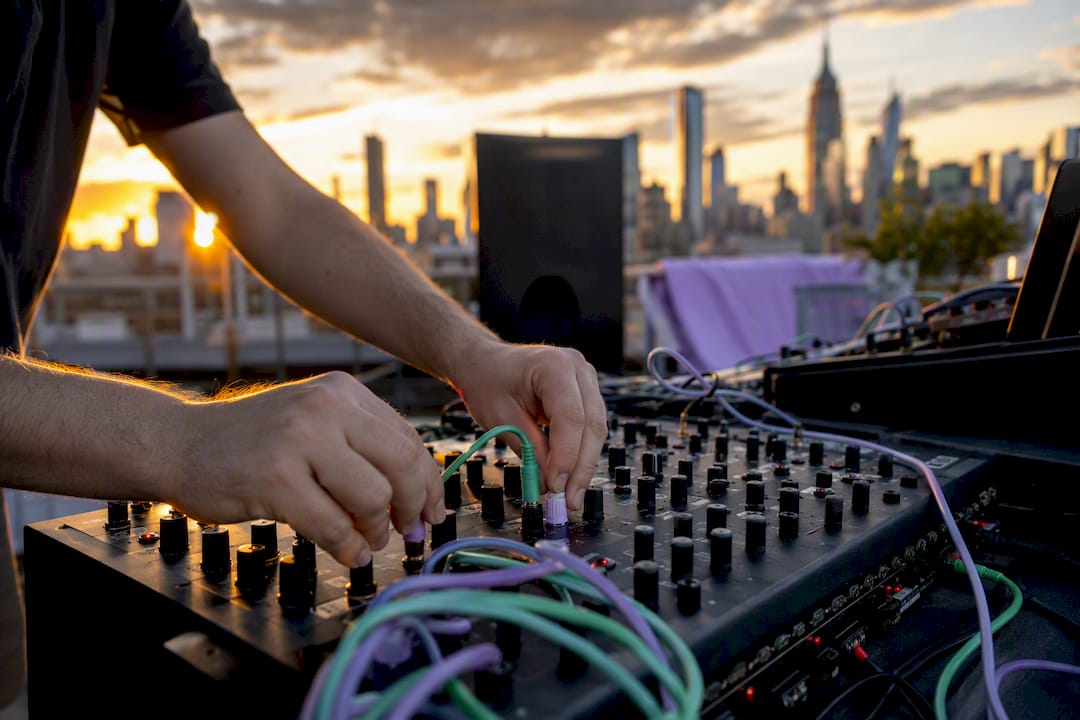
• Audio systems: Line array speaker systems deliver even sound coverage across large rooms. Wireless microphone systems, mixing consoles, and stage monitors round out a complete audio setup.
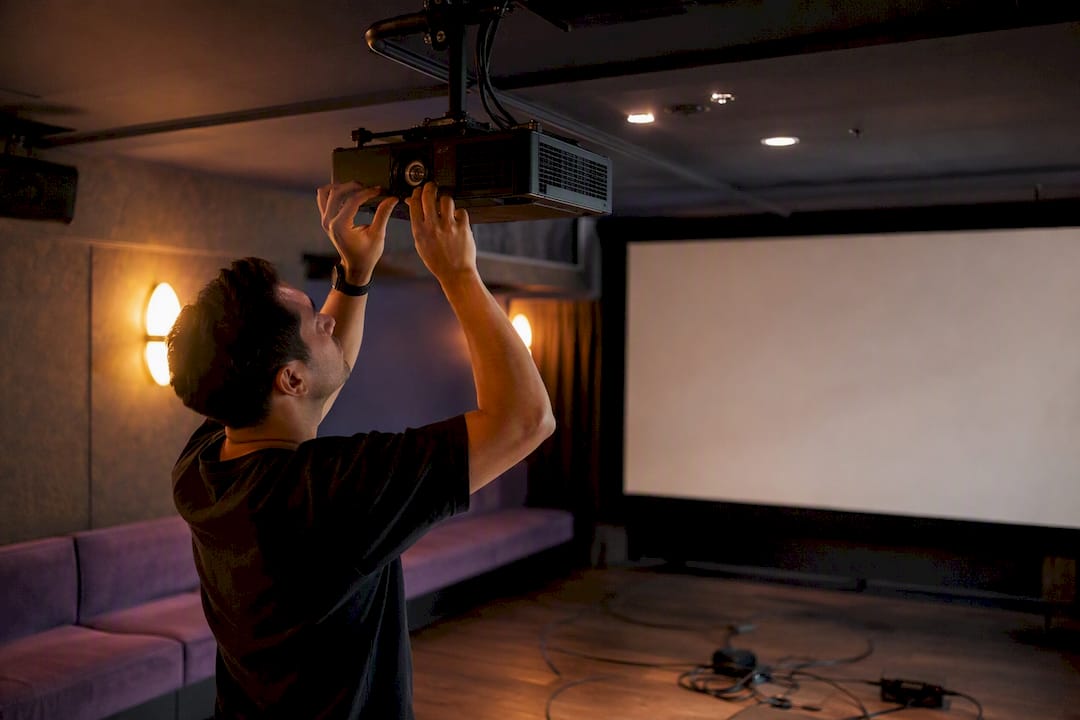
• Video and display: LED walls, projectors, and IMAG (image magnification) cameras bring content and presenters to life for audiences seated far from the stage.
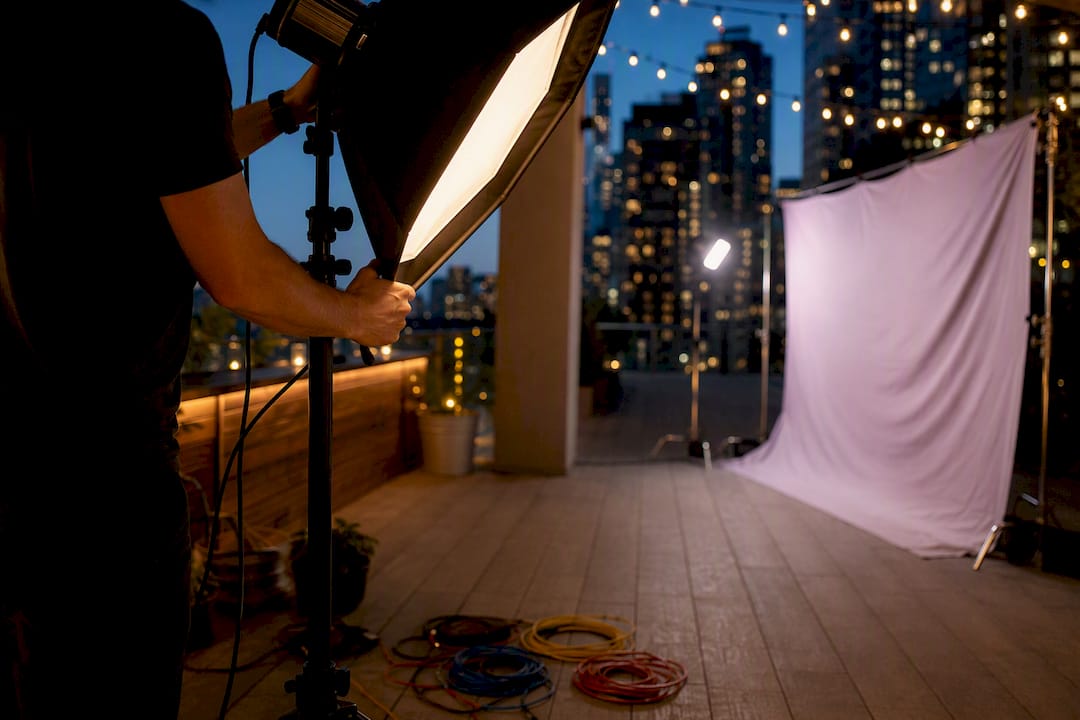
• Lighting: Stage wash lights, spotlights, moving heads, and DMX control systems shape the atmosphere and reinforce your brand identity.
• Staging and rigging: Modular stage platforms, trusses, and rigging hardware support speakers, screens, and lighting above the audience safely.
• Control and streaming gear: Technical director consoles, video switchers, and streaming encoders manage the live show and extend reach to remote audiences.
Pro Tip: Build your equipment list by category before you contact any vendor. A category-first approach prevents you from overlooking critical items like confidence monitors or backup power supplies.
Line array audio systems are the standard for large audiences because they project sound evenly from front to back without the volume drop you get from point-source speakers. A properly configured line array eliminates dead zones and hot spots, which is critical when your CEO is presenting to 800 people.
LED walls outperform projectors in bright ballrooms and daylit conference halls. A typical LED wall for a corporate event runs $2,500–$4,000 to rent, while professional lighting design adds $800–$3,000 to your budget. Projectors cost less upfront but require controlled ambient light and longer throw distances, making them better suited to smaller breakout rooms.
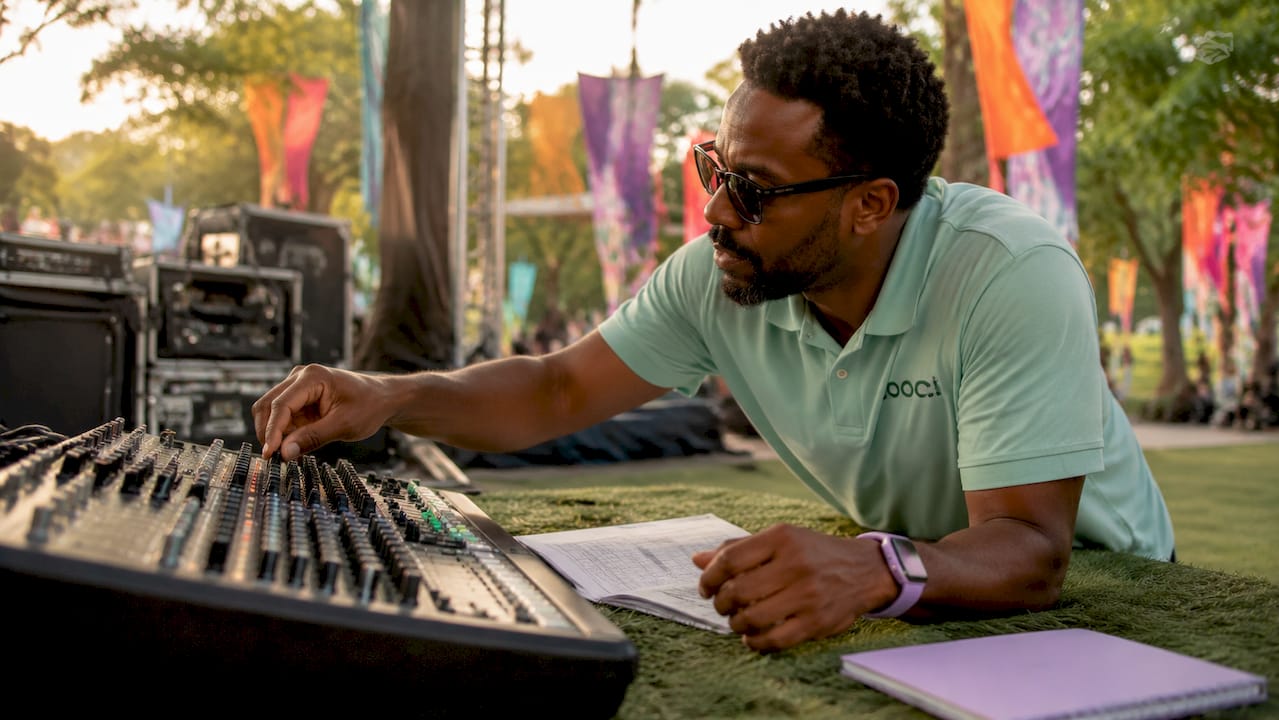
Wireless microphone setups require redundancy. Backup equipment at a 1:1 ratio means a spare mic on standby for every active channel. A single dropped signal during a keynote address is the kind of failure that defines an event for the wrong reasons.
Pro Tip: For hybrid events, dedicated wired internet with at least 10 Mbps upload is the minimum for reliable streaming. Venue Wi-Fi will fail under production load. Always request a dedicated circuit from the venue’s IT team.
The AV equipment checklist for 2026 covers the full technical scope, from signal flow to power distribution, and is worth reviewing before your pre-production meeting.
Stage configuration drives every other decision in your floor plan. A 24-foot-wide by 16-foot-deep stage works for most general session formats, but panel discussions and award ceremonies often need wider configurations to accommodate multiple presenters simultaneously.
Site surveys must document physical rigging points, load ratings, and power drop locations. Relying on a venue’s published capacity specs without a physical inspection leads to costly last-minute changes. A structural engineer’s sign-off is required for any rigging load above the venue’s certified limit.
Key staging and logistics items to confirm before load-in:
• Stage height and sightline clearance for the back row
• Rigging point load ratings for LED walls and truss systems
• Power distribution panels and dedicated circuit availability
• Backstage setup: podiums, confidence monitors, and teleprompters
• Cable runs, floor tape, and crowd barrier placement
Power distribution planning is one of the most overlooked elements in corporate event logistics. Large audio and lighting rigs draw significant amperage. Always request the venue’s electrical panel specs and cross-reference them against your production rider before signing the contract.
Full-scale corporate event production costs range from $40,000 to over $120,000 depending on audience size, event duration, and technical complexity. That range reflects real differences in crew size, equipment quality, and production scope.
| Event scale | Estimated AV budget | Minimum crew size |
|---|---|---|
| 100–200 attendees | $10,000–$25,000 | 2–3 technicians |
| 200–500 attendees | $25,000–$60,000 | 4–6 technicians |
| 500+ attendees | $60,000–$120,000+ | 6–10 professionals |
Technical teams for large events require at minimum a Technical Director, an audio engineer, and a video operator. Hybrid events with live streaming add a streaming engineer, a graphics operator, and additional camera operators, bringing the total to 6–10 professionals. Each role is specialized. Assigning one person to cover audio and video simultaneously is a common mistake that produces mediocre results in both.
Venue-contracted AV solutions are often insufficient for high-stakes presentations. In-house systems typically have limited mixing capacity and technicians who manage multiple events simultaneously. For a product launch or executive conference, that level of attention is not enough. Third-party production providers offer significantly greater capability and reliability for complex productions.
For a detailed breakdown of how to allocate your production budget, the event budget planning guide for 2026 walks through line items and contingency planning in practical terms.
The most effective approach to large corporate event equipment combines the right gear categories, a qualified technical crew, and a pre-production plan that starts at least 4–8 weeks before event day.
| Point | Details |
|---|---|
| Start planning early | Book equipment and crew 4–8 weeks out for single-day events, 10–14 weeks for major conferences. |
| Budget for full production | Expect $40,000–$120,000+ for large-scale events; LED walls and lighting are major line items. |
| Hire a Technical Director | Events over 200 attendees need a dedicated TD to coordinate audio, video, and staging. |
| Build in redundancy | Keep spare wireless mics, playback devices, and UPS units on hand at a 1:1 backup ratio. |
| Conduct a site survey | Verify rigging loads, power drops, and acoustics in person before finalizing your technical plan. |
The single biggest mistake corporate event planners make is treating equipment rental as a commodity purchase. You pick items from a list, they show up on a truck, and someone plugs them in. That approach works for folding tables. It does not work for a 600-person general session with live streaming and simultaneous breakout rooms.
Viewing corporate AV as a production project rather than just a rental eliminates the vast majority of technical failures. That shift in thinking changes how you scope the project, who you hire, and how far in advance you start. The quality of your Technical Director matters more than the brand of your speakers or the resolution of your LED wall. A skilled TD with average gear will outperform an inexperienced crew with premium equipment every time.
We also see planners underestimate the value of a thorough pre-production checklist. An 87-point pre-production checklist covering sightlines, cabling, and power specs can prevent 90% of common AV failures. That is not a theoretical claim. It reflects what happens when you document everything versus when you assume the venue has it handled.
For planners who want to understand the technical vocabulary before their first production meeting, the corporate event AV glossary is a practical starting point. Knowing the difference between a line array and a point-source system, or between IMAG and a confidence monitor, changes the quality of every conversation you have with a vendor. You can also explore entertainment format considerations to understand how equipment choices connect to the overall event experience.
— PORCCI
Porcci NYC provides event equipment rentals and production support for corporate clients across New York City and New Jersey. Our inventory covers sound systems, lighting, photo booths, DJ services, and entertainment packages built for events of all sizes. Every booking includes delivery, setup, and breakdown so your team stays focused on the program, not the logistics. We work with corporate planners from initial inquiry through load-out, with experienced onsite staff available for events that need hands-on technical support. Whether you need a single piece of gear or a full production package, start your booking here and we will build a solution that fits your event’s scope and budget.
Large corporate event equipment refers to professional audio, video, lighting, staging, and streaming gear used at major gatherings. It is designed to handle audience sizes, technical complexity, and production quality that standard venue systems cannot match.
Book equipment and crew 4–8 weeks before a single-day event and 10–14 weeks before a major conference. Shorter lead times limit your vendor options and increase the risk of unavailability for critical gear.
Events with more than 200–300 attendees require a dedicated Technical Director to coordinate audio, video, and staging in real time. Without a TD, technical decisions fall to people who are managing other responsibilities simultaneously.
Venue-provided AV is generally insufficient for high-stakes corporate events. In-house systems have limited mixing capacity and technicians who split attention across multiple events, which reduces reliability and responsiveness during your program.
Reliable corporate event streaming requires a dedicated wired internet connection with at least 10 Mbps upload speed. Venue Wi-Fi is not a substitute and will fail under the load of a live production stream.
Discover vital insights on large corporate event equipment for 2026. Plan your successful event with expert tips on budgeting and coordination.
TL;DR:
• Large corporate event equipment includes professional audio, video, lighting, staging, and streaming gear for large gatherings. Treating AV as a production project with early planning, proper crew, and thorough checklists ensures event success. Venue-provided AV often falls short for high-stakes conferences, necessitating dedicated third-party support.
Large corporate event equipment is defined as the specialized audio, video, lighting, staging, and production gear required to deliver professional presentations and experiences at major gatherings. For events exceeding 200–300 attendees, event complexity grows exponentially, requiring coordinated technical direction and advanced coverage systems. Industry standards call for 4–8 weeks lead time for single-day events and 10–14 weeks for major conferences. Full production budgets typically start at $40,000 and can exceed $120,000. Getting this right means treating AV as a production project, not just a rental transaction.
Every large-scale production depends on five core equipment categories. Understanding each one helps you budget accurately and avoid gaps in your technical plan.
• Audio systems: Line array speaker systems deliver even sound coverage across large rooms. Wireless microphone systems, mixing consoles, and stage monitors round out a complete audio setup.
• Video and display: LED walls, projectors, and IMAG (image magnification) cameras bring content and presenters to life for audiences seated far from the stage.
• Lighting: Stage wash lights, spotlights, moving heads, and DMX control systems shape the atmosphere and reinforce your brand identity.
• Staging and rigging: Modular stage platforms, trusses, and rigging hardware support speakers, screens, and lighting above the audience safely.
• Control and streaming gear: Technical director consoles, video switchers, and streaming encoders manage the live show and extend reach to remote audiences.
Pro Tip: Build your equipment list by category before you contact any vendor. A category-first approach prevents you from overlooking critical items like confidence monitors or backup power supplies.
Line array audio systems are the standard for large audiences because they project sound evenly from front to back without the volume drop you get from point-source speakers. A properly configured line array eliminates dead zones and hot spots, which is critical when your CEO is presenting to 800 people.
LED walls outperform projectors in bright ballrooms and daylit conference halls. A typical LED wall for a corporate event runs $2,500–$4,000 to rent, while professional lighting design adds $800–$3,000 to your budget. Projectors cost less upfront but require controlled ambient light and longer throw distances, making them better suited to smaller breakout rooms.
Wireless microphone setups require redundancy. Backup equipment at a 1:1 ratio means a spare mic on standby for every active channel. A single dropped signal during a keynote address is the kind of failure that defines an event for the wrong reasons.
Pro Tip: For hybrid events, dedicated wired internet with at least 10 Mbps upload is the minimum for reliable streaming. Venue Wi-Fi will fail under production load. Always request a dedicated circuit from the venue’s IT team.
The AV equipment checklist for 2026 covers the full technical scope, from signal flow to power distribution, and is worth reviewing before your pre-production meeting.
Stage configuration drives every other decision in your floor plan. A 24-foot-wide by 16-foot-deep stage works for most general session formats, but panel discussions and award ceremonies often need wider configurations to accommodate multiple presenters simultaneously.
Site surveys must document physical rigging points, load ratings, and power drop locations. Relying on a venue’s published capacity specs without a physical inspection leads to costly last-minute changes. A structural engineer’s sign-off is required for any rigging load above the venue’s certified limit.
Key staging and logistics items to confirm before load-in:
• Stage height and sightline clearance for the back row
• Rigging point load ratings for LED walls and truss systems
• Power distribution panels and dedicated circuit availability
• Backstage setup: podiums, confidence monitors, and teleprompters
• Cable runs, floor tape, and crowd barrier placement
Power distribution planning is one of the most overlooked elements in corporate event logistics. Large audio and lighting rigs draw significant amperage. Always request the venue’s electrical panel specs and cross-reference them against your production rider before signing the contract.
Full-scale corporate event production costs range from $40,000 to over $120,000 depending on audience size, event duration, and technical complexity. That range reflects real differences in crew size, equipment quality, and production scope.
| Event scale | Estimated AV budget | Minimum crew size |
|---|---|---|
| 100–200 attendees | $10,000–$25,000 | 2–3 technicians |
| 200–500 attendees | $25,000–$60,000 | 4–6 technicians |
| 500+ attendees | $60,000–$120,000+ | 6–10 professionals |
Technical teams for large events require at minimum a Technical Director, an audio engineer, and a video operator. Hybrid events with live streaming add a streaming engineer, a graphics operator, and additional camera operators, bringing the total to 6–10 professionals. Each role is specialized. Assigning one person to cover audio and video simultaneously is a common mistake that produces mediocre results in both.
Venue-contracted AV solutions are often insufficient for high-stakes presentations. In-house systems typically have limited mixing capacity and technicians who manage multiple events simultaneously. For a product launch or executive conference, that level of attention is not enough. Third-party production providers offer significantly greater capability and reliability for complex productions.
For a detailed breakdown of how to allocate your production budget, the event budget planning guide for 2026 walks through line items and contingency planning in practical terms.
The most effective approach to large corporate event equipment combines the right gear categories, a qualified technical crew, and a pre-production plan that starts at least 4–8 weeks before event day.
| Point | Details |
|---|---|
| Start planning early | Book equipment and crew 4–8 weeks out for single-day events, 10–14 weeks for major conferences. |
| Budget for full production | Expect $40,000–$120,000+ for large-scale events; LED walls and lighting are major line items. |
| Hire a Technical Director | Events over 200 attendees need a dedicated TD to coordinate audio, video, and staging. |
| Build in redundancy | Keep spare wireless mics, playback devices, and UPS units on hand at a 1:1 backup ratio. |
| Conduct a site survey | Verify rigging loads, power drops, and acoustics in person before finalizing your technical plan. |
The single biggest mistake corporate event planners make is treating equipment rental as a commodity purchase. You pick items from a list, they show up on a truck, and someone plugs them in. That approach works for folding tables. It does not work for a 600-person general session with live streaming and simultaneous breakout rooms.
Viewing corporate AV as a production project rather than just a rental eliminates the vast majority of technical failures. That shift in thinking changes how you scope the project, who you hire, and how far in advance you start. The quality of your Technical Director matters more than the brand of your speakers or the resolution of your LED wall. A skilled TD with average gear will outperform an inexperienced crew with premium equipment every time.
We also see planners underestimate the value of a thorough pre-production checklist. An 87-point pre-production checklist covering sightlines, cabling, and power specs can prevent 90% of common AV failures. That is not a theoretical claim. It reflects what happens when you document everything versus when you assume the venue has it handled.
For planners who want to understand the technical vocabulary before their first production meeting, the corporate event AV glossary is a practical starting point. Knowing the difference between a line array and a point-source system, or between IMAG and a confidence monitor, changes the quality of every conversation you have with a vendor. You can also explore entertainment format considerations to understand how equipment choices connect to the overall event experience.
— PORCCI
Porcci NYC provides event equipment rentals and production support for corporate clients across New York City and New Jersey. Our inventory covers sound systems, lighting, photo booths, DJ services, and entertainment packages built for events of all sizes. Every booking includes delivery, setup, and breakdown so your team stays focused on the program, not the logistics. We work with corporate planners from initial inquiry through load-out, with experienced onsite staff available for events that need hands-on technical support. Whether you need a single piece of gear or a full production package, start your booking here and we will build a solution that fits your event’s scope and budget.
Large corporate event equipment refers to professional audio, video, lighting, staging, and streaming gear used at major gatherings. It is designed to handle audience sizes, technical complexity, and production quality that standard venue systems cannot match.
Book equipment and crew 4–8 weeks before a single-day event and 10–14 weeks before a major conference. Shorter lead times limit your vendor options and increase the risk of unavailability for critical gear.
Events with more than 200–300 attendees require a dedicated Technical Director to coordinate audio, video, and staging in real time. Without a TD, technical decisions fall to people who are managing other responsibilities simultaneously.
Venue-provided AV is generally insufficient for high-stakes corporate events. In-house systems have limited mixing capacity and technicians who split attention across multiple events, which reduces reliability and responsiveness during your program.
Reliable corporate event streaming requires a dedicated wired internet connection with at least 10 Mbps upload speed. Venue Wi-Fi is not a substitute and will fail under the load of a live production stream.