Discover the essential role of dance floors at events. Learn how they boost guest participation and enhance your event’s atmosphere.
TL;DR:
• A dance floor acts as the central social and physical space at events, encouraging guest participation and shaping the atmosphere. Its design, size, and quality significantly influence safety, engagement, and overall event success, with professional installation being essential. Matching the floor style to event type and considering safety features ensures an inviting, injury-free environment that enhances photos and guest experience.
A dance floor is the physical and social centerpiece of any event, defining where energy concentrates, where guests connect, and where the atmosphere either ignites or stalls. The role of dance floors at events extends well beyond providing a surface to move on. A properly designed and installed floor signals to every guest that participation is welcome, reduces injury risk, and gives your DJ or band a natural focal point to work from. The global electronic music sector is valued at $12.9 billion, which reflects just how central the dance floor experience is to live event culture. Whether you are planning a wedding in Manhattan, a corporate dinner in New Jersey, or a private party in Brooklyn, your flooring decision shapes everything that follows.
A dedicated dance floor functions as a non-verbal invitation. When guests see a clearly defined space with good lighting and a quality surface, they understand that dancing is not just permitted but expected. Professionally installed dance floors are the most effective tool for increasing guest participation because they remove the ambiguity that keeps people seated.
The psychological mechanism here is worth understanding. Guests who feel uncertain about where to stand, whether the floor is safe, or whether others will join them tend to stay at their tables. A well-placed, well-lit floor resolves all three concerns at once. Research confirms that safety as a system lowers self-protective vigilance, meaning guests stop monitoring their own behavior and start enjoying themselves.
This effect shows up across event types:
• Weddings: A parquet wood floor in the center of the reception room draws guests naturally after dinner and signals the transition from formal dining to celebration.
• Corporate events: A defined floor area separates the networking zone from the entertainment zone, making both feel more intentional.
• Private parties: Even a modest portable floor in a backyard creates a focal point that concentrates energy instead of letting it dissipate across the space.
Pro Tip: Place your dance floor within direct sightlines of the bar and seating areas. Guests are far more likely to step onto a floor they can see from where they are already comfortable.
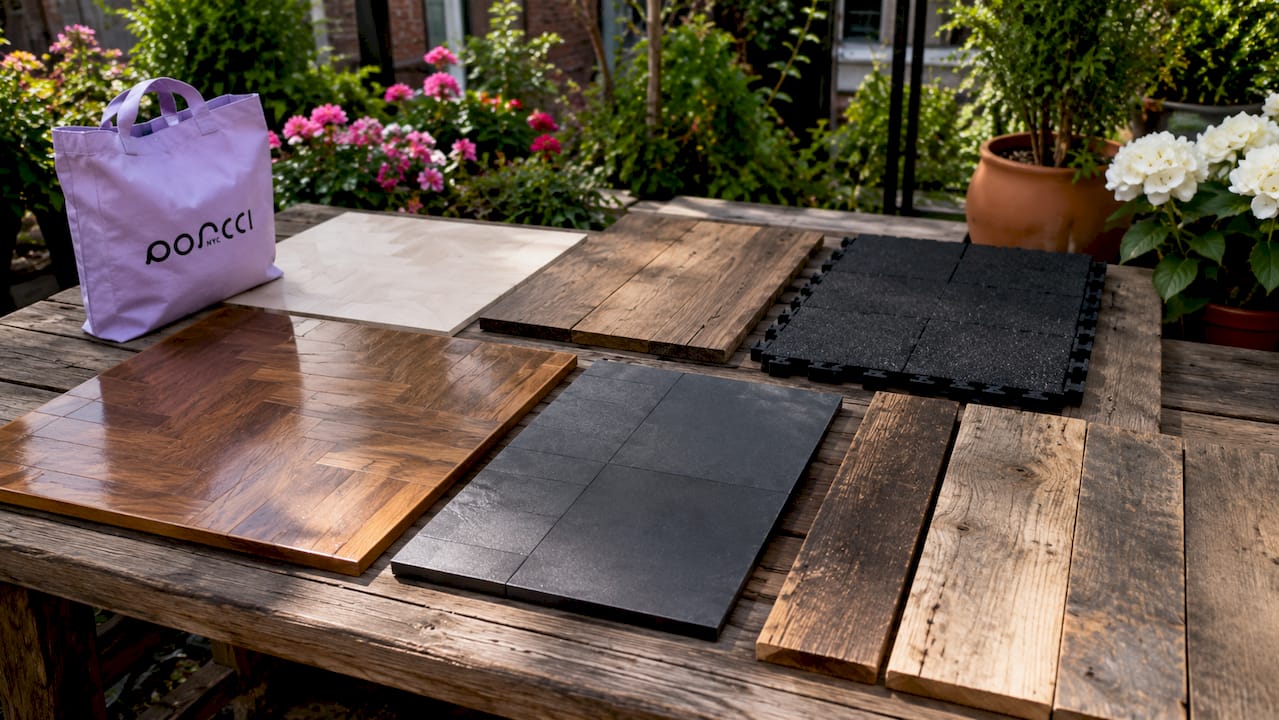
Dance floor material affects acoustics, safety, and how well the floor integrates with your event’s visual theme. Choosing the wrong surface can undermine both the guest experience and your overall decor. Here is a comparison of the four most common options:
| Floor type | Best for | Safety profile | Aesthetic fit |
|---|---|---|---|
| Parquet wood | Weddings, galas, formal dinners | High traction, moderate shock absorption | Classic, elegant |
| LED panels | Corporate parties, product launches, clubs | Moderate traction, low shock absorption | Modern, high-energy |
| Sprung floors | Dance performances, high-activity events | Highest shock absorption, excellent for joints | Neutral, professional |
| Vinyl/portable | Outdoor events, temporary setups | Good traction, weather-resistant | Flexible, customizable |
Sprung floors deserve special attention for events with extended dancing. The sub-floor construction absorbs impact and returns energy to the dancer, which reduces fatigue significantly over a three to four hour reception. Shock absorption and traction are the two biomechanical factors that allow guests to dance without fatigue or injury concerns, according to experts in dance surface science.
Eco-friendly options are also gaining traction in the event industry. Reclaimed wood panels and recycled rubber sub-floors are now available from several rental providers and offer a lower environmental footprint without sacrificing performance.
Pro Tip: For outdoor events, always request a vinyl or modular floor with a sealed edge trim. Exposed edges on grass or uneven ground are the most common source of trip hazards at outdoor receptions.
Getting the installation right is not optional. A floor that is slightly uneven, has exposed seams, or lacks proper anchoring creates real liability for you as a planner. Here is the sequence that professional installers follow, and why each step matters:
1. Sub-floor assessment. The structural sub-floor must be level and slip-resistant before any surface panel goes down. Without this foundation, guests instinctively limit their movement regardless of how good the music is.
2. Panel locking and edge finishing. Interlocking panels must be secured so they cannot shift under load. Edge ramps or trim pieces eliminate the step-up that causes ankle rolls.
3. Size calculation. The standard industry formula allocates approximately 4.5 square feet per dancing guest. For a 100-person event where roughly 40% will dance at peak time, that means a minimum 180-square-foot floor.
4. DJ or band placement. A professional dance floor gives your DJ a clear focal point and a natural sightline to the crowd, which directly improves set pacing and crowd reading.
5. Final safety walkthrough. Before guests arrive, walk the entire perimeter and surface in dress shoes. If you feel any flex, catch, or unevenness, address it before the event starts.
Undersizing is the most common mistake we see. A floor that fills up too quickly creates a crowded, uncomfortable experience and pushes guests back to their seats. Oversizing is a lesser problem but still worth avoiding since a half-empty floor can feel awkward and reduce the social momentum you are trying to build.
Safety is not a secondary concern. Guests on professional dance surfaces are 30% less likely to experience injuries compared to those dancing on uneven or unsuitable surfaces like grass, concrete, or carpet. That single statistic should inform every flooring decision you make.
A safety-focused evaluation of any dance floor option should cover:
• Traction: The surface must grip dress shoes, heels, and sneakers equally. Polished hardwood without a matte finish coat is a common hazard.
• Levelness: Any height variation greater than a quarter inch between panels is a trip risk.
• Edge treatment: All perimeter edges need ramps or beveled trim to prevent catches.
• Load capacity: Confirm the floor is rated for the expected guest density, particularly for elevated or portable installations.
“Organizers who prioritize safe, well-managed dance floors facilitate deeper social bonds and merriment beyond audio-visual effects.” — Wellbeing Magazine
When guests sense a well-run dance floor, they respond with freer, more expressive interactions. Safety clarity removes the cognitive overhead of self-protection and replaces it with confidence and energy.
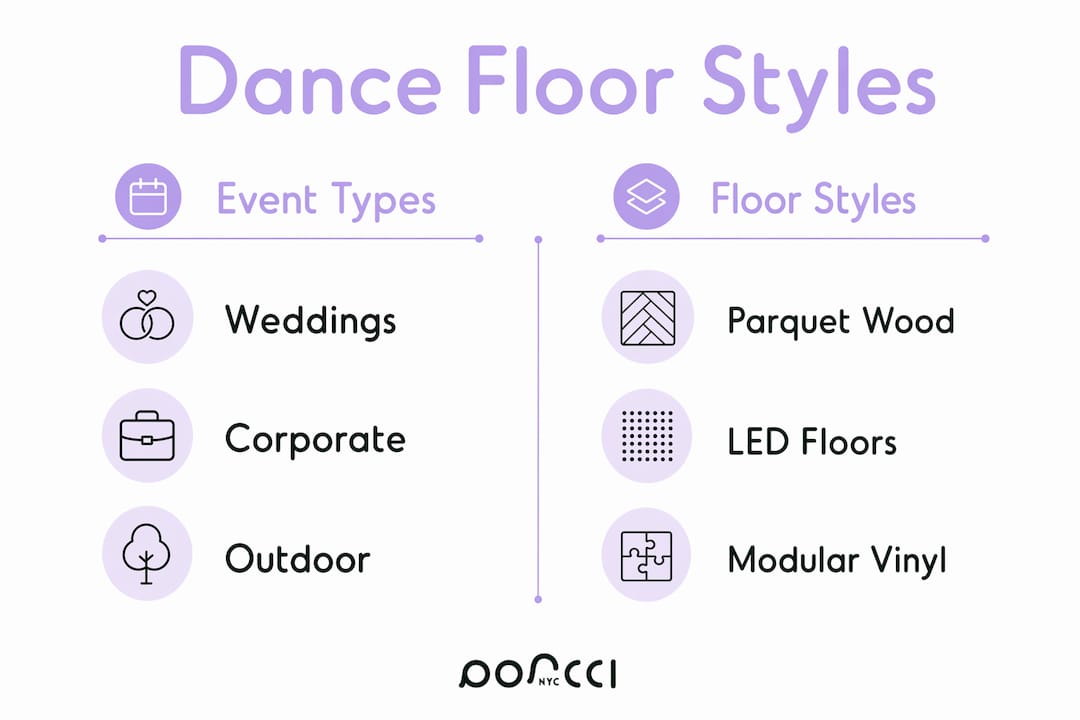
Matching floor style to event type is one of the highest-leverage decisions in dance floor design for events. The wrong aesthetic creates visual friction that subtly undermines the mood you are building.
| Event type | Recommended floor style | Key benefit |
|---|---|---|
| Wedding reception | Classic parquet wood | Timeless look, photographer-friendly warm tones |
| Corporate party | LED panels with custom animation | Branding tool that displays logos and energizes guests |
| Outdoor celebration | Modular vinyl or portable wood | Weather-resistant, quick setup on uneven ground |
| Bar/bat mitzvah | LED or black-and-white checkered | High visual energy, matches celebratory atmosphere |
| Gala or charity dinner | White or ivory parquet | Elegant, cohesive with formal table settings |
LED floors deserve specific mention for corporate and brand-activation events. Custom animations can display company logos, product imagery, or event hashtags directly on the floor surface, turning the dance area into an interactive branding moment. For high-energy event planning, this kind of visual integration between the floor, lighting, and AV setup creates a unified sensory experience that guests remember.
The role of dance floors at events is to create a safe, defined, and visually compelling space that increases guest participation, reduces injury risk, and anchors the energy of the entire event.
| Point | Details |
|---|---|
| Participation driver | A dedicated floor signals that dancing is encouraged, directly increasing guest engagement. |
| Safety foundation | Professional surfaces reduce injury risk by 30% compared to unsuitable alternatives. |
| Material selection | Match floor type to event style: parquet for formals, LED for corporate, vinyl for outdoors. |
| Correct sizing | Allocate approximately 4.5 square feet per dancing guest to prevent overcrowding. |
| Professional installation | Level sub-floors, locked panels, and edge trim are non-negotiable for guest safety. |
After working on hundreds of events across New York City and New Jersey, the pattern is consistent: the dance floor is the last thing many planners budget for and the first thing guests notice is missing or wrong. We have seen beautifully catered weddings where guests sat all night because the floor was too small, too far from the bar, or simply felt unstable underfoot.
The insight that changed how we approach this is simple. A quality dance floor enables guests to focus on experience instead of monitoring safety concerns, which increases energy and creativity across the whole room, not just on the floor itself. When the floor feels right, the DJ sounds better, the lighting looks better, and the photos turn out better.
The mistake we see most often is treating the floor as a rental commodity rather than a design decision. Planners spend hours on centerpieces and menus but accept whatever portable floor the venue provides. That floor may be scratched, uneven, or the wrong size for the room. Investing in a quality rental with professional installation is one of the most cost-effective upgrades available to any event planner.
Our advice: lock in your floor size, style, and installer before you finalize your DJ or lighting package. Everything else in the entertainment setup should be built around the floor, not the other way around.
— PORCCI
A great dance floor needs equally great sound and lighting to deliver the full experience your guests expect. Porcci NYC provides professional AV and sound system rentals specifically configured for events with dance floors, from intimate private parties to large-scale corporate gatherings across NYC and New Jersey. Our packages include setup, delivery, and breakdown so your focus stays on the event itself. We also offer event lighting solutions that complement any floor style, from warm parquet uplighting to synchronized LED effects. Contact Porcci NYC for a personalized quote and let us help you build an event setup where every element works together.
A dance floor defines the social and physical center of an event, signaling to guests that dancing is encouraged and providing a safe, dedicated surface for movement. Its presence directly increases guest participation and shapes the overall energy of the gathering.
The standard allocation is approximately 4.5 square feet per dancing guest, calculated based on peak participation, which is typically 30 to 40 percent of total attendees at most events.
Sprung floors offer the highest level of shock absorption and are ideal for events with extended dancing. For most standard events, parquet wood with a matte finish provides strong traction and reliable safety performance.
LED dance floors are particularly effective for corporate events and brand activations because they can display custom logos and animations, turning the dance area into an interactive visual feature that reinforces event branding.
A well-chosen floor style, particularly classic parquet or white panels, creates a clean and visually appealing backdrop that improves the quality of event photos and gives photographers a natural focal point for candid and posed shots.
Discover the essential role of dance floors at events. Learn how they boost guest participation and enhance your event’s atmosphere.
TL;DR:
• A dance floor acts as the central social and physical space at events, encouraging guest participation and shaping the atmosphere. Its design, size, and quality significantly influence safety, engagement, and overall event success, with professional installation being essential. Matching the floor style to event type and considering safety features ensures an inviting, injury-free environment that enhances photos and guest experience.
A dance floor is the physical and social centerpiece of any event, defining where energy concentrates, where guests connect, and where the atmosphere either ignites or stalls. The role of dance floors at events extends well beyond providing a surface to move on. A properly designed and installed floor signals to every guest that participation is welcome, reduces injury risk, and gives your DJ or band a natural focal point to work from. The global electronic music sector is valued at $12.9 billion, which reflects just how central the dance floor experience is to live event culture. Whether you are planning a wedding in Manhattan, a corporate dinner in New Jersey, or a private party in Brooklyn, your flooring decision shapes everything that follows.
A dedicated dance floor functions as a non-verbal invitation. When guests see a clearly defined space with good lighting and a quality surface, they understand that dancing is not just permitted but expected. Professionally installed dance floors are the most effective tool for increasing guest participation because they remove the ambiguity that keeps people seated.
The psychological mechanism here is worth understanding. Guests who feel uncertain about where to stand, whether the floor is safe, or whether others will join them tend to stay at their tables. A well-placed, well-lit floor resolves all three concerns at once. Research confirms that safety as a system lowers self-protective vigilance, meaning guests stop monitoring their own behavior and start enjoying themselves.
This effect shows up across event types:
• Weddings: A parquet wood floor in the center of the reception room draws guests naturally after dinner and signals the transition from formal dining to celebration.
• Corporate events: A defined floor area separates the networking zone from the entertainment zone, making both feel more intentional.
• Private parties: Even a modest portable floor in a backyard creates a focal point that concentrates energy instead of letting it dissipate across the space.
Pro Tip: Place your dance floor within direct sightlines of the bar and seating areas. Guests are far more likely to step onto a floor they can see from where they are already comfortable.
Dance floor material affects acoustics, safety, and how well the floor integrates with your event’s visual theme. Choosing the wrong surface can undermine both the guest experience and your overall decor. Here is a comparison of the four most common options:
| Floor type | Best for | Safety profile | Aesthetic fit |
|---|---|---|---|
| Parquet wood | Weddings, galas, formal dinners | High traction, moderate shock absorption | Classic, elegant |
| LED panels | Corporate parties, product launches, clubs | Moderate traction, low shock absorption | Modern, high-energy |
| Sprung floors | Dance performances, high-activity events | Highest shock absorption, excellent for joints | Neutral, professional |
| Vinyl/portable | Outdoor events, temporary setups | Good traction, weather-resistant | Flexible, customizable |
Sprung floors deserve special attention for events with extended dancing. The sub-floor construction absorbs impact and returns energy to the dancer, which reduces fatigue significantly over a three to four hour reception. Shock absorption and traction are the two biomechanical factors that allow guests to dance without fatigue or injury concerns, according to experts in dance surface science.
Eco-friendly options are also gaining traction in the event industry. Reclaimed wood panels and recycled rubber sub-floors are now available from several rental providers and offer a lower environmental footprint without sacrificing performance.
Pro Tip: For outdoor events, always request a vinyl or modular floor with a sealed edge trim. Exposed edges on grass or uneven ground are the most common source of trip hazards at outdoor receptions.
Getting the installation right is not optional. A floor that is slightly uneven, has exposed seams, or lacks proper anchoring creates real liability for you as a planner. Here is the sequence that professional installers follow, and why each step matters:
1. Sub-floor assessment. The structural sub-floor must be level and slip-resistant before any surface panel goes down. Without this foundation, guests instinctively limit their movement regardless of how good the music is.
2. Panel locking and edge finishing. Interlocking panels must be secured so they cannot shift under load. Edge ramps or trim pieces eliminate the step-up that causes ankle rolls.
3. Size calculation. The standard industry formula allocates approximately 4.5 square feet per dancing guest. For a 100-person event where roughly 40% will dance at peak time, that means a minimum 180-square-foot floor.
4. DJ or band placement. A professional dance floor gives your DJ a clear focal point and a natural sightline to the crowd, which directly improves set pacing and crowd reading.
5. Final safety walkthrough. Before guests arrive, walk the entire perimeter and surface in dress shoes. If you feel any flex, catch, or unevenness, address it before the event starts.
Undersizing is the most common mistake we see. A floor that fills up too quickly creates a crowded, uncomfortable experience and pushes guests back to their seats. Oversizing is a lesser problem but still worth avoiding since a half-empty floor can feel awkward and reduce the social momentum you are trying to build.
Safety is not a secondary concern. Guests on professional dance surfaces are 30% less likely to experience injuries compared to those dancing on uneven or unsuitable surfaces like grass, concrete, or carpet. That single statistic should inform every flooring decision you make.
A safety-focused evaluation of any dance floor option should cover:
• Traction: The surface must grip dress shoes, heels, and sneakers equally. Polished hardwood without a matte finish coat is a common hazard.
• Levelness: Any height variation greater than a quarter inch between panels is a trip risk.
• Edge treatment: All perimeter edges need ramps or beveled trim to prevent catches.
• Load capacity: Confirm the floor is rated for the expected guest density, particularly for elevated or portable installations.
“Organizers who prioritize safe, well-managed dance floors facilitate deeper social bonds and merriment beyond audio-visual effects.” — Wellbeing Magazine
When guests sense a well-run dance floor, they respond with freer, more expressive interactions. Safety clarity removes the cognitive overhead of self-protection and replaces it with confidence and energy.
Matching floor style to event type is one of the highest-leverage decisions in dance floor design for events. The wrong aesthetic creates visual friction that subtly undermines the mood you are building.
| Event type | Recommended floor style | Key benefit |
|---|---|---|
| Wedding reception | Classic parquet wood | Timeless look, photographer-friendly warm tones |
| Corporate party | LED panels with custom animation | Branding tool that displays logos and energizes guests |
| Outdoor celebration | Modular vinyl or portable wood | Weather-resistant, quick setup on uneven ground |
| Bar/bat mitzvah | LED or black-and-white checkered | High visual energy, matches celebratory atmosphere |
| Gala or charity dinner | White or ivory parquet | Elegant, cohesive with formal table settings |
LED floors deserve specific mention for corporate and brand-activation events. Custom animations can display company logos, product imagery, or event hashtags directly on the floor surface, turning the dance area into an interactive branding moment. For high-energy event planning, this kind of visual integration between the floor, lighting, and AV setup creates a unified sensory experience that guests remember.
The role of dance floors at events is to create a safe, defined, and visually compelling space that increases guest participation, reduces injury risk, and anchors the energy of the entire event.
| Point | Details |
|---|---|
| Participation driver | A dedicated floor signals that dancing is encouraged, directly increasing guest engagement. |
| Safety foundation | Professional surfaces reduce injury risk by 30% compared to unsuitable alternatives. |
| Material selection | Match floor type to event style: parquet for formals, LED for corporate, vinyl for outdoors. |
| Correct sizing | Allocate approximately 4.5 square feet per dancing guest to prevent overcrowding. |
| Professional installation | Level sub-floors, locked panels, and edge trim are non-negotiable for guest safety. |
After working on hundreds of events across New York City and New Jersey, the pattern is consistent: the dance floor is the last thing many planners budget for and the first thing guests notice is missing or wrong. We have seen beautifully catered weddings where guests sat all night because the floor was too small, too far from the bar, or simply felt unstable underfoot.
The insight that changed how we approach this is simple. A quality dance floor enables guests to focus on experience instead of monitoring safety concerns, which increases energy and creativity across the whole room, not just on the floor itself. When the floor feels right, the DJ sounds better, the lighting looks better, and the photos turn out better.
The mistake we see most often is treating the floor as a rental commodity rather than a design decision. Planners spend hours on centerpieces and menus but accept whatever portable floor the venue provides. That floor may be scratched, uneven, or the wrong size for the room. Investing in a quality rental with professional installation is one of the most cost-effective upgrades available to any event planner.
Our advice: lock in your floor size, style, and installer before you finalize your DJ or lighting package. Everything else in the entertainment setup should be built around the floor, not the other way around.
— PORCCI
A great dance floor needs equally great sound and lighting to deliver the full experience your guests expect. Porcci NYC provides professional AV and sound system rentals specifically configured for events with dance floors, from intimate private parties to large-scale corporate gatherings across NYC and New Jersey. Our packages include setup, delivery, and breakdown so your focus stays on the event itself. We also offer event lighting solutions that complement any floor style, from warm parquet uplighting to synchronized LED effects. Contact Porcci NYC for a personalized quote and let us help you build an event setup where every element works together.
A dance floor defines the social and physical center of an event, signaling to guests that dancing is encouraged and providing a safe, dedicated surface for movement. Its presence directly increases guest participation and shapes the overall energy of the gathering.
The standard allocation is approximately 4.5 square feet per dancing guest, calculated based on peak participation, which is typically 30 to 40 percent of total attendees at most events.
Sprung floors offer the highest level of shock absorption and are ideal for events with extended dancing. For most standard events, parquet wood with a matte finish provides strong traction and reliable safety performance.
LED dance floors are particularly effective for corporate events and brand activations because they can display custom logos and animations, turning the dance area into an interactive visual feature that reinforces event branding.
A well-chosen floor style, particularly classic parquet or white panels, creates a clean and visually appealing backdrop that improves the quality of event photos and gives photographers a natural focal point for candid and posed shots.