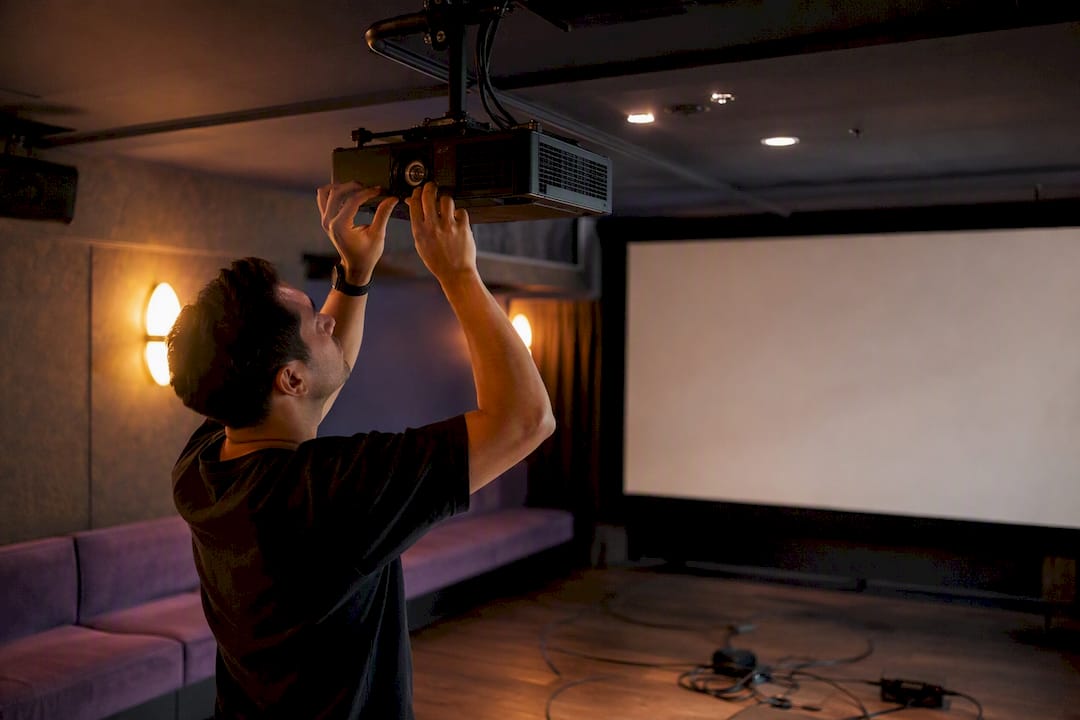
Discover the true role of event coordinators, their essential skills, and how they ensure your events succeed. Unlock expert insights!
TL;DR:
• Event coordinators are responsible for managing logistics, vendors, and real-time problem solving to ensure successful events. Their skills span administration, technical proficiency, and interpersonal communication, with physical stamina also playing a crucial role. Precise planning and robust systems are essential for preventing issues during the critical 24 to 48 hours before an event.
Most people assume event coordinators spend their days sending emails and updating spreadsheets. The reality is far more demanding. The role of event coordinators spans physical logistics, vendor management, budget oversight, client communication, and real-time problem solving, often all at once. Understanding what coordinators actually do, and what separates a good one from a great one, makes a measurable difference in how your events turn out. This guide breaks it all down with the specificity you need to plan smarter and hire better.
• The role of event coordinators: responsibilities explained
• Skills every event coordinator needs
• Handling high-pressure periods in event coordination
• Why coordination quality drives event success
• Best practices for more effective coordination
• My take on what coordination really demands
• Let Porccinyc support your next event
• FAQ
| Point | Details |
|---|---|
| Coordination is physical work | Coordinators can exceed 15,000 steps daily during large events, managing logistics that go far beyond desk tasks. |
| Pre-event timing matters most | The 24 to 48 hours before an event are the highest-risk window for catching and fixing problems before they cascade. |
| Skills span multiple disciplines | Effective coordinators combine administrative, technical, interpersonal, and vendor management abilities into one role. |
| Execution reliability drives vendor selection | Event planners in 2026 prioritize coordinators who deliver consistently over those who simply offer the lowest price. |
| Checklists outperform memory | Coordinators who rely on detailed lists rather than recall have significantly fewer day-of surprises under pressure. |
The terms “event coordinator,” “event planner,” and “event manager” often get used interchangeably. They shouldn’t be. A planner typically handles the creative vision and client relationship at the strategic level. A manager oversees the business side, budgets, and overall execution standards. A coordinator is the operational engine that converts both into a running event.
The event coordination duties break down into three distinct phases:
Before the event:
• Securing permits and handling venue walkthroughs
• Drafting vendor contracts and tracking purchase orders
• Building backward timelines from the event date
• Managing guest communications and RSVPs
• Coordinating with caterers, AV teams, photographers, and staffing
During the event:
• Running the day-of timeline and keeping vendors on schedule
• Troubleshooting technical or logistical issues as they arise
• Serving as the primary point of contact for all vendors on site
• Monitoring room setup, signage, and flow between program segments
After the event:
• Collecting vendor invoices and reconciling the budget
• Conducting client debriefs and gathering feedback
• Filing final reports and updating vendor records for future reference
For large events, coordinators collaborate with dozens of departments and vendors across months of preparation, which is why event planning responsibilities at this scale require exceptional organizational discipline. The importance of event coordination becomes clear when you realize that every guest experience, from the moment they arrive to the moment they leave, flows through decisions the coordinator made days or weeks in advance.
Pro Tip: Build your vendor contact sheet with a primary and a backup contact for every supplier. A caterer’s head chef being unreachable on event day is more common than you’d think.
The skills for event coordinators fall into three categories, and all three matter equally.
Administrative and financial skills form the foundation. Coordinators handle contract drafting, purchase orders, and CRM software on a regular basis. Budget tracking is not a finance team’s job at the coordinator level. You own it. That means reconciling line items, flagging overruns early, and documenting every vendor payment.

Technical proficiency is no longer optional. Most working coordinators use a combination of project management platforms, digital timelines, and communication tools to keep teams aligned across long planning windows. AI tools now automate proposals and timelines, which frees up coordinators to focus on higher-judgment tasks like vendor negotiation and onsite problem solving. If you’re not using technology to reduce your administrative load, you’re spending mental energy on the wrong things.
Interpersonal and soft skills are what separate competent coordinators from exceptional ones. Vendor negotiation, client expectation management, and team coordination under pressure all depend on reading people accurately. Skilled coordinators adjust their communication style based on how much detail a client wants. Some clients want real-time updates. Others want you to handle everything quietly and only surface what requires their decision. Getting that read wrong creates unnecessary stress on both sides.
There is also a physical dimension that rarely gets mentioned in job descriptions. Coordinators track over 15,000 steps during major events. Stamina, comfortable footwear, and deliberate physical preparation are legitimate parts of the job, not afterthoughts.
Pro Tip: If you’re newer to coordination, invest time in learning one project management tool well before switching between several. Mastery of one platform beats surface-level use of five.
The most critical window in any event is the 24 to 48 hours before doors open. This is where the difference between a smooth event and a chaotic one gets determined. Final walkthroughs, signage checks, and equipment testing during this window exist for one reason: to surface problems while you still have time to fix them.
Common day-of issues follow predictable patterns:
1. A vendor arrives 30 to 45 minutes late, compressing setup time for every subsequent team
2. AV equipment that tested fine during rehearsal fails when the full load comes on
3. A last-minute guest count change throws off seating and catering quantities
4. A key staff member calls out sick with no pre-planned backup
Managing these issues discreetly matters as much as solving them quickly. Your clients should not feel the friction of a problem being resolved. They should only see the outcome: an event running on time. Coordination failures causing 20-minute vendor delays can cascade and affect the entire timeline, which is why mitigation protocols need to be built before the day arrives, not invented on the spot.
Practical mitigation strategies include using a stress-free event checklist to verify every deliverable at defined intervals, having escalation contacts confirmed in advance, and running tabletop scenarios for your three most likely failure points.
The event industry’s evaluation criteria shifted noticeably heading into 2026. Price used to be the dominant factor when selecting coordinators and vendors. Execution reliability and risk management have now become the primary selection criteria as events grow more complex.
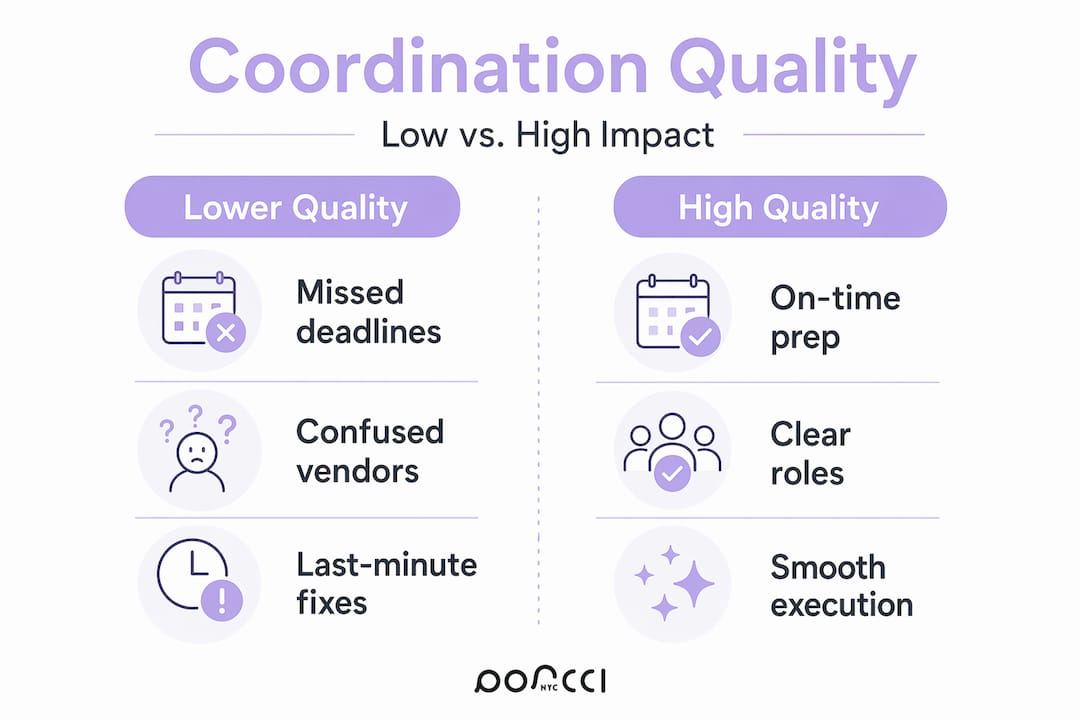
The table below shows how that shift affects practical decisions:
| Factor | Lower-quality coordination | High-quality coordination |
|---|---|---|
| Vendor delays | Reactive response, timeline disrupted | Pre-set escalation protocols activated immediately |
| Client communication | Updates pushed when problems arise | Proactive updates calibrated to client preferences |
| Budget accuracy | Reconciled after the event | Tracked in real time throughout planning |
| Compliance and permits | Addressed when flagged | Built into the planning timeline from the start |
Insurance requirements, licensing compliance, and vendor accountability documentation are no longer just formalities for large corporate events. They are the baseline expectation across event types. Coordinators who build these into their standard workflows, rather than treating them as add-ons, demonstrate exactly the kind of reliability that clients now expect.
Execution quality comes down to systems. The coordinators who consistently deliver strong results are not more talented. They are more organized.
• Start every project with a backward timeline, working from the event date to the present, and assign ownership to every task block
• Use a corporate staffing workflow to define roles, responsibilities, and handoff points before the event week arrives
• Conduct vendor briefings at least 72 hours out, confirming arrival times, setup requirements, and primary contacts
• Build contingency plans for your top three risk areas, whether that’s weather, AV failure, or staffing gaps
• Confirmed checklists at every milestone reduce day-of surprises more than any other single practice
Client relationship maintenance throughout the event lifecycle is equally important. The post-event debrief is often overlooked, but it’s where the strongest client relationships get built. A 20-minute follow-up call to review what worked and what didn’t signals professionalism and positions you for the next event.
I’ve seen events fall apart because a coordinator arrived without a printed checklist. Not because of a vendor failure. Not because of a budget issue. Because of overconfidence in memory under pressure.
What I’ve learned is that the importance of event coordinators is most visible in their absence. When coordination is strong, guests experience a smooth, enjoyable event and assume it just came together naturally. When it breaks down, everyone notices immediately, and the client remembers that failure far longer than any success.
The physical demands are also genuinely underestimated. Wearing the right shoes, staying hydrated, and building short breaks into a day-of schedule are not minor details. They determine how sharp your judgment stays when a real problem hits at hour six of a ten-hour event.
New coordinators often prioritize looking calm over actually being prepared. Those are not the same thing. Real composure comes from knowing your backup plan before you need it.
— PORCCI
When coordination and entertainment come together well, events feel effortless. At Porccinyc, we work with event planners across New York City and New Jersey to provide the equipment, staffing, and entertainment services that back up great coordination. From professional event planning and AV equipment rentals to DJ services and photo booths, our packages include setup, delivery, and breakdown so your team can focus on execution. Tell us what you’re building and we’ll help you put it together right.
Event coordinators manage the operational execution of events, handling vendor logistics, timelines, client communication, and day-of problem solving to keep every element running on schedule.
An event planner focuses on strategic vision and client relationships, while a coordinator handles the hands-on logistics and real-time execution that bring the plan to life.
The most critical skills include administrative organization, budget tracking, vendor negotiation, CRM and project management tool proficiency, and the ability to communicate clearly under pressure.
This window is when final checks and walkthroughs catch problems while there is still time to address them. Issues discovered after doors open are far harder and more costly to fix.
Detailed checklists and confirmed escalation contacts are the two most effective tools. Coordinators who rely on memory rather than written verification consistently have higher rates of missed details under pressure.
Discover the true role of event coordinators, their essential skills, and how they ensure your events succeed. Unlock expert insights!
TL;DR:
• Event coordinators are responsible for managing logistics, vendors, and real-time problem solving to ensure successful events. Their skills span administration, technical proficiency, and interpersonal communication, with physical stamina also playing a crucial role. Precise planning and robust systems are essential for preventing issues during the critical 24 to 48 hours before an event.
Most people assume event coordinators spend their days sending emails and updating spreadsheets. The reality is far more demanding. The role of event coordinators spans physical logistics, vendor management, budget oversight, client communication, and real-time problem solving, often all at once. Understanding what coordinators actually do, and what separates a good one from a great one, makes a measurable difference in how your events turn out. This guide breaks it all down with the specificity you need to plan smarter and hire better.
• The role of event coordinators: responsibilities explained
• Skills every event coordinator needs
• Handling high-pressure periods in event coordination
• Why coordination quality drives event success
• Best practices for more effective coordination
• My take on what coordination really demands
• Let Porccinyc support your next event
• FAQ
| Point | Details |
|---|---|
| Coordination is physical work | Coordinators can exceed 15,000 steps daily during large events, managing logistics that go far beyond desk tasks. |
| Pre-event timing matters most | The 24 to 48 hours before an event are the highest-risk window for catching and fixing problems before they cascade. |
| Skills span multiple disciplines | Effective coordinators combine administrative, technical, interpersonal, and vendor management abilities into one role. |
| Execution reliability drives vendor selection | Event planners in 2026 prioritize coordinators who deliver consistently over those who simply offer the lowest price. |
| Checklists outperform memory | Coordinators who rely on detailed lists rather than recall have significantly fewer day-of surprises under pressure. |
The terms “event coordinator,” “event planner,” and “event manager” often get used interchangeably. They shouldn’t be. A planner typically handles the creative vision and client relationship at the strategic level. A manager oversees the business side, budgets, and overall execution standards. A coordinator is the operational engine that converts both into a running event.
The event coordination duties break down into three distinct phases:
Before the event:
• Securing permits and handling venue walkthroughs
• Drafting vendor contracts and tracking purchase orders
• Building backward timelines from the event date
• Managing guest communications and RSVPs
• Coordinating with caterers, AV teams, photographers, and staffing
During the event:
• Running the day-of timeline and keeping vendors on schedule
• Troubleshooting technical or logistical issues as they arise
• Serving as the primary point of contact for all vendors on site
• Monitoring room setup, signage, and flow between program segments
After the event:
• Collecting vendor invoices and reconciling the budget
• Conducting client debriefs and gathering feedback
• Filing final reports and updating vendor records for future reference
For large events, coordinators collaborate with dozens of departments and vendors across months of preparation, which is why event planning responsibilities at this scale require exceptional organizational discipline. The importance of event coordination becomes clear when you realize that every guest experience, from the moment they arrive to the moment they leave, flows through decisions the coordinator made days or weeks in advance.
Pro Tip: Build your vendor contact sheet with a primary and a backup contact for every supplier. A caterer’s head chef being unreachable on event day is more common than you’d think.
The skills for event coordinators fall into three categories, and all three matter equally.
Administrative and financial skills form the foundation. Coordinators handle contract drafting, purchase orders, and CRM software on a regular basis. Budget tracking is not a finance team’s job at the coordinator level. You own it. That means reconciling line items, flagging overruns early, and documenting every vendor payment.
Technical proficiency is no longer optional. Most working coordinators use a combination of project management platforms, digital timelines, and communication tools to keep teams aligned across long planning windows. AI tools now automate proposals and timelines, which frees up coordinators to focus on higher-judgment tasks like vendor negotiation and onsite problem solving. If you’re not using technology to reduce your administrative load, you’re spending mental energy on the wrong things.
Interpersonal and soft skills are what separate competent coordinators from exceptional ones. Vendor negotiation, client expectation management, and team coordination under pressure all depend on reading people accurately. Skilled coordinators adjust their communication style based on how much detail a client wants. Some clients want real-time updates. Others want you to handle everything quietly and only surface what requires their decision. Getting that read wrong creates unnecessary stress on both sides.
There is also a physical dimension that rarely gets mentioned in job descriptions. Coordinators track over 15,000 steps during major events. Stamina, comfortable footwear, and deliberate physical preparation are legitimate parts of the job, not afterthoughts.
Pro Tip: If you’re newer to coordination, invest time in learning one project management tool well before switching between several. Mastery of one platform beats surface-level use of five.
The most critical window in any event is the 24 to 48 hours before doors open. This is where the difference between a smooth event and a chaotic one gets determined. Final walkthroughs, signage checks, and equipment testing during this window exist for one reason: to surface problems while you still have time to fix them.
Common day-of issues follow predictable patterns:
1. A vendor arrives 30 to 45 minutes late, compressing setup time for every subsequent team
2. AV equipment that tested fine during rehearsal fails when the full load comes on
3. A last-minute guest count change throws off seating and catering quantities
4. A key staff member calls out sick with no pre-planned backup
Managing these issues discreetly matters as much as solving them quickly. Your clients should not feel the friction of a problem being resolved. They should only see the outcome: an event running on time. Coordination failures causing 20-minute vendor delays can cascade and affect the entire timeline, which is why mitigation protocols need to be built before the day arrives, not invented on the spot.
Practical mitigation strategies include using a stress-free event checklist to verify every deliverable at defined intervals, having escalation contacts confirmed in advance, and running tabletop scenarios for your three most likely failure points.
The event industry’s evaluation criteria shifted noticeably heading into 2026. Price used to be the dominant factor when selecting coordinators and vendors. Execution reliability and risk management have now become the primary selection criteria as events grow more complex.
The table below shows how that shift affects practical decisions:
| Factor | Lower-quality coordination | High-quality coordination |
|---|---|---|
| Vendor delays | Reactive response, timeline disrupted | Pre-set escalation protocols activated immediately |
| Client communication | Updates pushed when problems arise | Proactive updates calibrated to client preferences |
| Budget accuracy | Reconciled after the event | Tracked in real time throughout planning |
| Compliance and permits | Addressed when flagged | Built into the planning timeline from the start |
Insurance requirements, licensing compliance, and vendor accountability documentation are no longer just formalities for large corporate events. They are the baseline expectation across event types. Coordinators who build these into their standard workflows, rather than treating them as add-ons, demonstrate exactly the kind of reliability that clients now expect.
Execution quality comes down to systems. The coordinators who consistently deliver strong results are not more talented. They are more organized.
• Start every project with a backward timeline, working from the event date to the present, and assign ownership to every task block
• Use a corporate staffing workflow to define roles, responsibilities, and handoff points before the event week arrives
• Conduct vendor briefings at least 72 hours out, confirming arrival times, setup requirements, and primary contacts
• Build contingency plans for your top three risk areas, whether that’s weather, AV failure, or staffing gaps
• Confirmed checklists at every milestone reduce day-of surprises more than any other single practice
Client relationship maintenance throughout the event lifecycle is equally important. The post-event debrief is often overlooked, but it’s where the strongest client relationships get built. A 20-minute follow-up call to review what worked and what didn’t signals professionalism and positions you for the next event.
I’ve seen events fall apart because a coordinator arrived without a printed checklist. Not because of a vendor failure. Not because of a budget issue. Because of overconfidence in memory under pressure.
What I’ve learned is that the importance of event coordinators is most visible in their absence. When coordination is strong, guests experience a smooth, enjoyable event and assume it just came together naturally. When it breaks down, everyone notices immediately, and the client remembers that failure far longer than any success.
The physical demands are also genuinely underestimated. Wearing the right shoes, staying hydrated, and building short breaks into a day-of schedule are not minor details. They determine how sharp your judgment stays when a real problem hits at hour six of a ten-hour event.
New coordinators often prioritize looking calm over actually being prepared. Those are not the same thing. Real composure comes from knowing your backup plan before you need it.
— PORCCI
When coordination and entertainment come together well, events feel effortless. At Porccinyc, we work with event planners across New York City and New Jersey to provide the equipment, staffing, and entertainment services that back up great coordination. From professional event planning and AV equipment rentals to DJ services and photo booths, our packages include setup, delivery, and breakdown so your team can focus on execution. Tell us what you’re building and we’ll help you put it together right.
Event coordinators manage the operational execution of events, handling vendor logistics, timelines, client communication, and day-of problem solving to keep every element running on schedule.
An event planner focuses on strategic vision and client relationships, while a coordinator handles the hands-on logistics and real-time execution that bring the plan to life.
The most critical skills include administrative organization, budget tracking, vendor negotiation, CRM and project management tool proficiency, and the ability to communicate clearly under pressure.
This window is when final checks and walkthroughs catch problems while there is still time to address them. Issues discovered after doors open are far harder and more costly to fix.
Detailed checklists and confirmed escalation contacts are the two most effective tools. Coordinators who rely on memory rather than written verification consistently have higher rates of missed details under pressure.