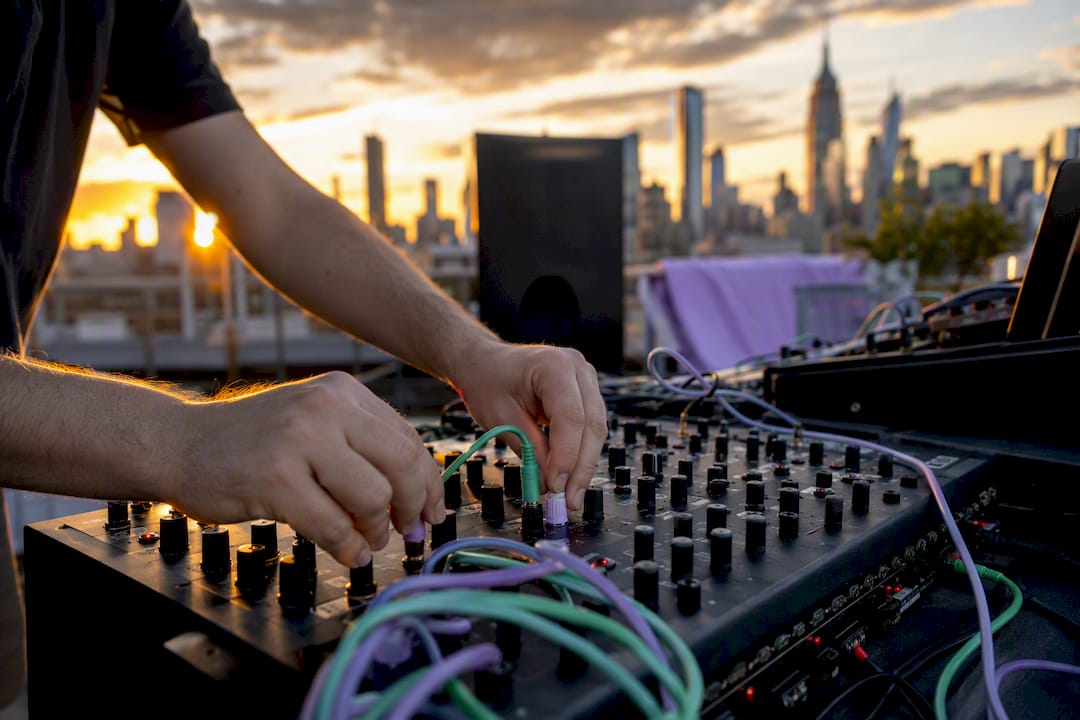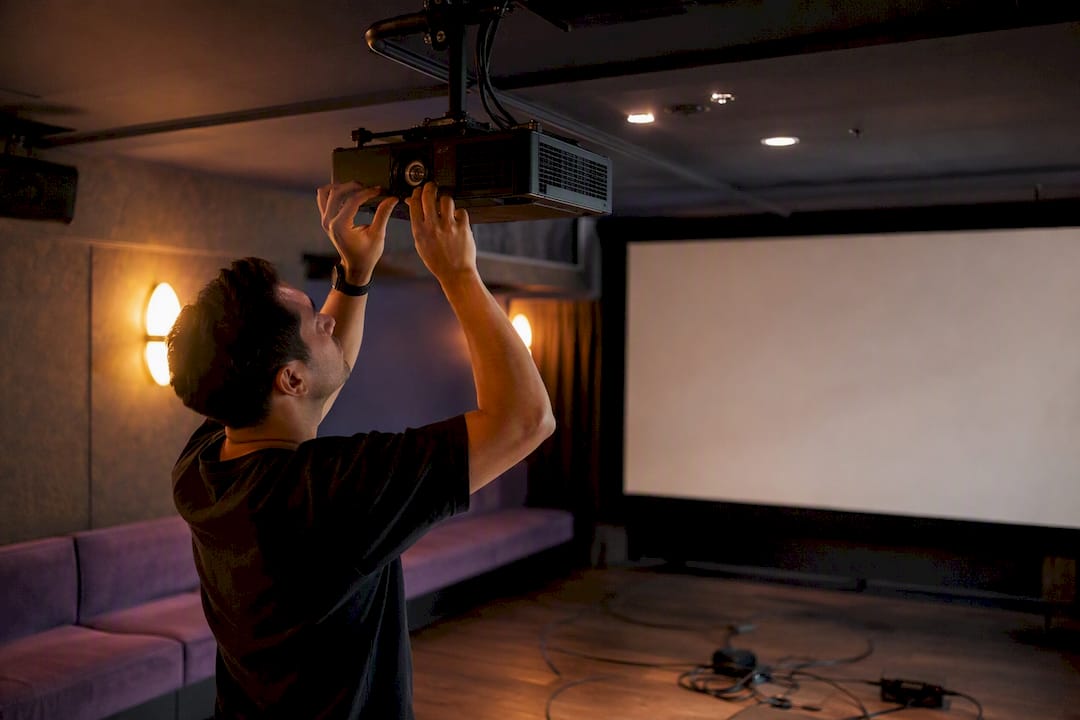
Discover what is dry hire for NYC & NJ event planners. Learn how to effectively rent equipment and manage your own event responsibilities.
Dry hire means you rent the equipment and nothing else. No operator, no on-site technician, no setup crew — just the gear delivered to your venue, and full operational responsibility on your shoulders. For NYC and New Jersey planners with trusted vendor networks and a clear creative vision, that model can work well. For everyone else, the headline savings often disappear once you price out external catering premiums, security, cleaning, and the Certificate of Insurance (COI) your venue will require — commonly minimum general liability coverage as typically required by venues. Choose dry hire when creative control matters more than vendor-managed risk. Choose full-service when execution certainty matters more than customization.
• What does dry hire actually include?
• Dry hire vs. full-service: what you’re really comparing
• What are the insurance and legal risks of dry hire?
• When does dry hire actually make sense?
• How to book dry hire in NYC and New Jersey: a planner’s checklist
• When we recommend dry hire — and when we don’t
• Porcci NYC full-service rentals for NYC and New Jersey events
• Useful sources and further reading
• FAQ
Understanding the dry hire definition means knowing exactly where the vendor’s responsibility ends — and yours begins.
Typically included in a dry hire agreement:
• Equipment inventory (AV gear, lighting rigs, sound systems, staging, furniture, photo booths, etc.)
• A scheduled delivery window and a pickup window
• Basic equipment documentation or operating instructions
• Access to the vendor’s recommended third-party technician list (varies by vendor)
Typically excluded:
• Operators or on-site technicians
• Setup and breakdown labor
• Event staffing of any kind
• Catering, bar service, or permits
• Cleaning and security
• Insurance coverage for the renter’s liability
Vendor policies vary. Some rental companies offer operator add-ons at an hourly rate, or can refer you to vetted freelance techs. Always confirm in writing what is and is not included before signing — a vague contract is where dry hire arrangements most often go wrong.
The core difference is accountability. With a full-service model, one vendor owns the outcome — they coordinate, troubleshoot, and absorb operational risk. With dry hire, you become the integrator. Every vendor relationship, every delivery window, every technical failure is your problem to solve in real time.
| Cost Line Item | Dry Hire | Full-Service |
|---|---|---|
| Venue/equipment fee | Lower upfront | Bundled, higher upfront |
| External catering premium | Often notably higher than in-house rates | Included or negotiated |
| Security | Separate contract | Usually included |
| Cleaning | Separate contract | Usually included |
| On-site staffing | Hired independently | Included |
| Insurance (COI) | Planner’s responsibility | Vendor typically provides |
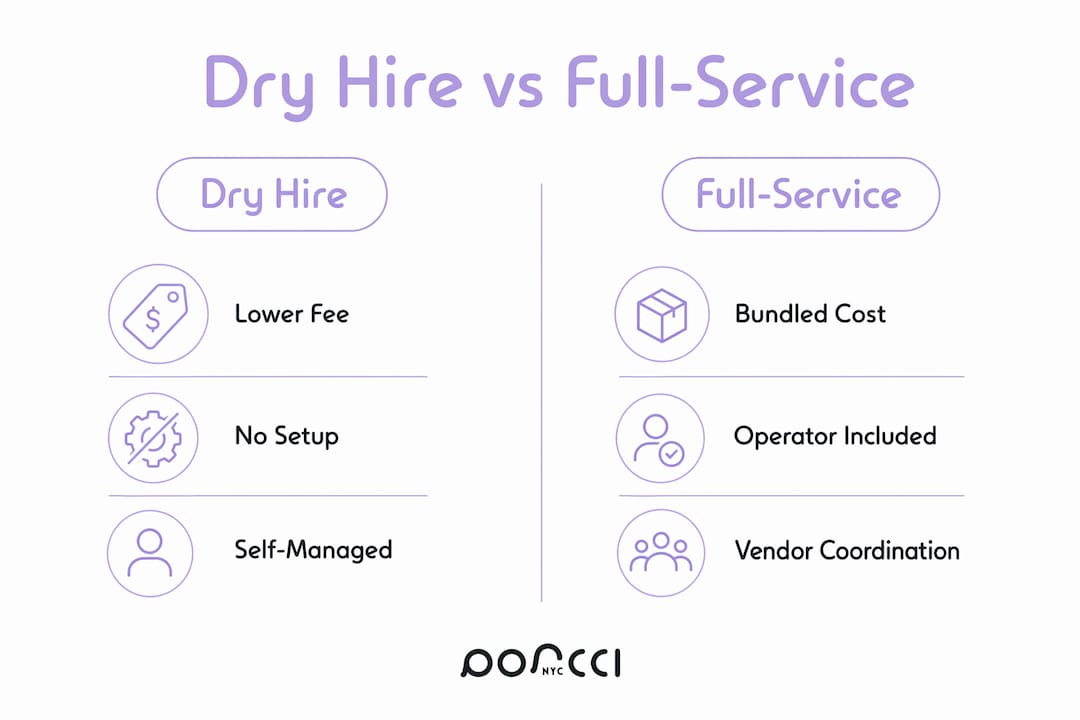
External caterers at dry hire venues charge higher fees than in-house operations, and separate security and cleaning contracts add up fast. Many planners are surprised to find their total dry hire cost exceeds a comparable full-service quote.
Pros of dry hire:
• Full creative control over vendors, décor, and format
• Ability to use preferred or brand-specific suppliers
• Transparent per-item pricing
Cons of dry hire:
• Multiple contracts to manage, multiplying the chance of miscommunication
• No single point of contact when something goes wrong on event day
• Hidden costs that can push total spend above full-service rates
• Higher coordination burden, especially for complex or large-scale events
For planners weighing the outsourcing decision, the honest question is whether your team has the bandwidth to manage vendor fragmentation without dropping anything.
This is where dry hire gets serious. Venues in NYC and New Jersey routinely require a COI naming them as an additional insured before you can load in. Getting this wrong doesn’t just create paperwork — it can cost you the booking entirely.
Insurance types to confirm before signing any dry hire contract:
• General liability: Minimum $1 million per occurrence / $2 million aggregate, with the venue named as additional insured. High-end venues may require higher limits. Per Porcci NYC’s own guidance on rental insurance, this is the non-negotiable baseline.
• Inland marine (equipment floater): Standard commercial property policies do not cover equipment in transit or at an off-site event location. Inland marine coverage fills that gap.
• Commercial auto: Required if your vendors are transporting heavy equipment via box trucks or trailers.
• Workers’ compensation: Required if any hired crew is setting up or operating equipment on-site.
• Per-event policy: A single-date event insurance policy is an option when a full commercial policy isn’t practical — venues commonly accept these.
Damage waivers are not insurance. A damage waiver is a fee-based agreement that covers minor, incidental damage during normal use. It excludes major losses, theft, transit accidents, and operator negligence. Relying on a damage waiver alone leaves you exposed for the scenarios that actually cost money.
Pro Tip: Ask your vendor for a COI with primary/noncontributory endorsements — this means the vendor’s policy pays first, protecting the venue before any other coverage kicks in. Request the COI at least 30 days before your event date; many venues won’t confirm your booking without it.
Dry hire delivers the most value when a planner already has skilled operators, trusted vendor relationships, and enough lead time to coordinate everything properly. Three concrete scenarios where it works:
Brand activation with a custom build. A corporate client wants a fully branded environment — specific lighting colors, custom staging, proprietary AV layout. No full-service package will match that spec. Dry hire lets you source each element independently and build exactly what the brief requires. For guidance on entertainment-specific decisions in this context, corporate event music planning offers a useful framework for layering live entertainment into a custom format.
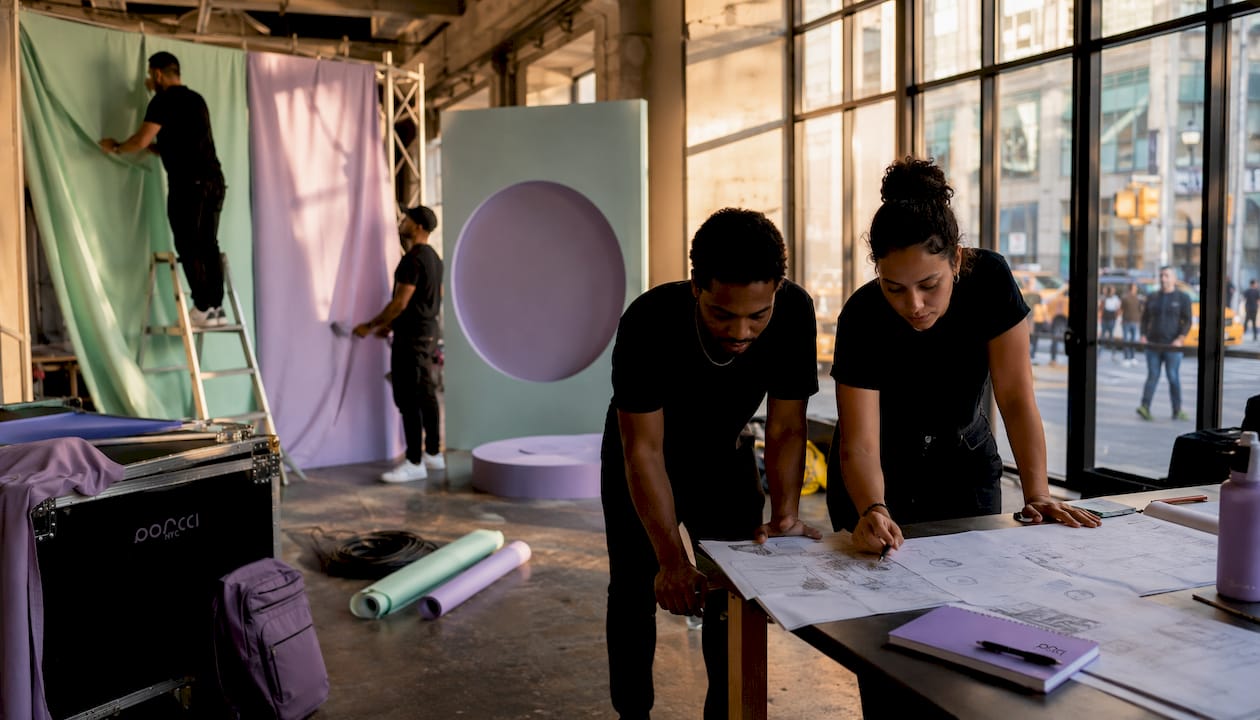
Intimate standing reception. A 60-person cocktail event in a raw loft space where the host has a preferred caterer and an in-house AV tech. The equipment list is short, the setup is straightforward, and dry hire keeps costs lean without sacrificing quality.
Pop-up activation. Short-run, high-concept events where the planner controls every vendor relationship and the venue is essentially a blank canvas. Dry hire is the standard model here.
The hybrid approach is worth considering for mid-size events: use a venue-approved vendor list for catering and security, then source AV and entertainment equipment externally through a company like Porcci NYC that can supply equipment with optional on-site tech staffing. You get creative flexibility on the elements that matter most, with managed risk on the rest.
One timing reality: complex dry hire events need at least three months of lead time for vendor sourcing, site visits, and contingency planning. Premium NYC dates book 12–18 months out. If your timeline is short, full-service is almost always the safer path.
1. Do you provide an operator or on-site technician, and what does that add-on cost?
2. What does your COI cover, and will you name our venue as additional insured?
3. Do you carry inland marine coverage for equipment in transit?
4. What are your delivery and pickup windows, and what happens if the venue runs long?
5. What are the exact terms of your damage waiver, and what does it exclude?
6. Who is our on-site contact if something fails during the event?
| Milestone | Recommended Deadline |
|---|---|
| Confirm venue and dry hire vendor | 12+ weeks out |
| Collect all vendor COIs | 30 days before event |
| Submit COIs to venue for approval | 28 days before event |
| On-site load-in and equipment test | Day before or morning of event |
1. Label every piece of rented equipment with the vendor name and return instructions.
2. Designate a staging zone for load-in and load-out that doesn’t conflict with guest flow.
3. Confirm backup power access (circuit breakers, generator location) with the venue contact.
4. Keep a printed contact list: every vendor’s on-site rep, venue manager, and emergency contacts.
5. Have a contingency staffing plan — know who you’ll call if a technician doesn’t show.
For a deeper look at coordinating rental vendors on event day, Porcci NYC’s planner guide covers the operational details that most checklists skip.
Dry hire gives planners creative control and transparent equipment pricing, but the total cost and coordination burden often exceed a full-service quote once insurance, staffing, and vendor premiums are added.
| Point | Details |
|---|---|
| Dry hire definition | Equipment-only rental — no operator, no setup crew, full responsibility on the planner. |
| Hidden costs add up | External catering, security, cleaning, and COI requirements regularly push total spend above full-service rates. |
| Insurance is non-negotiable | Venues require a COI naming them as additional insured, typically $1M per occurrence / $2M aggregate, at least 30 days out. |
| Lead time matters | Complex dry hire events need at least three months; premium NYC dates book 12–18 months in advance. |
| Porcci NYC option | Porcci NYC supplies AV, DJ, photo booth, and entertainment equipment with optional on-site tech staffing — a hybrid that reduces execution risk. |
Dry hire gets recommended too often as a default cost-saving move, and that framing does planners a disservice. The model genuinely works for a specific type of planner: someone with existing vendor relationships, internal project management capacity, and enough lead time to coordinate multiple contracts without gaps. For that planner, dry hire is efficient and gives them exactly the creative latitude they need.
For everyone else — especially first-time hosts, planners managing complex multi-vendor events, or anyone working with a tight timeline — the coordination risk is real and the hidden costs are predictable. We’ve seen events where the dry hire “savings” evaporated entirely once the planner priced out a freelance AV tech, a separate cleaning crew, and a per-event insurance policy.
What actually works for most clients in NYC and New Jersey is a hybrid: Porcci NYC supplies the equipment and handles delivery, setup, and breakdown, with optional on-site tech staffing added for events that need it. That structure gives you creative control over the entertainment and AV elements while keeping execution risk where it belongs — with a professional team that knows the gear. The COI handling, the delivery coordination, the contingency plan: we manage all of it so your focus stays on the event itself.
If dry hire coordination sounds like more than you want to manage, Porcci NYC offers a direct alternative across NYC and New Jersey:
• AV and sound system rentals with delivery, setup, and on-site tech support included — no freelance sourcing required.
• DJ services with professional equipment and an experienced DJ who manages the room, not just the playlist.
• Photo booth rentals with an attendant, custom branding options, and instant print or digital sharing.
• Karaoke machine rentals with multilingual song libraries and optional host staffing.
Porcci NYC handles COI documentation and coordinates directly with your venue, so you’re not chasing paperwork 30 days before your event. For New Jersey events, our Jersey City AV rental team covers the full setup-to-breakdown workflow. Ready to skip the coordination complexity? Request a quote and we’ll put together a package that fits your event and budget.
• Why rental insurance matters for event hosts — Porcci NYC’s guide to COI requirements and coverage basics
• Event budget planning guide — full cost breakdown framework for NYC and NJ events
• Working with rental companies: a planner’s guide — vendor coordination and contract tips
• Event staffing guide for NY and NJ weddings — on-site crew planning and contingency staffing
• LendControl: event rental insurance explained — COI requirements, inland marine coverage, and per-event policy options
• Goodshuffle Pro: damage waivers vs. inland marine insurance — what damage waivers actually cover and where they fall short
• Venues.London: dry hire vs. full-service venues — cost comparison and lead time guidance
• Private event music: hiring the right act — entertainment-specific guidance for private events
Dry hire is an equipment-only rental — you get the gear, but no operator, setup crew, or on-site support. All operational responsibility falls on the renter.
Not always. The upfront equipment fee is lower, but external catering premiums, separate security and cleaning contracts, staffing, and insurance costs often push the total above a comparable full-service quote.
At minimum, general liability coverage of $1 million per occurrence and $2 million aggregate, with the venue named as additional insured. Inland marine coverage is also recommended if equipment is being transported to the site.
For complex events, allow at least three months. Premium NYC and New Jersey dates can book 12–18 months out, and COIs must typically be submitted to the venue at least 30 days before the event.
Yes. Porcci NYC offers equipment rentals with optional on-site tech staffing, delivery, setup, and breakdown — a hybrid model that gives you creative control without the full coordination burden of dry hire.
Discover what is dry hire for NYC & NJ event planners. Learn how to effectively rent equipment and manage your own event responsibilities.
Dry hire means you rent the equipment and nothing else. No operator, no on-site technician, no setup crew — just the gear delivered to your venue, and full operational responsibility on your shoulders. For NYC and New Jersey planners with trusted vendor networks and a clear creative vision, that model can work well. For everyone else, the headline savings often disappear once you price out external catering premiums, security, cleaning, and the Certificate of Insurance (COI) your venue will require — commonly minimum general liability coverage as typically required by venues. Choose dry hire when creative control matters more than vendor-managed risk. Choose full-service when execution certainty matters more than customization.
• What does dry hire actually include?
• Dry hire vs. full-service: what you’re really comparing
• What are the insurance and legal risks of dry hire?
• When does dry hire actually make sense?
• How to book dry hire in NYC and New Jersey: a planner’s checklist
• When we recommend dry hire — and when we don’t
• Porcci NYC full-service rentals for NYC and New Jersey events
• Useful sources and further reading
• FAQ
Understanding the dry hire definition means knowing exactly where the vendor’s responsibility ends — and yours begins.
Typically included in a dry hire agreement:
• Equipment inventory (AV gear, lighting rigs, sound systems, staging, furniture, photo booths, etc.)
• A scheduled delivery window and a pickup window
• Basic equipment documentation or operating instructions
• Access to the vendor’s recommended third-party technician list (varies by vendor)
Typically excluded:
• Operators or on-site technicians
• Setup and breakdown labor
• Event staffing of any kind
• Catering, bar service, or permits
• Cleaning and security
• Insurance coverage for the renter’s liability
Vendor policies vary. Some rental companies offer operator add-ons at an hourly rate, or can refer you to vetted freelance techs. Always confirm in writing what is and is not included before signing — a vague contract is where dry hire arrangements most often go wrong.
The core difference is accountability. With a full-service model, one vendor owns the outcome — they coordinate, troubleshoot, and absorb operational risk. With dry hire, you become the integrator. Every vendor relationship, every delivery window, every technical failure is your problem to solve in real time.
| Cost Line Item | Dry Hire | Full-Service |
|---|---|---|
| Venue/equipment fee | Lower upfront | Bundled, higher upfront |
| External catering premium | Often notably higher than in-house rates | Included or negotiated |
| Security | Separate contract | Usually included |
| Cleaning | Separate contract | Usually included |
| On-site staffing | Hired independently | Included |
| Insurance (COI) | Planner’s responsibility | Vendor typically provides |
External caterers at dry hire venues charge higher fees than in-house operations, and separate security and cleaning contracts add up fast. Many planners are surprised to find their total dry hire cost exceeds a comparable full-service quote.
Pros of dry hire:
• Full creative control over vendors, décor, and format
• Ability to use preferred or brand-specific suppliers
• Transparent per-item pricing
Cons of dry hire:
• Multiple contracts to manage, multiplying the chance of miscommunication
• No single point of contact when something goes wrong on event day
• Hidden costs that can push total spend above full-service rates
• Higher coordination burden, especially for complex or large-scale events
For planners weighing the outsourcing decision, the honest question is whether your team has the bandwidth to manage vendor fragmentation without dropping anything.
This is where dry hire gets serious. Venues in NYC and New Jersey routinely require a COI naming them as an additional insured before you can load in. Getting this wrong doesn’t just create paperwork — it can cost you the booking entirely.
Insurance types to confirm before signing any dry hire contract:
• General liability: Minimum $1 million per occurrence / $2 million aggregate, with the venue named as additional insured. High-end venues may require higher limits. Per Porcci NYC’s own guidance on rental insurance, this is the non-negotiable baseline.
• Inland marine (equipment floater): Standard commercial property policies do not cover equipment in transit or at an off-site event location. Inland marine coverage fills that gap.
• Commercial auto: Required if your vendors are transporting heavy equipment via box trucks or trailers.
• Workers’ compensation: Required if any hired crew is setting up or operating equipment on-site.
• Per-event policy: A single-date event insurance policy is an option when a full commercial policy isn’t practical — venues commonly accept these.
Damage waivers are not insurance. A damage waiver is a fee-based agreement that covers minor, incidental damage during normal use. It excludes major losses, theft, transit accidents, and operator negligence. Relying on a damage waiver alone leaves you exposed for the scenarios that actually cost money.
Pro Tip: Ask your vendor for a COI with primary/noncontributory endorsements — this means the vendor’s policy pays first, protecting the venue before any other coverage kicks in. Request the COI at least 30 days before your event date; many venues won’t confirm your booking without it.
Dry hire delivers the most value when a planner already has skilled operators, trusted vendor relationships, and enough lead time to coordinate everything properly. Three concrete scenarios where it works:
Brand activation with a custom build. A corporate client wants a fully branded environment — specific lighting colors, custom staging, proprietary AV layout. No full-service package will match that spec. Dry hire lets you source each element independently and build exactly what the brief requires. For guidance on entertainment-specific decisions in this context, corporate event music planning offers a useful framework for layering live entertainment into a custom format.
Intimate standing reception. A 60-person cocktail event in a raw loft space where the host has a preferred caterer and an in-house AV tech. The equipment list is short, the setup is straightforward, and dry hire keeps costs lean without sacrificing quality.
Pop-up activation. Short-run, high-concept events where the planner controls every vendor relationship and the venue is essentially a blank canvas. Dry hire is the standard model here.
The hybrid approach is worth considering for mid-size events: use a venue-approved vendor list for catering and security, then source AV and entertainment equipment externally through a company like Porcci NYC that can supply equipment with optional on-site tech staffing. You get creative flexibility on the elements that matter most, with managed risk on the rest.
One timing reality: complex dry hire events need at least three months of lead time for vendor sourcing, site visits, and contingency planning. Premium NYC dates book 12–18 months out. If your timeline is short, full-service is almost always the safer path.
1. Do you provide an operator or on-site technician, and what does that add-on cost?
2. What does your COI cover, and will you name our venue as additional insured?
3. Do you carry inland marine coverage for equipment in transit?
4. What are your delivery and pickup windows, and what happens if the venue runs long?
5. What are the exact terms of your damage waiver, and what does it exclude?
6. Who is our on-site contact if something fails during the event?
| Milestone | Recommended Deadline |
|---|---|
| Confirm venue and dry hire vendor | 12+ weeks out |
| Collect all vendor COIs | 30 days before event |
| Submit COIs to venue for approval | 28 days before event |
| On-site load-in and equipment test | Day before or morning of event |
1. Label every piece of rented equipment with the vendor name and return instructions.
2. Designate a staging zone for load-in and load-out that doesn’t conflict with guest flow.
3. Confirm backup power access (circuit breakers, generator location) with the venue contact.
4. Keep a printed contact list: every vendor’s on-site rep, venue manager, and emergency contacts.
5. Have a contingency staffing plan — know who you’ll call if a technician doesn’t show.
For a deeper look at coordinating rental vendors on event day, Porcci NYC’s planner guide covers the operational details that most checklists skip.
Dry hire gives planners creative control and transparent equipment pricing, but the total cost and coordination burden often exceed a full-service quote once insurance, staffing, and vendor premiums are added.
| Point | Details |
|---|---|
| Dry hire definition | Equipment-only rental — no operator, no setup crew, full responsibility on the planner. |
| Hidden costs add up | External catering, security, cleaning, and COI requirements regularly push total spend above full-service rates. |
| Insurance is non-negotiable | Venues require a COI naming them as additional insured, typically $1M per occurrence / $2M aggregate, at least 30 days out. |
| Lead time matters | Complex dry hire events need at least three months; premium NYC dates book 12–18 months in advance. |
| Porcci NYC option | Porcci NYC supplies AV, DJ, photo booth, and entertainment equipment with optional on-site tech staffing — a hybrid that reduces execution risk. |
Dry hire gets recommended too often as a default cost-saving move, and that framing does planners a disservice. The model genuinely works for a specific type of planner: someone with existing vendor relationships, internal project management capacity, and enough lead time to coordinate multiple contracts without gaps. For that planner, dry hire is efficient and gives them exactly the creative latitude they need.
For everyone else — especially first-time hosts, planners managing complex multi-vendor events, or anyone working with a tight timeline — the coordination risk is real and the hidden costs are predictable. We’ve seen events where the dry hire “savings” evaporated entirely once the planner priced out a freelance AV tech, a separate cleaning crew, and a per-event insurance policy.
What actually works for most clients in NYC and New Jersey is a hybrid: Porcci NYC supplies the equipment and handles delivery, setup, and breakdown, with optional on-site tech staffing added for events that need it. That structure gives you creative control over the entertainment and AV elements while keeping execution risk where it belongs — with a professional team that knows the gear. The COI handling, the delivery coordination, the contingency plan: we manage all of it so your focus stays on the event itself.
If dry hire coordination sounds like more than you want to manage, Porcci NYC offers a direct alternative across NYC and New Jersey:
• AV and sound system rentals with delivery, setup, and on-site tech support included — no freelance sourcing required.
• DJ services with professional equipment and an experienced DJ who manages the room, not just the playlist.
• Photo booth rentals with an attendant, custom branding options, and instant print or digital sharing.
• Karaoke machine rentals with multilingual song libraries and optional host staffing.
Porcci NYC handles COI documentation and coordinates directly with your venue, so you’re not chasing paperwork 30 days before your event. For New Jersey events, our Jersey City AV rental team covers the full setup-to-breakdown workflow. Ready to skip the coordination complexity? Request a quote and we’ll put together a package that fits your event and budget.
• Why rental insurance matters for event hosts — Porcci NYC’s guide to COI requirements and coverage basics
• Event budget planning guide — full cost breakdown framework for NYC and NJ events
• Working with rental companies: a planner’s guide — vendor coordination and contract tips
• Event staffing guide for NY and NJ weddings — on-site crew planning and contingency staffing
• LendControl: event rental insurance explained — COI requirements, inland marine coverage, and per-event policy options
• Goodshuffle Pro: damage waivers vs. inland marine insurance — what damage waivers actually cover and where they fall short
• Venues.London: dry hire vs. full-service venues — cost comparison and lead time guidance
• Private event music: hiring the right act — entertainment-specific guidance for private events
Dry hire is an equipment-only rental — you get the gear, but no operator, setup crew, or on-site support. All operational responsibility falls on the renter.
Not always. The upfront equipment fee is lower, but external catering premiums, separate security and cleaning contracts, staffing, and insurance costs often push the total above a comparable full-service quote.
At minimum, general liability coverage of $1 million per occurrence and $2 million aggregate, with the venue named as additional insured. Inland marine coverage is also recommended if equipment is being transported to the site.
For complex events, allow at least three months. Premium NYC and New Jersey dates can book 12–18 months out, and COIs must typically be submitted to the venue at least 30 days before the event.
Yes. Porcci NYC offers equipment rentals with optional on-site tech staffing, delivery, setup, and breakdown — a hybrid model that gives you creative control without the full coordination burden of dry hire.