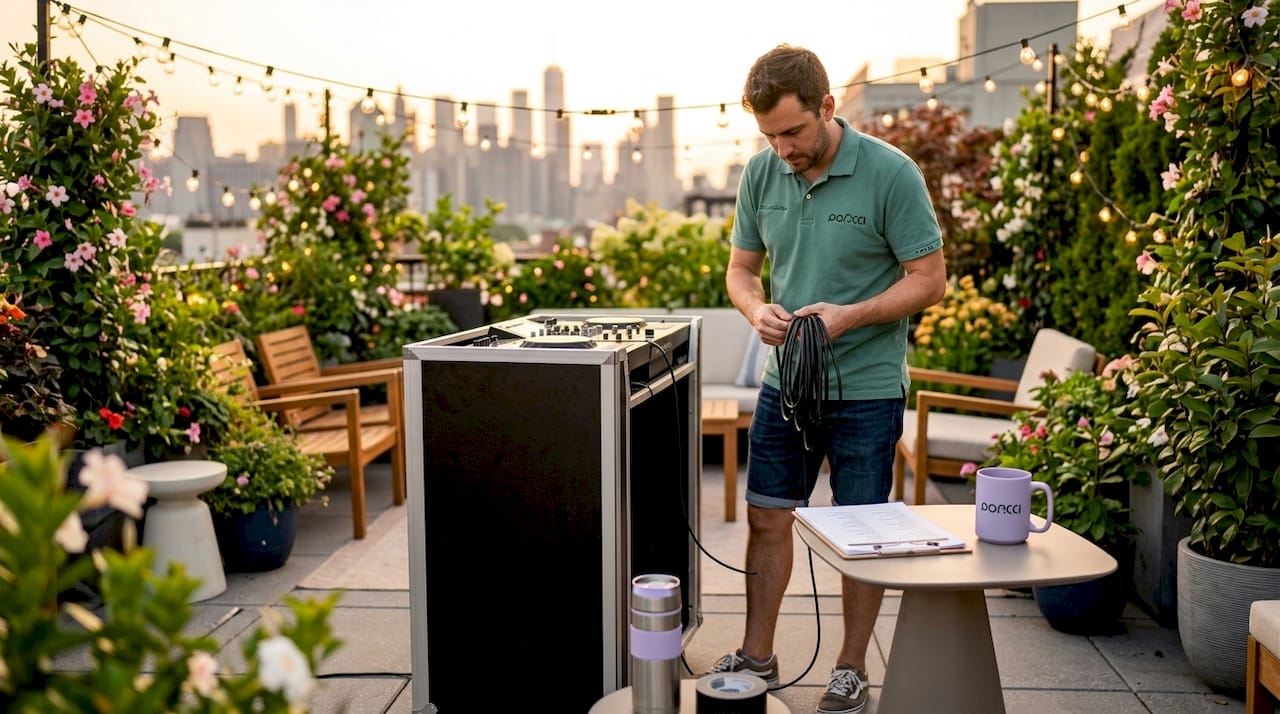
Master your event entertainment setup with our ultimate guide for NYC and NJ. Discover tips to elevate your event experience today!
TL;DR:
• Effective event entertainment planning in NYC and NJ requires understanding your event’s goals, audience, and venue layout before selecting tailored setups.
• A comprehensive checklist of equipment and logistics, along with step-by-step setup procedures, ensures a smooth, energy-filled experience that adapts to unforeseen challenges.
One wrong speaker placement, a microphone that cuts out mid-toast, or a photo booth jammed in a corner where no one can find it — any of these can drain the energy from an event faster than an empty dance floor. In New York City and New Jersey, where venues range from rooftop lofts to cavernous ballrooms, the margin for error is razor thin. Whether you’re planning a corporate gala in Midtown or a wedding reception in Jersey City, getting your entertainment setup right means thinking through every detail long before load-in day arrives. This guide gives you a clear, practical roadmap to do exactly that.
• Understand your event’s entertainment needs
• Gather your essentials: Equipment and logistics checklist
• Step-by-step: Setting up audio, visual, and specialty entertainment
• Overcoming challenges: Common pitfalls and troubleshooting
• Hard-won lessons: Why success hinges on planning for the unexpected
• Upgrade your next event: Streamline entertainment with professional support
| Point | Details |
|---|---|
| Tailor entertainment to your event | Understanding your goals and audience is key for creating a memorable experience. |
| Prepare a detailed setup checklist | A comprehensive logistics list prevents last-minute issues and streamlines execution. |
| Test audio and tech before guests arrive | Early equipment testing helps avoid embarrassing technical problems during the event. |
| Plan for the unexpected | Backup performers, clear roles, and tech point-people prepare you for surprises. |
Before you order a single piece of equipment or book any talent, you need to know what this event is actually supposed to feel like. A corporate awards night calls for a very different setup than a 40th birthday bash or a bar mitzvah. Different events require unique entertainment setups and tailored guest engagement strategies, so your starting point is always the event’s purpose and audience.
Ask yourself these questions early:
• What is the event’s primary goal? Networking, celebration, recognition, or pure fun?
• Who are the guests? A multigenerational wedding crowd needs different energy than a team of corporate professionals.
• What is the venue’s layout and capacity? A narrow Brooklyn loft requires a totally different tech footprint than an open NJ banquet hall.
• What is the event timeline? Cocktail hour entertainment differs from main event programming.
• How much audience interaction is expected? High-energy crowd participation vs. seated observation changes everything.
Once you know these answers, match your entertainment options to the event’s flow. A DJ might power the dance floor, but a photo booth keeps guests engaged during dinner transitions. Multilingual karaoke works beautifully for diverse communities. Interactive games and specialty acts add variety for private parties. You can dig deeper into tailoring choices with our private party guide.
Here’s a quick comparison to help narrow your choices:
| Entertainment type | Best for | Key requirement |
|---|---|---|
| DJ + sound system | Weddings, corporate, parties | Space for booth + floor |
| Photo booth | All event types | 8x8 ft minimum footprint |
| Karaoke system | Private parties, bar/bat mitzvahs | Microphone management |
| Live specialty acts | Corporate, upscale events | Stage or cleared area |
| Interactive games | Corporate team events, kids parties | Open floor space |
For more corporate event ideas, it helps to see what other planners are doing at similar-scale events.
Pro Tip: Map your entertainment to the event timeline from the very start. Identify the moments most likely to produce a lull, like the gap between dinner service and dancing, and schedule a filler activity or a DJ set transition to keep the energy unbroken.
With your entertainment vision mapped out, it’s time to dig into the concrete gear and plans you’ll need. Having the right AV, lighting, and specialty equipment is crucial for event success in NYC and NJ venues, where building restrictions and noise ordinances add extra layers of complexity.
Here’s a master checklist for a fully equipped event:
• Sound system: Main PA speakers, subwoofers, monitors, and mixer
• Microphones: Wired and wireless handhelds, lapel mics for speeches
• Lighting: Wash lights, spotlights, uplighting, and dance floor effects
• Special effects: Fog machines, cold spark fountains (check local fire codes first)
• Interactive tech: Photo booth, karaoke system, digital game stations
• Cables and power: Extension cords, power strips, cable ramps for safety
• Backup gear: Spare microphones, cables, and a backup speaker
Logistics are equally important. Coordinate venue access times for load-in, confirm elevator dimensions if you’re on an upper floor, and get written confirmation of power access points. Many NYC venues limit available circuits, which can force you to prioritize equipment. Work through the full event logistics planning process early so nothing surprises you on setup day.
| Logistical factor | What to confirm | Why it matters |
|---|---|---|
| Load-in time | Hours before guests arrive | Setup needs 2-4 hours minimum |
| Power supply | Circuit count, amperage | Prevents blown fuses mid-event |
| Venue restrictions | Noise limits, fire codes | Avoids legal and safety issues |
| Staffing plan | Technician and operator count | Ensures fast troubleshooting |
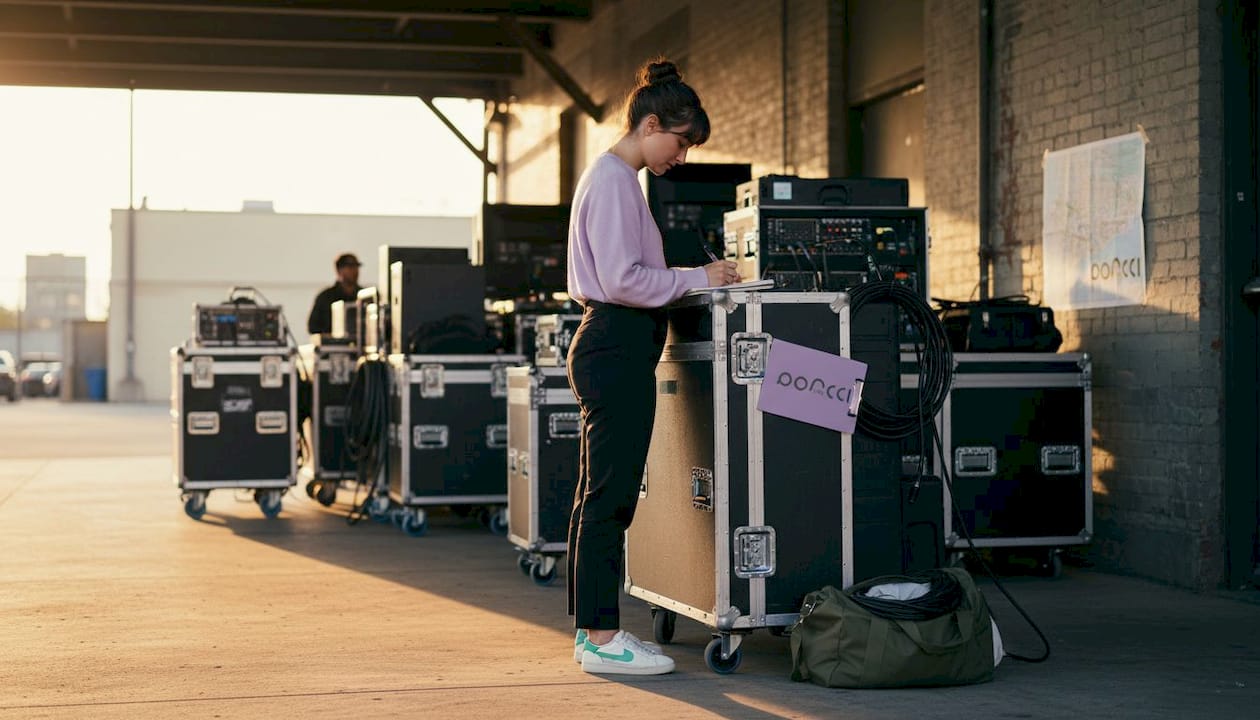
Also review these event lighting tips to ensure your lighting design supports the mood you want, without overwhelming the space.
Pro Tip: Sketch a setup diagram of the venue before load-in day. Mark each zone — DJ area, photo booth station, specialty act space — so every team member knows exactly where things go. This cuts setup time significantly and prevents gear from ending up in the wrong corner.
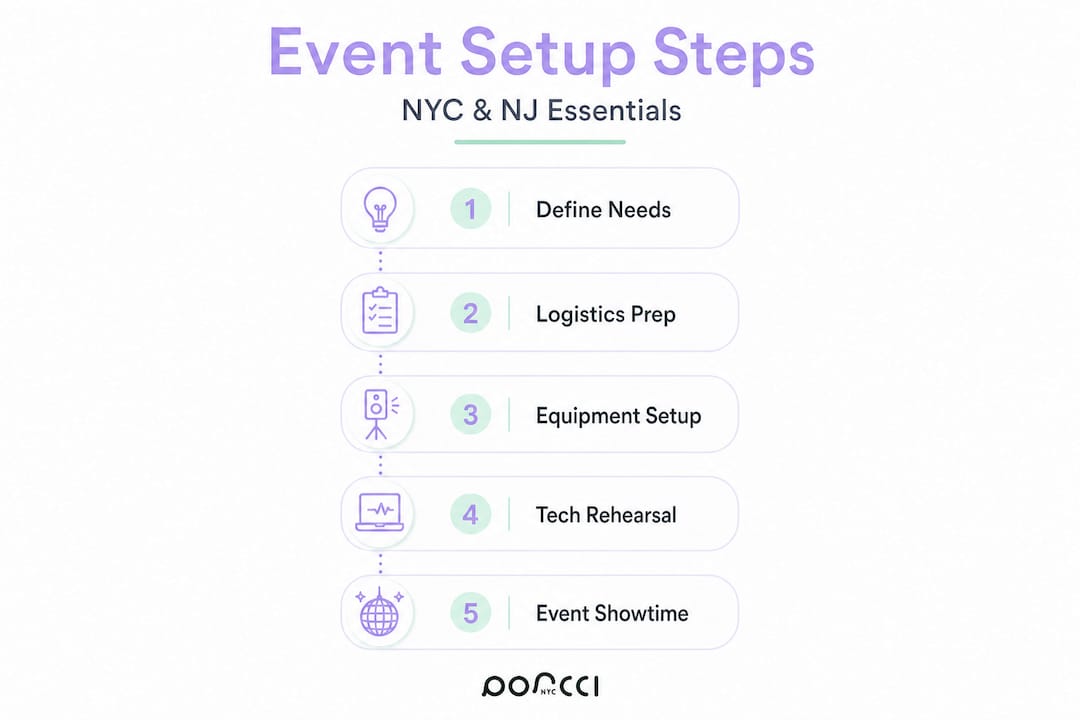
With your checklist in hand, move into execution — step by step, from the main stage to the smallest entertainment detail. Proper sound system selection and setup impacts the energy and experience of every event, making this phase the most technically demanding part of the day.
1. Set up staging first. Position the DJ booth, performance stage, or presentation podium before anything else. This anchors the room and everything else gets built around it.
2. Run your main AV. Place and wire speakers, run cables along walls and under floor ramps, connect the mixer, and test basic playback through the full audio visual setup.
3. Install lighting rigs. Mount uplights along perimeter walls, position spotlights above performance zones, and program any automated lighting sequences.
4. Position specialty entertainment. Set up the photo booth, karaoke station, or game areas in high-traffic zones that are visible but not obstructing the main floor.
5. Run a full sound check. Test every microphone, every speaker zone, and any overflow areas or outdoor spaces. Don’t skip this step even when you’re running behind.
6. Test interactive tech. Power on photo booths, run a karaoke test track, and confirm all touchscreens and printers function correctly.
7. Do a complete walk-through. Walk the room as a guest would, listening for dead audio zones and checking sightlines for all entertainment elements.
“The best events aren’t those where nothing goes wrong — they’re the ones where problems get fixed before anyone in the room notices.”
You can also reference the AV equipment guide for a deeper breakdown of gear choices at different event scales. For a broader event execution reference, the event setup steps framework provides a solid outside perspective.
Pro Tip: Build a 15-minute buffer into every planned tech handoff, such as switching from cocktail hour music to a live performance or from dinner speeches to DJ sets. Those transitions are where technical issues cluster, and a buffer keeps the program on track.
After setting up, you’ll need to stay vigilant. Even flawlessly planned events hit bumps, and how you respond determines whether guests even notice. Effective coordination of live talent, AV, and transitions ensures a smooth, high-impact event from start to finish.
The most common problems planners face include:
• Power failures: Blown circuits from overloaded outlets are preventable. Map your amperage before load-in and never daisy-chain power strips.
• Audio feedback: Position microphones away from speaker cones and use directional mics in reverberant spaces like churches or marble-floored venues.
• Performer delays: Traffic in NYC is unpredictable. Build extra time into your entertainment schedule and have filler content ready.
• Equipment malfunctions: Always bring backup cables and a spare wireless mic transmitter. Small redundancies prevent big disasters.
• Layout restrictions: Narrow doorways, low ceilings, and fixed furniture can block entertainment flow. Survey the venue in person before the event if possible.
For guidance on timeline planning, it’s worth building contingency time into every phase of your run-of-show document.
“One designated tech point-person changes everything. Assign that role before the event, not after something breaks.”
Pro Tip: Designate a single tech lead whose only job is to monitor equipment and coordinate fixes throughout the event. When every vendor and staff member knows who to call, problems get solved in minutes instead of stalling the entire program.
Here’s an uncomfortable truth most event planning guides won’t say directly: the technical rehearsal and the buffer time that guests never see are the most valuable investments you’ll make. We’ve seen events with extraordinary talent, stunning venues, and generous budgets fall flat because no one ran a complete sound check or accounted for the 20-minute speaker delay that cascaded into a chaotic evening.
Adaptability is genuinely the difference-maker. Experienced teams do not just follow a script — they read the room and adjust. When a performer runs late, the DJ extends a set. When a photo booth jams, a staff member resolves it quietly while guests remain engaged elsewhere. This kind of improvisation is only possible when your team knows the plan well enough to deviate from it intelligently.
We’ve also learned that clients consistently remember the feeling of an event far longer than they remember specific features. The transitions between moments, the absence of dead silence, the way a room fills with energy at the right time — those are the things that generate word-of-mouth referrals and five-star reviews. No single piece of equipment creates that. A thoughtful, well-rehearsed plan does.
If you’re planning a private event, the private party insights we’ve gathered cover many of the lessons that only come with experience.
You know what it takes — now discover the support to make it effortless. At Porcci NYC, we bring together everything you need for a polished event entertainment setup across New York City and New Jersey. Our NYC event planning services include hands-on coordination, delivery, and full breakdown so you never have to manage logistics alone. Pair that with our AV and sound rentals for professional-grade equipment that is tested and ready before your guests arrive. Add one of our photo booth rentals and you have an interactive entertainment station that works all night. Reach out to us for a consultation and let’s build the setup your event deserves.
A reliable sound system, microphones, and event lighting form the essential foundation; specialty entertainment like photo booths or karaoke adds interactive engagement on top of that core.
Finalize entertainment at least 2 to 3 months in advance, since unique entertainment setups for weddings and corporate events require vendor coordination and technical planning that takes time to get right.
Keep a backup entertainer or filler activity in your run-of-show, and make sure live talent coordination includes confirmed contact protocols with all vendors well before the event date.
Many NYC venues enforce noise curfews and fire safety regulations around fog machines and spark effects, so always confirm restrictions with your venue coordinator during the planning stage, not on setup day.
Master your event entertainment setup with our ultimate guide for NYC and NJ. Discover tips to elevate your event experience today!
TL;DR:
• Effective event entertainment planning in NYC and NJ requires understanding your event’s goals, audience, and venue layout before selecting tailored setups.
• A comprehensive checklist of equipment and logistics, along with step-by-step setup procedures, ensures a smooth, energy-filled experience that adapts to unforeseen challenges.
One wrong speaker placement, a microphone that cuts out mid-toast, or a photo booth jammed in a corner where no one can find it — any of these can drain the energy from an event faster than an empty dance floor. In New York City and New Jersey, where venues range from rooftop lofts to cavernous ballrooms, the margin for error is razor thin. Whether you’re planning a corporate gala in Midtown or a wedding reception in Jersey City, getting your entertainment setup right means thinking through every detail long before load-in day arrives. This guide gives you a clear, practical roadmap to do exactly that.
• Understand your event’s entertainment needs
• Gather your essentials: Equipment and logistics checklist
• Step-by-step: Setting up audio, visual, and specialty entertainment
• Overcoming challenges: Common pitfalls and troubleshooting
• Hard-won lessons: Why success hinges on planning for the unexpected
• Upgrade your next event: Streamline entertainment with professional support
| Point | Details |
|---|---|
| Tailor entertainment to your event | Understanding your goals and audience is key for creating a memorable experience. |
| Prepare a detailed setup checklist | A comprehensive logistics list prevents last-minute issues and streamlines execution. |
| Test audio and tech before guests arrive | Early equipment testing helps avoid embarrassing technical problems during the event. |
| Plan for the unexpected | Backup performers, clear roles, and tech point-people prepare you for surprises. |
Before you order a single piece of equipment or book any talent, you need to know what this event is actually supposed to feel like. A corporate awards night calls for a very different setup than a 40th birthday bash or a bar mitzvah. Different events require unique entertainment setups and tailored guest engagement strategies, so your starting point is always the event’s purpose and audience.
Ask yourself these questions early:
• What is the event’s primary goal? Networking, celebration, recognition, or pure fun?
• Who are the guests? A multigenerational wedding crowd needs different energy than a team of corporate professionals.
• What is the venue’s layout and capacity? A narrow Brooklyn loft requires a totally different tech footprint than an open NJ banquet hall.
• What is the event timeline? Cocktail hour entertainment differs from main event programming.
• How much audience interaction is expected? High-energy crowd participation vs. seated observation changes everything.
Once you know these answers, match your entertainment options to the event’s flow. A DJ might power the dance floor, but a photo booth keeps guests engaged during dinner transitions. Multilingual karaoke works beautifully for diverse communities. Interactive games and specialty acts add variety for private parties. You can dig deeper into tailoring choices with our private party guide.
Here’s a quick comparison to help narrow your choices:
| Entertainment type | Best for | Key requirement |
|---|---|---|
| DJ + sound system | Weddings, corporate, parties | Space for booth + floor |
| Photo booth | All event types | 8x8 ft minimum footprint |
| Karaoke system | Private parties, bar/bat mitzvahs | Microphone management |
| Live specialty acts | Corporate, upscale events | Stage or cleared area |
| Interactive games | Corporate team events, kids parties | Open floor space |
For more corporate event ideas, it helps to see what other planners are doing at similar-scale events.
Pro Tip: Map your entertainment to the event timeline from the very start. Identify the moments most likely to produce a lull, like the gap between dinner service and dancing, and schedule a filler activity or a DJ set transition to keep the energy unbroken.
With your entertainment vision mapped out, it’s time to dig into the concrete gear and plans you’ll need. Having the right AV, lighting, and specialty equipment is crucial for event success in NYC and NJ venues, where building restrictions and noise ordinances add extra layers of complexity.
Here’s a master checklist for a fully equipped event:
• Sound system: Main PA speakers, subwoofers, monitors, and mixer
• Microphones: Wired and wireless handhelds, lapel mics for speeches
• Lighting: Wash lights, spotlights, uplighting, and dance floor effects
• Special effects: Fog machines, cold spark fountains (check local fire codes first)
• Interactive tech: Photo booth, karaoke system, digital game stations
• Cables and power: Extension cords, power strips, cable ramps for safety
• Backup gear: Spare microphones, cables, and a backup speaker
Logistics are equally important. Coordinate venue access times for load-in, confirm elevator dimensions if you’re on an upper floor, and get written confirmation of power access points. Many NYC venues limit available circuits, which can force you to prioritize equipment. Work through the full event logistics planning process early so nothing surprises you on setup day.
| Logistical factor | What to confirm | Why it matters |
|---|---|---|
| Load-in time | Hours before guests arrive | Setup needs 2-4 hours minimum |
| Power supply | Circuit count, amperage | Prevents blown fuses mid-event |
| Venue restrictions | Noise limits, fire codes | Avoids legal and safety issues |
| Staffing plan | Technician and operator count | Ensures fast troubleshooting |
Also review these event lighting tips to ensure your lighting design supports the mood you want, without overwhelming the space.
Pro Tip: Sketch a setup diagram of the venue before load-in day. Mark each zone — DJ area, photo booth station, specialty act space — so every team member knows exactly where things go. This cuts setup time significantly and prevents gear from ending up in the wrong corner.
With your checklist in hand, move into execution — step by step, from the main stage to the smallest entertainment detail. Proper sound system selection and setup impacts the energy and experience of every event, making this phase the most technically demanding part of the day.
1. Set up staging first. Position the DJ booth, performance stage, or presentation podium before anything else. This anchors the room and everything else gets built around it.
2. Run your main AV. Place and wire speakers, run cables along walls and under floor ramps, connect the mixer, and test basic playback through the full audio visual setup.
3. Install lighting rigs. Mount uplights along perimeter walls, position spotlights above performance zones, and program any automated lighting sequences.
4. Position specialty entertainment. Set up the photo booth, karaoke station, or game areas in high-traffic zones that are visible but not obstructing the main floor.
5. Run a full sound check. Test every microphone, every speaker zone, and any overflow areas or outdoor spaces. Don’t skip this step even when you’re running behind.
6. Test interactive tech. Power on photo booths, run a karaoke test track, and confirm all touchscreens and printers function correctly.
7. Do a complete walk-through. Walk the room as a guest would, listening for dead audio zones and checking sightlines for all entertainment elements.
“The best events aren’t those where nothing goes wrong — they’re the ones where problems get fixed before anyone in the room notices.”
You can also reference the AV equipment guide for a deeper breakdown of gear choices at different event scales. For a broader event execution reference, the event setup steps framework provides a solid outside perspective.
Pro Tip: Build a 15-minute buffer into every planned tech handoff, such as switching from cocktail hour music to a live performance or from dinner speeches to DJ sets. Those transitions are where technical issues cluster, and a buffer keeps the program on track.
After setting up, you’ll need to stay vigilant. Even flawlessly planned events hit bumps, and how you respond determines whether guests even notice. Effective coordination of live talent, AV, and transitions ensures a smooth, high-impact event from start to finish.
The most common problems planners face include:
• Power failures: Blown circuits from overloaded outlets are preventable. Map your amperage before load-in and never daisy-chain power strips.
• Audio feedback: Position microphones away from speaker cones and use directional mics in reverberant spaces like churches or marble-floored venues.
• Performer delays: Traffic in NYC is unpredictable. Build extra time into your entertainment schedule and have filler content ready.
• Equipment malfunctions: Always bring backup cables and a spare wireless mic transmitter. Small redundancies prevent big disasters.
• Layout restrictions: Narrow doorways, low ceilings, and fixed furniture can block entertainment flow. Survey the venue in person before the event if possible.
For guidance on timeline planning, it’s worth building contingency time into every phase of your run-of-show document.
“One designated tech point-person changes everything. Assign that role before the event, not after something breaks.”
Pro Tip: Designate a single tech lead whose only job is to monitor equipment and coordinate fixes throughout the event. When every vendor and staff member knows who to call, problems get solved in minutes instead of stalling the entire program.
Here’s an uncomfortable truth most event planning guides won’t say directly: the technical rehearsal and the buffer time that guests never see are the most valuable investments you’ll make. We’ve seen events with extraordinary talent, stunning venues, and generous budgets fall flat because no one ran a complete sound check or accounted for the 20-minute speaker delay that cascaded into a chaotic evening.
Adaptability is genuinely the difference-maker. Experienced teams do not just follow a script — they read the room and adjust. When a performer runs late, the DJ extends a set. When a photo booth jams, a staff member resolves it quietly while guests remain engaged elsewhere. This kind of improvisation is only possible when your team knows the plan well enough to deviate from it intelligently.
We’ve also learned that clients consistently remember the feeling of an event far longer than they remember specific features. The transitions between moments, the absence of dead silence, the way a room fills with energy at the right time — those are the things that generate word-of-mouth referrals and five-star reviews. No single piece of equipment creates that. A thoughtful, well-rehearsed plan does.
If you’re planning a private event, the private party insights we’ve gathered cover many of the lessons that only come with experience.
You know what it takes — now discover the support to make it effortless. At Porcci NYC, we bring together everything you need for a polished event entertainment setup across New York City and New Jersey. Our NYC event planning services include hands-on coordination, delivery, and full breakdown so you never have to manage logistics alone. Pair that with our AV and sound rentals for professional-grade equipment that is tested and ready before your guests arrive. Add one of our photo booth rentals and you have an interactive entertainment station that works all night. Reach out to us for a consultation and let’s build the setup your event deserves.
A reliable sound system, microphones, and event lighting form the essential foundation; specialty entertainment like photo booths or karaoke adds interactive engagement on top of that core.
Finalize entertainment at least 2 to 3 months in advance, since unique entertainment setups for weddings and corporate events require vendor coordination and technical planning that takes time to get right.
Keep a backup entertainer or filler activity in your run-of-show, and make sure live talent coordination includes confirmed contact protocols with all vendors well before the event date.
Many NYC venues enforce noise curfews and fire safety regulations around fog machines and spark effects, so always confirm restrictions with your venue coordinator during the planning stage, not on setup day.


